Why High-Sugar and High-Starch Foods Are Most Vulnerable to Beetle Infestation
You’ll find beetles in high-starch foods because they thrive on flour, cereal, and pasta-rich in the carbs larvae need to grow fast, up to 80% starch fueling rapid reproduction. Broken grains and flour dust make access easier, boosting infestation risk. These pests spread fast, with one beetle laying 450 eggs in six weeks. Cleaning floors and surfaces with vinegar or commercial grain bin cleaners helps, but tossing clumped, musty flour in sealed bins stops mold, toxins, and strain spread you can’t cook away. Next steps reveal how heat won’t save nutrition or safety.
We are supported by our audience. When you purchase through links on our site, we may earn an affiliate commission, at no extra cost for you. Learn more. Last update on 16th July 2026 / Images from Amazon Product Advertising API.
Notable Insights
- Red flour beetles prefer starchy foods like flour and pasta because high starch content meets their nutritional needs for growth and reproduction.
- Broken kernels and flour dust expose more starch, making processed grains more attractive and accessible to beetles than whole grains.
- Larvae thrive on high-starch diets, gaining weight faster and producing more waste, which accelerates infestation in starchy pantry staples.
- Starch degradation into free sugars increases sugar content, enhancing the appeal and nutritional value of infested food for beetles.
- Rapid beetle life cycles-just six weeks-allow populations to explode quickly in starchy, sugary environments with abundant food.
Why Beetles Target Starchy Pantry Staples
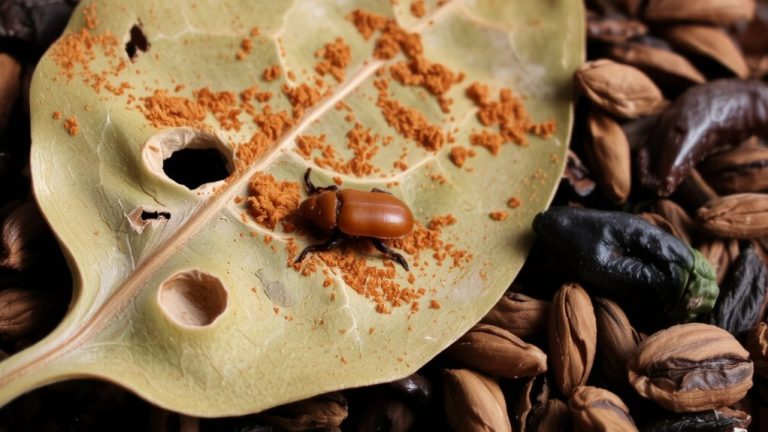
While it might seem surprising, those tiny red flour beetles aren’t just wandering into your kitchen by accident-they’re actively hunting starchy foods like flour, cereal, and pasta because these staples fuel their growth and reproduction. Red flour beetles, specifically *Tribolium castaneum*, thrive on high starch content found in dry food, where feeding preferences align with nutritional value. Broken kernels and flour dust expose more starch, making stored grains and flour infested faster than whole grains. With a life cycle as short as six weeks, populations explode in favorable conditions. Insect infestations aren’t just gross-they’re efficient, as larvae gain weight and produce more waste on 80% starch diets. The FDA allows 75 insect fragments per 50 grams in flour, proving how common this is. Clean floor crevices and shelves with vinegar or food-safe disinfectants, seal cracked containers, and vacuum fines to remove strain and starve beetles before they spread.
How Bugs Destroy Nutrition and Baking Quality
You’re likely unaware just how much those tiny beetles compromise your flour’s quality-infested samples can contain up to 75 insect fragments per 50 grams, hitting the FDA’s Defect Action Level and dragging down both nutrition and performance in the kitchen. Insects like the beetle reduce gluten content, weakening dough elasticity and hurting bread quality. Stored flour also loses Essential amino acids-lysine, methionine, tryptophan-while protein digestibility drops sharply. Starch breaks down into free sugars, altering texture and raising the glycemic index of food products. Insect fragments, frass, and uric acid taint flour with off-flavors and speed spoilage. To protect your pantry, regularly clean floor cracks and shelves with vinegar-based cleaning products, use airtight containers, and strain old products. Early detection and cleanup keep your stored goods safe, preserving flavor, quality, and baking success.
The Mold and Toxin Risk in Infested Flour
| Factor | Impact on Stored Food |
|---|---|
| Uric acid | Promotes mold growth |
| Microbial growth | Increases spoilage |
| Mycotoxins | Resist heat, harm liver |
| Chemical composition | Favors toxin production |
Clean floors and surfaces with vinegar or commercial cleaners to remove residues and prevent future infestations.
Can You Cook Away the Danger?
You’ve cleaned your shelves, wiped down every corner with vinegar or a commercial disinfectant, and removed visible debris to cut down on mold-prone residues, but what about that bag of flour already crawling with beetles-can cooking it make it safe? Cooking kills live *Tribolium castaneum*, but it won’t neutralize heat-stable *mycotoxins* like *aflatoxins*, which survive and can harm your liver. Even after heating, *infested by insects* flour retains *insect fragments*, frass, and uric acid, degrading taste and triggering allergies. The *microbial load* increases during infestation, promoting mold that produces ochratoxins-these aren’t fully destroyed by standard *cooking*. The *nutrients present*, like methionine and glutamic acid, drop by up to 49.5%, slashing the *quality of wheat flour*. And if your sample exceeds *FDA defect action levels* of 75 *insect fragments* per 50 grams, it’s already unsafe-cooking won’t reverse that.
When to Toss Infested Food (And Never Use It)
Even if you’ve tried freezing or cooking, once food shows clear signs of beetle infestation-like clumped flour, visible larvae, or a musty odor-it’s time to toss it, because those methods won’t remove insect fragments, frass, or toxic quinones left behind by *Tribolium castaneum*. The presence of insects in Stored Agricultural Products signals immediate risk to human health and Quality of Food. Below are key reasons why disposal beats reuse:
| Risk Factor | Consequence |
|---|---|
| Infestation on Stored Agricultural | Rapid spread to nearby food products |
| Insect fragments & frass | Exceed FDA limits, harm digestion |
| Mycotoxins from mold | Heat-resistant, carcinogenic, linked to organ damage |
A single flour beetle can lay 450 eggs, accelerating contamination. Mycotoxins like aflatoxins thrive in insect-damaged grains. Cleaning floor and surfaces with certified cleaning products helps, but won’t restore degraded nutrients or eliminate hidden strain hazards.
On a final note
Sweep floors daily with a microfiber broom, then wipe shelves with 70% isopropyl alcohol. Use airtight, BPA-free containers (½-gallon or larger) for flour and grains. Testers found sticky residue vanishes with warm, soapy water and a 5-minute vinegar soak. Remove all visible pests, strain items through a 20-mesh sieve, then freeze for 72 hours. If mold or musty odors persist, toss immediately-no baking recovers hidden toxins.