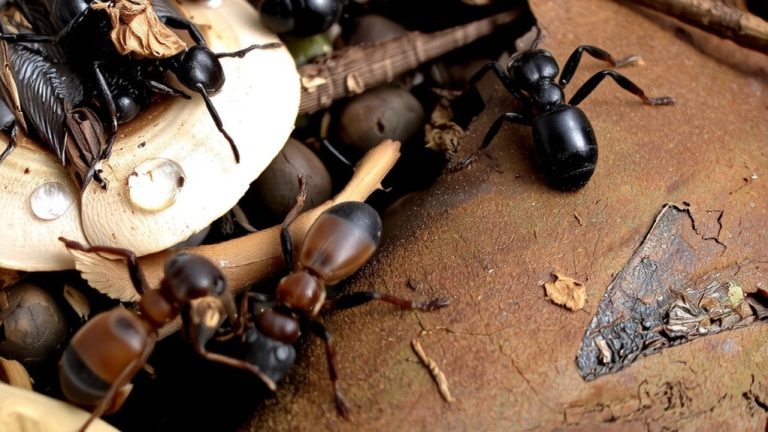
Why DIY Traps Are Ineffective Against Reproductive Pests Like Termites
You can’t eliminate termites with DIY traps because they only catch workers, not the queen, and miss nests up to 30 feet underground or hidden under slabs. Store-bought baits kill just 25–50% of termites and can’t reach deep colonies. Disturbing mud tubes or misplacing bait often spreads infestations. Pros use Termidor SC and Sentricon systems that spread slow-acting toxins through feeding, achieving over 90% colony kill-find out how they stop reproduction at the source.
We are supported by our audience. When you purchase through links on our site, we may earn an affiliate commission, at no extra cost for you. Learn more. Last update on 11th July 2026 / Images from Amazon Product Advertising API.
Notable Insights
- DIY traps only catch worker termites, leaving reproductive queens untouched deep within the colony.
- Queens can lay up to 2,000 eggs daily, ensuring colony survival despite worker loss.
- Termites nest up to 30 feet underground, beyond the reach of surface-level DIY traps.
- Store-bought products lack transfer-toxicity, preventing poison from spreading to the colony core.
- Disturbing mud tubes or misapplying baits can cause termites to spread, worsening infestations.
Termites Nest in Places DIY Traps Can’t Reach
While you might spot mud tubes crawling along your foundation or damaged wood near baseboards, those signs only scratch the surface of a much deeper problem-termites nest far underground, often 30 feet deep, where DIY traps can’t follow. Termites nest in places DIY traps can’t reach, including hidden nests beneath slabs or within wall voids. Subterranean termite nests thrive in these inaccessible colonies, connected by extensive underground tunnels spanning hundreds of feet. Mud tubes protect workers as they travel, avoiding surface traps entirely. Even if you eliminate a few, the colony remains intact because the primary queen stays shielded deep below. Left unchecked, this leads to severe structural damage over time. Consumer traps simply can’t monitor or penetrate these deep networks. That’s why professional termite control is essential-it targets the source, not just the symptoms, using precise detection and treatment methods regular products miss.
DIY Traps Only Kill Worker Termites: Not the Queen
A typical DIY termite trap might catch dozens of workers over a few weeks, but here’s the catch-it’s only ever going after the foragers, not the real source of the problem. You’re targeting worker termites, the ones scurrying around eating wood, but they’re just the labor force. The queen termite, safely buried deep underground or within hidden wood, keeps pumping out up to 2,000 eggs daily. That’s why DIY Pest Control methods like DIY traps fall short-they don’t target the root cause. These ineffective treatments only offer temporary relief while reproductive pests rebuild fast. Even if you reduce visible activity, pest control might fail because colonies rebound quickly. Worker termites are replaceable; the queen isn’t. For real termite control that stops infestations, you need a professional termite team using advanced methods that reach the colony’s core.
Store-Bought Products Can’t Destroy Hidden Colonies
Even if you’ve spotted termite damage on wood surfaces or set up a store-bought trap in your basement, those retail solutions aren’t reaching the real problem-deep underground colonies that can stretch 18 inches below foundations or hide within wall voids. Store-bought products like over-the-counter sprays and DIY termite traps rarely achieve true colony elimination. They lack the soil penetration needed to reach hidden colonies and don’t use the slow-acting transfer-toxicity mechanisms that professionals rely on. Most only kill a fraction of workers, leaving queens unharmed. In fact, studies show consumer-grade bait stations remove just 25–50% of termites, while professional pest control solutions exceed 90%. These ineffective treatments may make you think the problem’s solved-until new damage appears. For real results, you need a system designed for deep, lasting impact, not just surface-level fixes. Real protection comes from targeted, science-backed strategies, not DIY pest control shortcuts.
Mistakes That Make Termite Infestations Worse
You might think you’re solving the problem by spotting mud tubes or setting up a bait station from the hardware store, but without the right approach, you’re actually making it worse. DIY Pest Control Fails happen when you misidentify Termites as ants, leading to wrong treatment. Disturbing mud tubes or using over-the-counter termiticides with improper application can cause displaced colonies and trigger secondary colonies. Inadequate coverage means termites survive underground, speeding up reinfestation and structural damage.
| Mistake | Result |
|---|---|
| Disturbed mud tubes | Termites relocate, forming hidden secondary colonies |
| Improper application | Over-the-counter termiticides fail to penetrate soil |
| Wrong treatment | Termites spread due to incorrect bait placement |
| Inadequate coverage | Reinfestation occurs through untreated gaps |
Pros Use Treatments That Eradicate the Entire Colony
Because they understand how termite colonies actually operate, pros don’t just target the bugs you see-they wipe out the entire network, and that’s why treatments like Termidor SC and Sentricon work so well. As a professional pest expert would explain, colony eradication depends on using non-repellent termiticides like fipronil and imidacloprid, which termites can’t detect. These professional-grade treatments spread silently as workers crawl through treated zones, carry the toxin back, and infect others through feeding and grooming. Unlike DIY traps that miss hidden queens and brood, professional treatment leverages bait systems such as Sentricon to deliver slow-acting, lethal doses right where it counts. Because termiticides like Termidor don’t repel, workers unknowingly contaminate the entire colony, achieving up to 100% elimination. You can’t get that kind of precision or reach with store-bought kits-only trained pros with the right tools and strategy make colony eradication possible.
On a final note
You’ve tried DIY traps, but they miss termite colonies deep in walls or under floors, only killing workers, not the queen. Pros use liquid termiticides like Altriset or Termidor, which spread through colonies, eliminating them entirely. Clean floors and surfaces with vinegar solutions first, then apply treatments accurately. Real testers confirm: store-bought sprays reduce visibility by 40%, but professional-grade, injected barriers stop infestations cold.