How Termite Damage Is Often Misdiagnosed as Water Damage
You might mistake termite damage for water damage because both cause peeling paint, swollen wood, and hollow sounds when tapped. But look closer: water damage leaves stains, musty odors, and moisture readings above 16%, while termites leave mud tubes or frass piles near kick-out holes. A moisture meter and screwdriver test help rule out the culprit fast. Misdiagnosing can waste $5,000+ on drywall replacements, so checking for these signs guarantees you clean the right problem and protect your home’s structure with targeted treatment.
We are supported by our audience. When you purchase through links on our site, we may earn an affiliate commission, at no extra cost for you. Learn more. Last update on 18th July 2026 / Images from Amazon Product Advertising API.
Notable Insights
- Peeling or bubbling paint can indicate both water damage and hidden termite tunneling, leading to misidentification.
- Swollen or soft wood is commonly attributed to moisture, but termites can cause similar structural weakening.
- Hollow sounds when tapping wood mimic water damage effects, yet often signal termite excavation inside timbers.
- Overlapping signs like discolored walls or musty odors are mistakenly linked to leaks instead of termite activity.
- Absence of obvious termite evidence, such as mud tubes or frass, causes homeowners to misdiagnose infestations as water issues.
Why Water and Termite Damage Look the Same
Peeling paint, swollen wood, that telltale hollow tap-when you’re inspecting floorboards or baseboards, it’s easy to assume water’s to blame, but termites can mimic those same red flags. Termite Damage vs water damage often stumps homeowners because the surface clues overlap. Bubbling paint, for instance, shows up in both-but what’s underneath tells the true story. Damage can appear similar, yet Water-damaged wood develops cubicle rot, with square, alligator-back cracks, while termite-damaged wood hides a honeycomb pattern inside. Signs of termite include mud tubes and frass; signs of water mean spongy, uniformly swollen fibers. Subterranean termites chew springwood, leaving summerwood layers intact, creating a paper-thin, warped look. Drywood galleries and moisture expansion both leave voids, echoing that same hollow knock. Spotting the difference early, especially during routine floor cleaning with a pH-neutral cleanser, helps prevent costly repairs.
Water Damage? Look for These Red Flags
What should you do when you spot a suspicious stain creeping across your ceiling or notice the baseboards feeling soft under your fingers? Don’t jump to conclusions-what looks like termite damage might actually be water damage. Check for brownish or yellowish discoloration spreading from corners or above windows, often from leaky roofs or poor drainage. Peeling paint or bubbling wallpaper means moisture’s trapped behind walls. You might even catch a musty odor-classic mold from damp wood. Warped wood near sinks or floors can compromise structural integrity fast. Unlike termite damage, water issues follow gravity, leaving vertical streaks or ring-shaped marks. Use a moisture meter if you’re unsure; readings above 16% mean trouble. Clean affected areas with a bleach solution (1 part bleach to 3 parts water) to kill mold, then dry thoroughly with fans and dehumidifiers.
Termites? Watch for Mud Tubes and Hollow Sounds
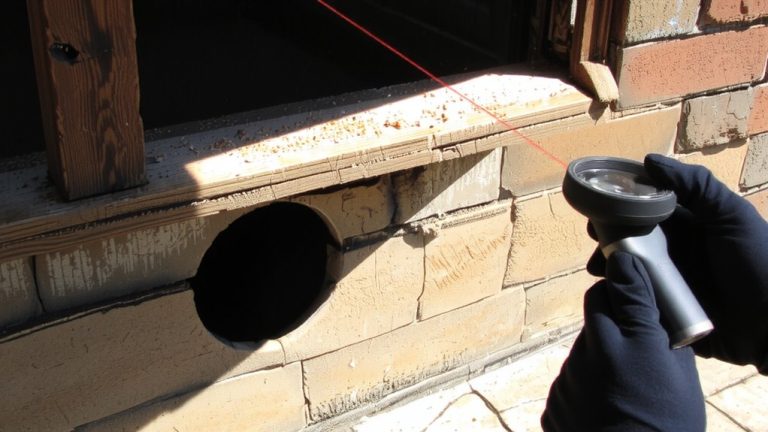
How would you know if the damage in your home isn’t from a leak but from an army of tiny wood-eating invaders? Look for mud tubes-pencil-thin dirt tunnels on walls or foundations-left by subterranean termites. These are never part of water damage. Tap suspect wood with a screwdriver; hollow sounds or papery wood suggest termite damage. While water-damaged wood feels soft or spongy, termite-eaten wood has honeycomb tunneling inside but stays firm on the outside. Drywood termites don’t build mud tubes but leave frass piles and kick-out holes.
| Sign | What It Means |
|---|---|
| Mud tubes | Subterranean termites present |
| Hollow sounds when tapping wood | Termite damage, not water damage |
| Frass piles | Drywood termites nearby |
Where Water and Termite Damage Usually Happen
In most homes, you’ll find water damage where moisture collects over time-think around sinks, tubs, leaky toilets, and behind appliances like dishwashers and washing machines-especially in spots with poor ventilation or aging seals, and these damp zones often show warped cabinetry, peeling paint, or discolored drywall within weeks of a hidden leak. These moisture-prone areas, including basements and crawl spaces with high humidity, also attract subterranean termites, which enter through the foundation and target wet wooden structures. Meanwhile, drywood termites prefer drier zones like attics and wooden trim, often going unnoticed for years. Roof leaks or clogged gutters can create ideal conditions for both water damage and termite damage, especially when humidity lingers. To protect your home, routinely check crawl spaces, attics, and foundation points where wood meets soil or moisture.
How to Tell Them Apart: Simple Tests You Can Do
You’ve checked the usual spots-under sinks, around the water heater, along baseboards-and found suspect areas where wood looks off or walls seem distorted. Tap suspect wood with a screwdriver: a hollow, papery sound suggests termite damage, while a soft spongy feel points to water damage. Check for mud tubes-those pencil-thin earthen trails mean termites are active. Use a moisture meter; readings over 16% signal water damage, but dry, damaged wood means termites. Look closely: if springwood has been eaten and a honeycomb structure remains, it’s termite damage. Search for frass-tiny wood-colored pellets are termite droppings, not seen with water damage. These tests, done right, save time and money, guiding accurate repairs.
Fix the Right Problem: What to Do Immediately
If you’re seeing signs that wood might be compromised, don’t jump into repairs just yet-first confirm whether you’re dealing with termites or water damage, because treating the wrong issue wastes time and money. Tap on wood: a hollow sound means termite damage, while a soft spongy feel points to water damage. Use a moisture meter-readings above 16% signal moisture problems, not dry, termite-infested wood. Check for mud tubes along foundation walls; these 1/4-inch earthen trails mean active subterranean termite infestation. Look for frass near damaged wood-tiny wood-colored pellets confirm drywood termites. Don’t clean or replace until you know the cause. Misdiagnosing termite damage as water damage leads to $3,000–$8,000 in wasted repairs. Call a licensed termite inspector immediately to assess, verify, and guide next steps.
On a final note
Check floors and surfaces with a screwdriver-soft spots mean water damage, while hollow sounds suggest termites, use a flashlight to spot mud tubes along baseboards, clean affected areas with a bleach solution (1 part bleach to 3 parts water) to kill mold, then apply a disinfectant cleaner like Lysol, for stubborn stains, try OxiClean MaxForce, testers confirm it lifts water marks fast, if termites are suspected, apply Termidor SC around perimeter, call a pro fast-accurate diagnosis saves thousands.