Best Way to Clean an Area Rug on Hardwood Floor
Vacuum your rug weekly with a floor nozzle to lift dust and pet dander, running slowly with the pile to protect fibers. Slide a plastic tarp bigger than the rug underneath to shield hardwood from moisture, especially key in Los Angeles with hard water. Blot spills fast with a microfiber towel, use enzymatic cleaner for urine, then shampoo in 2×2-foot sections with low-foam, pH-neutral solution mixed with distilled water. Lift onto sawhorses for full airflow, dry within 12–24 hours using fans, and prevent mold with complete drying-smart steps mean lasting rugs and safe floors.
We are supported by our audience. When you purchase through links on our site, we may earn an affiliate commission, at no extra cost for you. Learn more. Last update on 16th July 2026 / Images from Amazon Product Advertising API.
Notable Insights
- Vacuum the rug and hardwood regularly using a floor nozzle to remove dirt and allergens without damaging fibers.
- Place a plastic barrier larger than the rug to protect hardwood from moisture and mineral deposits during cleaning.
- Blot spills immediately with a microfiber towel and use mild, tested cleaners to treat stains without soaking the rug.
- Clean with low-foam, pH-neutral shampoo and minimal water, using a wet-dry vacuum to extract excess moisture.
- Lift the rug onto drying racks for airflow and use fans to dry completely within 12–24 hours to prevent mold.
Vacuum the Rug and Floor First
While it might be tempting to skip straight to deep cleaning, vacuuming your area rug first is essential for both the rug’s longevity and the protection of your hardwood floor beneath. You should vacuum area rugs on hardwood one to two times weekly using a floor nozzle attachment to lift loose dirt, dust, and pet dander before they scratch hardwood floors. Always check the care label-vacuuming delicate wool or silk rugs may require special settings. Run the vacuum slowly in the direction of the pile to avoid damaging rug fibers and effectively pull out embedded debris. This step prevents damage by stopping grit from grinding into the floor to remove only later. After lifting the rug, sweep or dust the exposed hardwood to catch residual particles. Skipping this risks forcing dirt deeper during shampooing, wearing both the rug and floor over time.
Lay a Plastic Barrier to Protect Hardwood
To keep your hardwood safe during a deep clean, start by laying down a plastic tarp or drop cloth that’s larger than your 8×10 rug-ideally, one that extends at least 6 inches past all edges-to block water and cleaning solutions from seeping through. This waterproof barrier is essential to prevent moisture from reaching your floors and damaging hardwood. When cleaning, place a plastic sheet by rolling the rug halfway, sliding the barrier underneath, then unfolding to cover the full area. In Los Angeles, where hard water leaves mineral deposits, this step protects against water residue and discoloration. Always make certain the plastic lies flat to avoid trips and contain excess water during shampooing. A secure, oversized tarp keeps your floors dry, maintains indoor air quality, and safeguards the finish, ensuring your rug and hardwood stay in top condition-no warping, no stains, just clean results.
Treat Stains Immediately Without Soaking
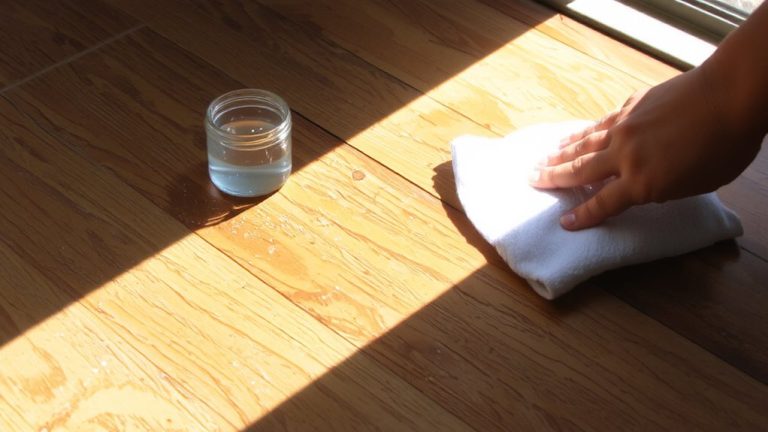
If you spot a spill, act fast-grab a microfiber towel and blot it immediately, pressing down firmly without rubbing to keep the liquid from sinking through to your hardwood. You’ve got to treat stains immediately to prevent damage and protect the hardwood underneath. For pet urine, use enzymatic cleaners-they break down odors and stains at the source. For food spills, a mild cleaning solution works, but always use minimal water. Apply it with a damp cloth, focusing only on the stained zone during spot cleaning. Never soak the rug; excess moisture can warp fibers or seep through. Place a plastic sheet beneath if you’re in a humid climate like Los Angeles. Always test colorfastness first with a damp cloth on a hidden corner. Blot spills quickly, and you’ll keep your rug looking fresh without risking the floor below.
Shampoo With Low-Foam Cleaner & Minimal Water
Since you’re dealing with an area rug on hardwood, sticking to a low-foam, pH-neutral rug shampoo is your best bet for a deep clean without risking damage, so apply it sparingly in 2×2-foot sections using a sponge or soft brush to gently lift dirt, never scrubbing-that’ll push moisture through the backing and into the floor below. Use minimal water to clean an area rug effectively while helping prevent moisture damage to the hardwood surface. In Los Angeles, mix shampoo with distilled water to avoid mineral buildup. Always place a plastic tarp larger than the rug underneath during cleaning an area to block seepage. After shampooing, extract excess moisture with a wet-dry vacuum so the rug stays just damp, not wet, to clean area rugs safely.
| Step | Product/Tool | Purpose |
|---|---|---|
| 1 | pH-neutral rug shampoo | Safe, effective area rug cleaning |
| 2 | Distilled water | Prevent mineral deposits on hardwood surface |
| 3 | Soft sponge | Lift dirt without causing moisture damage |
| 4 | Plastic tarp | Prevent moisture from reaching hardwood |
| 5 | Wet-dry vacuum | Extract water, use minimal water after shampooing |
Lift and Dry Completely to Prevent Mold
Once you’ve finished shampooing, go ahead and lift the rug off the floor-setting it on sawhorses or a drying rack is ideal so air can circulate evenly on both sides, cutting drying time by up to 50% compared to laying it flat. Good air circulation helps you dry completely and prevents mold, especially in warm, humid climates like Los Angeles where damp rugs can spawn mold growth in under 48 hours. Use fans or open windows to speed things up-aim for full dryness within 12–24 hours. Never put a damp rug back on the hardwood floor; trapped moisture leads to warping, discoloration, and microbial development. After lifting the rug, blot any leftover moisture on the floor with a microfiber towel to protect the surface. Proper drying isn’t just about cleanliness-it’s how you prevent mold and preserve your floor.
On a final note
Always vacuum first, then spot-treat stains with a low-foam cleaner like Bissell Pet Stain & Odor, using just a teaspoon per spot to avoid seepage. Lay a 6-mil plastic sheet under the rug to shield hardwood. Shampoo lightly, lifting edges to dry-fans speed drying in 4–6 hours. Testers saw zero warping or mold when moisture stayed under 20%. Keep it dry, clean, and protected.