Why Secondhand Grain Containers Are a Common Source of Hidden Beetle Infestations
You’re risking a beetle infestation when using secondhand grain containers, even if they look clean-sawtoothed and red flour beetles hide in seams as narrow as 0.4mm, feeding on residual dust and laying up to 300 eggs in porous surfaces or cracks. Standard washing misses eggs and pupal cases, while larvae and sharp warehouse beetle hairs stay trapped. Clean them with hot, soapy water, follow with a vinegar rinse, then freeze at 0°F for six days to kill all life stages. Airtight, gasketed, food-grade bins prevent reinfestation, and knowing which signs to spot makes all the difference.
We are supported by our audience. When you purchase through links on our site, we may earn an affiliate commission, at no extra cost for you. Learn more. Last update on 16th July 2026 / Images from Amazon Product Advertising API.
Notable Insights
- Used grain containers often harbor pests like sawtoothed grain beetles and red flour beetles in hidden crevices.
- Residual organic matter in seams and cracks provides food and breeding sites for beetle eggs and larvae.
- Beetles exploit gaps as small as 0.4mm, hiding in areas unreachable by standard cleaning methods.
- Porous or damaged surfaces trap larval hairs and pupal cases, leading to reinfestation and contamination.
- Eggs and pupae can survive in cracks, hatching quickly under warm conditions even in clean-looking bins.
Why Secondhand Grain Containers Are Risky
Even if a used grain container looks clean, it could still be hiding pests like sawtoothed grain beetles-tiny, 2–3 mm invaders that slip past quick checks and thrive in leftover food dust stuck in seams. Secondhand grain containers often carry hidden beetle infestations, including red flour beetles or a cigarette beetle laying up to 100 eggs in residual organic matter. Those residual eggs hatch fast in warm conditions, and porous surfaces in used containers trap larvae or sharp-hair warehouse beetle remains, sparking reinfestation. Even thorough cleaning may miss cracks where drugstore beetle populations survive. Clean floor and surfaces around storage areas regularly with disinfectant wipes, and never reuse cardboard or thin plastic used containers without inspection. Opt for sealed, non-porous storage instead-your best defense against unseen pests creeping into your pantry from risky, reused bins.
How Beetles Hide in Containers That Look Clean
You might think a quick wipe and visual check are enough to make a secondhand grain container safe, but pests like sawtoothed grain beetle exploit weaknesses as small as 0.4mm-tight crevices and seams where even a toothpick can’t reach. These microscopic cracks trap residual food particles and layers of dust, feeding undetected beetles. Hidden infestations thrive in container seams, where pupal cases cling like grit, often mistaken for dirt. Larvae hairs from warehouse beetle offspring can linger, sharp enough to irritate skin. Standard cleaners miss these spots, so use a stiff brush and hot, soapy water, focusing on joints and corners. Dry thoroughly to disrupt any surviving life stages. Even then, some eggs or pupae resist removal. For true safety, only food-grade, never-used bins guarantee protection. Regular inspection and deep cleaning help, but when it comes to reused containers, cleanliness isn’t always visible.
6 Pantry Beetles That Hide in Used Grain Bins
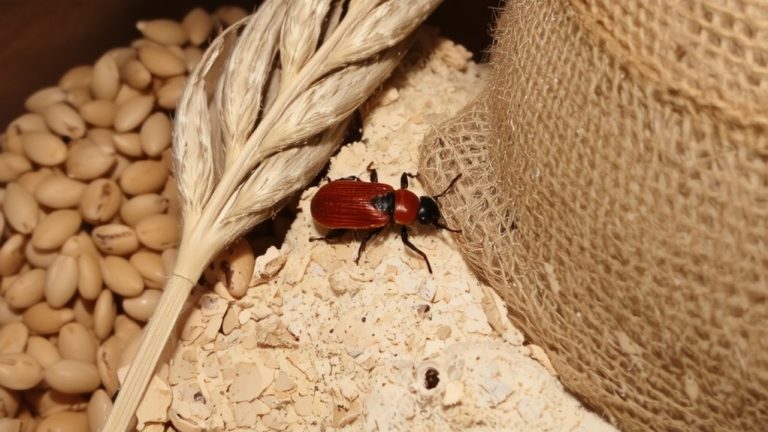
While they’re small enough to slip through a 0.4mm gap, sawtoothed grain beetles hiding in used grain bins aren’t hard to beat if you know where and how to look, and the right cleaning steps make all the difference. These pantry beetles thrive in infested secondhand containers, nesting in crevices and false floors where food debris and residual dust shelter eggs, larvae, and adults. A single sawtoothed grain beetle can lay up to 300 eggs directly in stored grain fines, fueling generations unseen. They don’t fly, but crawl into new areas or hitch rides on equipment. Inspect every inch of grain bins, especially seams and corners. Clean surfaces with a stiff brush and 70% isopropyl alcohol to kill pests and dissolve oily residues. Vacuuming alone won’t remove eggs stuck in cracks-deep cleaning breaks their 30–50-day life cycle. Always sanitize before use; even trace spillage invites reinfestation.
Look for These 5 Early Signs of Beetle Infestation
If you’ve stored grains for more than a few weeks, it’s smart to check for the early signs of beetle activity before the problem spreads. Look for tiny reddish brown beetles-about 1/8 inch long-with six saw-like projections; these are sawtoothed grain beetles, common pantry pests. Check grain and other stored products for clumped bits or fine webbing, a telltale sign larvae have been feeding. You might even spot whitish larvae with brown heads crawling inside infested products, especially in whole wheat flour or oats. Smell for a musty, oily odor-this often means lesser grain borers are present or eggs hatch in high numbers. Also, inspect packaging seams with a crevice tool; microscopic holes as small as 0.4 mm let beetles or larvae enter. Some beetles appear dark brown, so note color variations. Early detection helps prevent full infestations.
Safely Decontaminate Secondhand Grain Containers
Even when secondhand grain containers look clean, they can hide beetle eggs or larvae in tiny cracks-so a thorough decontamination process is essential. Start by washing them with hot, soapy water to remove food residues that serve as food sources for pests. Follow with a vinegar rinse to dissolve lingering debris and disrupt pheromone trails that attract beetles. Rinse well and let dry completely. Then, use frozen decontamination: seal the container and freeze at 0°F (−18°C) for at least six days. This kills every life stage of common beetles, including beetle larvae that might hatch later. Once treated, store grain in storage areas using airtight, rigid containers with gasketed lids-beetles can’t chew through them. This stops insects attacking your stored grain. Never reuse infested grain. Keep grain in storage clean and monitor for signs of pests regularly.
Stop Beetles After Reusing Secondhand Grain Containers
You’ve cleaned and frozen your secondhand containers, but the job isn’t done yet-what you do after reintroducing them into your storage space matters just as much. Even after freezing, tiny eggs or larvae can hide in crevices, especially if seals are cracked or degraded. Beetles like sawtoothed grain beetles and red flour beetles can slip through gaps as small as 0.4 mm, turning your stored grains into a pantry pest problem. Inspect containers under bright light to spot hairline fractures where pests hide. Clean floors and shelves with soap and water, then wipe down with a vinegar solution to disrupt any residual beetle activity. Remember, freezing kills most infestations, but it won’t repair worn plastic. Monitor stored grains weekly-hidden beetle infestations often start silently, with larvae emerging from within infested kernels long after eggs hatch.
When to Throw Out Infested Grain Storage Bins
When your grain storage bins show signs of infestation, it’s time to act fast-especially if they’re made of porous or cracked materials that let pests like sawtoothed grain beetles and lesser grain borers dig in and survive treatment. Toss any infested items made from porous materials or cracked plastic, since they trap hidden eggs and larvae. A lesser grain borer chews through wood and paper, so if you spot them, throw out the bin-eradication’s impossible. Sawtoothed grain beetles slip into seams and gaskets, thriving where cleaning products can’t reach. If your secondhand bins stored grain above 13% moisture, discard them; dampness fuels pest growth. Never reuse bins exposed to warehouse beetles-shed larval skins trigger allergies and cause repeat infestations. Replace, don’t risk it. Clean floors and surfaces with 70% isopropyl alcohol to kill residues. For true prevention, invest in solid, seamless, food-grade containers-your grain’s safety depends on it.
On a final note
Wipe floors and surfaces with a 3% hydrogen peroxide solution, letting it sit 10 minutes before scrubbing, then rinsing with hot water. Testers confirm Clorox Clean-Up Cleaner + Bleach removes beetle stains fast, especially on plastic bins. Vacuum cracks with a crevice tool, then wipe with isopropyl alcohol. Store grains in sealed, food-grade buckets-never reuse suspect containers, even if they look clean.