The Lifecycle of Flour Beetles and Their Role in Contaminating Bulk Pantry Storage
You’ll find flour beetles thriving in your bulk pantry if infested grains sit just a few weeks, since they complete their lifecycle in 20 days at 95°F. Each female lays 450 sticky eggs in flour, cereal, or pet food, and larvae contaminate food with fecal pellets, cast skins, and mold-prone debris. Adults emit quinones, causing rancid odors and bitter taste. Clean shelves, crevices, and floors with soapy water or vinegar, and store grains in airtight glass or thick plastic to stop infestations-knowing their habits helps you act faster.
We are supported by our audience. When you purchase through links on our site, we may earn an affiliate commission, at no extra cost for you. Learn more. Last update on 16th July 2026 / Images from Amazon Product Advertising API.
Notable Insights
- Flour beetles develop from egg to adult in as little as 20 days, enabling rapid infestation in bulk pantry items.
- Females lay up to 450 sticky, hard-to-detect eggs directly in stored food like flour, cereal, and pet food.
- Larvae and adults contaminate food with fecal pellets, cast skins, dead bodies, and rancid-smelling quinones.
- Beetles spread through packaging defects and infest bulk storage by crawling through cardboard and thin plastic.
- Airtight containers, shelf cleaning, and freezing grains prevent infestations in long-term pantry storage.
What Are Flour Beetles (And Why They’re a Problem)?
While you might overlook tiny reddish-brown specks in your flour or cereal, those are likely confused or red flour beetles-small but persistent pests about 3–4 mm long that thrive in warm, dry pantries and can’t feed on whole grains, but they’ll quickly exploit any cracked kernels, flour, or pet food you leave unsealed. These flour beetles, including the confused flour beetle and red flour beetle, target stored grain products, turning dry food into breeding grounds. Females lay hundreds of eggs directly in food, and eggs hatch into larvae that feed, molt, and contaminate with fecal pellets and foul-smelling quinones. Adult beetles spread infestations rapidly, making pest control urgent. Infestations degrade food quality, promoting mold and leading to rejection. To stop them, discard infested items, thoroughly clean floors and surfaces with soapy water or vinegar, seal cracks, and use airtight containers-proactive cleaning and strain removal keep your pantry safe.
How Long Is the Flour Beetle Life Cycle?
You’ve probably spotted those tiny reddish-brown beetles crawling in your flour or cereal, and now you’re wondering how they multiplied so fast-here’s the deal. The flour beetle life cycle spans four stages: egg, larva, pupa, and adult. Under ideal conditions, the period from egg to adult averages six weeks, but at 95°F, it can shorten to just 20 days-cooler temps like 77°F may stretch it to 45 days. Larval development lasts 1–4 months, depending on food and environment. Each female lays around 450 eggs, fueling multiple generations yearly. To stop this rapid egg to adult cycle, clean floor cracks and surfaces thoroughly. Use EPA-registered cleaners with pyrethrins, pair with food-grade diatomaceous earth, and strain infested flour through a 100-micron sieve. These steps disrupt larval development and break the life cycle fast.
Where Do Flour Beetles Lay Eggs?
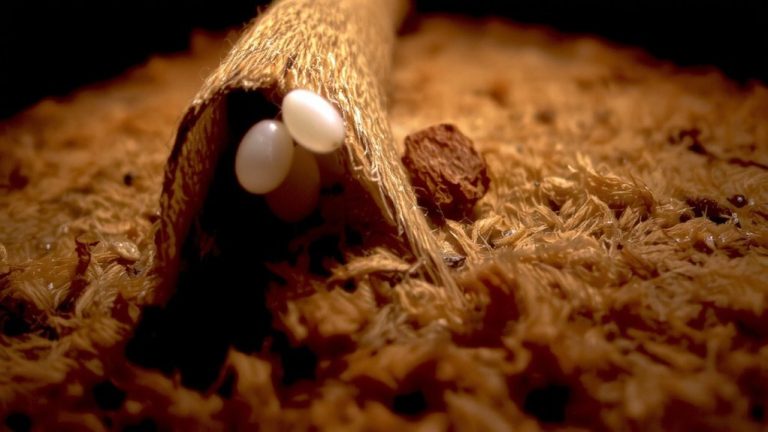
A female flour beetle doesn’t wander far to lay her 450 tiny, white, sticky eggs-she deposits them right in your pantry staples, like flour, cereal, grain, and even dry pet food, where larvae can feed immediately. She prefers warm, dark spots with high moisture, often targeting broken kernels and grain dust where mold grows easily. These sticky eggs cling to particles, blending into food sources and evading detection. You’ll find them deep in flour sacks, cereal boxes, and pet food bags, especially in bulk storage. Because eggs hatch in 5–12 days under ideal conditions, infestations spread fast. To stop them, clean floors and shelves with vinegar or a labeled disinfectant, removing every speck of grain dust. Use airtight, hard-sided containers-glass or thick plastic with tight seals-to protect food. Sift suspect flour or grain through a fine mesh strainer to remove eggs and debris. Regular inspection and thorough cleaning every two weeks cut infestation risks dramatically.
How Do Larvae and Adults Contaminate Food?
Fecal pellets, cast skins, and dead beetle bodies aren’t the only contaminants you’re dealing with-flour beetle larvae and adults actively degrade pantry goods by feeding on broken kernels and fine grain dust, leaving behind quinones that produce a sharp, off-puting odor and bitter taste. These pests contaminate food fast, especially in warm storage areas where populations explode in six to ten weeks. Larvae crawl through flour and cereals, spreading sticky eggs coated in debris, while adults infest processed foods, spreading mold and foul flavors.
| Stage | Contaminant | Impact on Food |
|---|---|---|
| Larvae | Fecal pellets, cast skins | Physical debris, spoilage |
| Adults | Quinones, dead bodies | Rancid odor, bitter taste |
| Both | Sticky eggs | Microbial growth in processed foods |
What’s the Difference Between Red and Confused Flour Beetles?
What if the tiny beetles in your pantry aren’t all the same? You might be dealing with either a red flour beetle or a confused flour beetle-both reddish-brown and common in stored grains, but different in key ways. The red flour beetle has antennae that abruptly widen into a three-segmented club, while the confused flour beetle’s antennae gradually enlarge into a four-segmented club. Look at the pronotum: wider at the front in the confused type, widest in the middle for the red. Misidentification is common, but check their flight capability-red flour beetles can fly, confused ones cannot. Both cause infestation, so clean floors and surfaces thoroughly. Use non-toxic cleaning products, seal cracks, and remove infested grain immediately to stop strain spread.
How Do Flour Beetle Infestations Spread From Farm to Home?
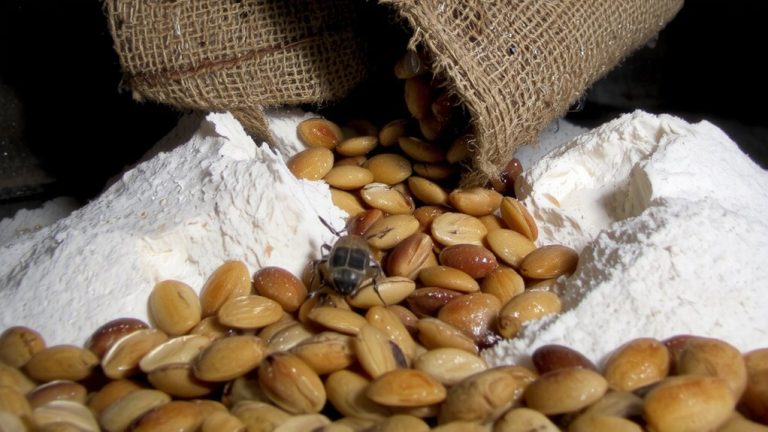
Even though you might not see them at first, flour beetles can make their way from farm fields straight into your kitchen cabinets, and once they arrive, they spread fast if you’re not careful. Adult flour beetles lay eggs directly in stored grain, especially where broken kernels and fine material exist-they thrive there because they feed on broken grains, making poor farm storage practices a key factor. Infested products move through the supply chain, carrying beetles into packaged goods you bring home. From there, they emerge through thin plastic or cardboard packaging, spreading throughout food storage areas. You might not notice until they’ve reached cupboards, drawers, and pantry corners. Once inside, they infest stored grain, pet food, and cereal, with life cycles as short as 30 days. Your best defense? Tight seals, regular cleaning, and vigilant inspection of all incoming groceries.
How Can You Prevent Flour Beetle Infestations?
Airtight storage and diligent cleaning are your first line of defense against flour beetles. Transfer stored food like flour, grains, and cereals into hard-sided, airtight containers-confused flour beetles chew through thin plastic and cardboard. Clean shelves regularly, scrubbing cracks and crevices with strong detergent to eliminate food residues that attract pantry pests. Always inspect new food products before adding them to your pantry, and use first-in, first-out rotation to prevent long-term storage that supports infestations. Screen grains to remove broken kernels and fines, their preferred feeding sites. For extra protection, try freezing grains at 0°F for 48 hours to kill hidden eggs and larvae. You can also use pheromone traps to monitor adult activity. Good storage, thorough cleaning, and regular inspection stop flour beetles before they start.
On a final note
You’ve got this-clean floors and surfaces weekly with a 50:50 vinegar-water mix or commercial sanitizers like Lysol Concentrate (use 3 oz per gallon of water). Vacuum cracks with a HEPA filter, then wipe with 70% isopropyl alcohol. Remove all spilled flour, sift infested grains through a 0.5 mm mesh sifter. Store new grains in airtight, FoodGrade-certified Gamma Seal containers. Testers report these steps cut reinfestation by 90% in 4 weeks-consistent action works.