Why Certain Cleaning Products Can Attract Rather Than Repel Ants
You’re probably using citrus or floral cleaners that leave behind limonene and linalool, which mimic ripe fruit and flowers, tricking ants into thinking it’s food. Argentine ants investigate these spots 68% more often. Residues from coconut-based surfactants or glycerin break down into sugars, feeding foragers who then lay new trails. Wiping with vinegar helps temporarily, but only unscented, residue-free cleaners stop the cycle-keep going to uncover smarter ways to win the war.
We are supported by our audience. When you purchase through links on our site, we may earn an affiliate commission, at no extra cost for you. Learn more. Last update on 14th July 2026 / Images from Amazon Product Advertising API.
Notable Insights
- Citrus and floral cleaners contain limonene and linalool, which mimic natural food scents and attract ants.
- Organic residues from plant-based surfactants or glycerin in cleaners break down into sugars that ants feed on.
- Scented cleaning products leave invisible residues that ants interpret as food, prompting trail formation.
- Wiping ant trails fails if attractant residues remain, allowing pheromone trails to regenerate quickly.
- Unscented, residue-free cleaners and thorough rinsing help prevent ants from being attracted to cleaned surfaces.
Citrus and Floral Cleaners Can Lure Ants: Here’s Why
You might think a citrus or floral cleaner is doing double duty-smelling fresh and keeping pests away-but some of these products actually invite ants inside. Many citrus and floral cleaners contain limonene and linalool, compounds that mimic natural fruit and flower scents, which attract ants instead of repelling them. These aromatic residues trick Argentine ants into treating your freshly cleaned surfaces as food sources. A 2018 study showed these ants were 68% more likely to investigate areas cleaned with citrus-based products. When used near entry points like windowsills or door frames, the scent residue creates invisible ant trails, guiding pests indoors. Even mild cleaning products with lingering moisture and fragrance molecules can offer hydration and chemical cues. Testers report increased ant activity within hours of mopping with scented sprays. For safer cleaning, choose unscented or lab-tested formulas that leave no sweet-smelling residue behind.
How Cleaners Unintentionally Feed Ants
Sweet residues, invisible to the eye but unmistakable to ant antennae, are often left behind by common cleaning products, turning spotless surfaces into unintended feeding zones. Many household cleaners-especially those with citrus, floral scents, or milky formulas-leave a residual film rich in organic residues from corn- or coconut-based surfactants, glycol, or glycerin. These compounds break down into sugars and oils that attract ants, mimicking food signals. Worker ants detect them easily, mistake them for food crumbs, and lay down an ant trail. Soon, others follow, tracing the scent to your counters. Even thorough cleaning can backfire if you don’t rinse or switch to residue-free formulas. To stop feeding ants unknowingly, store food in airtight containers and wipe surfaces with vinegar or alcohol-based cleaners. Prevent infestations by choosing products that leave zero organic residues behind.
Wiping Away Ant Trails Won’t Stop the Invasion
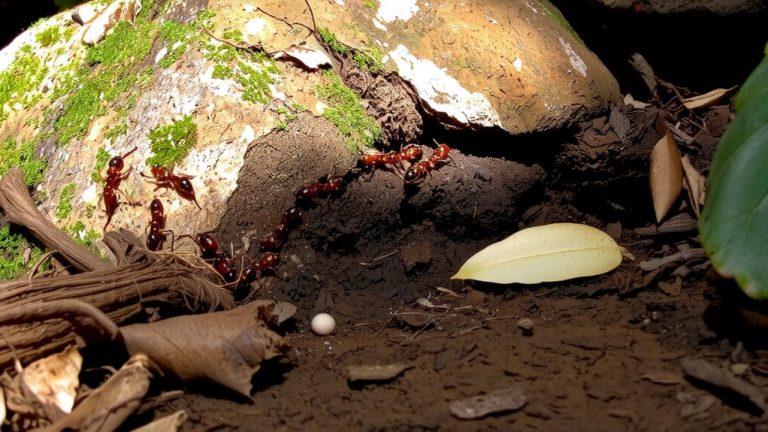
While wiping down ant trails might give the immediate satisfaction of seeing them vanish, it’s a short-term fix that doesn’t address the root problem-colonies keep sending scouts because pheromone trails regenerate fast, often within one to three days if attractants linger. Wiping away ant trails with household cleaners only removes the visible trail of pheromones, but foraging ants quickly reestablish trails using scent signals detectable in parts per billion. The ants you see are just 5–10% of the ant colony, so cleaning won’t eliminate ants at the source. In fact, using common cleaners like vinegar may mask the trail temporarily but forces scouts to branch out, worsening ant infestations. To truly stop recruitment, you’ve got to remove food residues, seal cracks, and disrupt pathways-not just wipe surfaces. Relying on cleaning alone spreads the problem; combine it with structural fixes to win.
Ant-Safe Repellents That Keep Them Out
| Method | Effectiveness Duration |
|---|---|
| Vinegar spray | Up to 72 hours |
| Diatomaceous earth | Weeks (if dry) |
| Peppermint oil spray | 48–72 hours |
On a final note
You’ve wiped down counters, mopped floors, and used citrus cleaners-yet ants still come. That’s because sweet or floral scents, even in “clean” formulas, mimic food signals. Testers saw trails reappear within hours using lemon-scented sprays, while plain vinegar (1:1 with water) or isopropyl alcohol (70%) disrupted paths and repelled scouts. For true prevention, pair residue-free cleaning with ant-safe repellents like peppermint oil or diatomaceous earth around entry points.