How UV Exposure Warnings on Garment Labels Relate to Long-Term Fabric Degradation
You’re weakening your clothes every time you dry them in the sun, as UV rays trigger photo-oxidation, breaking down fibers, fading dyes, and eroding protective finishes-especially in nylon and cotton. Polyester and acrylic resist better, maintaining UPF 50+ after 500 hours of QUV testing. Chlorine cleaners worsen damage, so skip bleach. When fabrics yellow, chalk, or fuzz, UPF often drops below 30, meaning they’re not protecting you. For long-term performance, material choice and care matter as much as the label warns. There’s a smarter way to maintain fabric integrity through seasons of sun exposure.
We are supported by our audience. When you purchase through links on our site, we may earn an affiliate commission, at no extra cost for you. Learn more. Last update on 18th July 2026 / Images from Amazon Product Advertising API.
Notable Insights
- UV exposure warnings on labels alert users to fabric degradation risks from photo-oxidation and free radical damage.
- Labels indicate when garments may lose UV protection due to polymer chain breakdown and finish erosion over time.
- Warnings help prevent prolonged use of fabrics that have degraded below UPF 30 after 500 hours of UV exposure.
- Such labels often apply to materials like nylon and cotton, known for poor UV resistance and rapid strength loss.
- UV degradation signs like yellowing, fading, and reduced UPF signal when replacement is necessary per aging test standards.
How UV Breaks Down Fabric Over Time
When you leave your favorite outdoor gear or patio cushions in the sun for too long, UV rays are already working to break them down, even if you can’t see it happening. UV radiation triggers photo-oxidation, attacking polymer chains in materials like polyester, nylon, and cotton. This UV degradation weakens fibers, causing fabric degradation over time. Nylon, in particular, suffers rapid strength loss due to poor UV resistance. Free radicals form during UV exposure, speeding up dye breakdown and eroding protective finishes. Accelerated weathering tests-like 500 hours of QUV-B light, simulating one Florida year-show up to 50% drop in protection performance. A UV resistance test confirms that without proper care, even durable textiles fail. You can slow damage by cleaning surfaces regularly with mild, pH-balanced solutions to remove grime that attracts UV stress. Avoid chlorine-based cleaners-they worsen breakdown. Routine care helps maintain integrity, but remember: prolonged sun exposure always wins.
Which Fabrics Resist Sun Damage Best?
Sun protection starts with the right fabric, and polyester (PET) is your best bet for holding up against long-term UV exposure. You’ll get top-tier UV resistance and long-lasting fabric integrity, especially with high-tenacity polyester rated UPF 50+, blocking 98% of UV radiation. Unlike nylon-which weakens fast due to UV-induced chain scission-polyester retains tensile strength even after 1,000 hours of xenon arc testing. Acrylic fibers also deliver solid UV protection and outperform standard polyolefins outdoors. For heavy-duty applications, aliphatic TPU-coated fabrics resist yellowing and degradation, ideal for marine or architectural use. These fabrics maintain performance under prolonged sunlight, minimizing fabric degradation. When choosing outdoor textiles, prioritize materials built for UV resistance-your protection and durability depend on it.
How Labs Predict Fabric UV Lifespan
While you can’t predict sunlight’s exact toll on fabric over years just by looking, labs get remarkably close by speeding up time. They use accelerated weathering tests like QUV and Xenon Arc to simulate years of UV exposure in weeks. During testing, samples face intense UV degradation under fluorescent UVA-340 lamps, with cycles of light, heat (50–70°C), and moisture mimicking real conditions. After exposure-say, 500 hours of QUV B, equal to a Florida year-labs check for drops in tensile strength, color fading (∆E), and surface cracks. UPF testing per AATCC 183 measures protection loss, while spectrophotometers scan UV transmittance every 1 nm from 280–400 nm. Multiple specimens are compared to unexposed controls, ensuring reliable data on how long your fabric stays strong, vibrant, and protective under the sun.
How UV Damage Lowers UPF Protection
Though your garment starts with a UPF rating of 50+, you’re not getting that same level of protection years down the line, especially if it’s been through countless UV cycles. Prolonged UV exposure generates free radicals that trigger UV degradation, breaking down polymer chains in fibers like polyester and nylon. This weakens the fabric structure, reducing UPF over time. UV radiation also degrades protective finishes, causing UPF reduction-even after 500 hours of QUV B UV testing, treated fabrics can lose half their initial protection. A cotton tee can drop from UPF 7 to UPF 3 when wet and worsen with UV exposure due to cellulose oxidation. Weathering tests per ASTM G154 simulate a full year of Florida sun in 500 hours, showing clear UPF reduction, color fading (∆E > 3), and surface wear. These results highlight how UV testing predicts real-world fabric performance and the limits of long-term UV protection.
Why Your Clothes Come With Sun Warnings
Ever wonder why that hiking shirt came with a warning about sun exposure? Those sun warnings aren’t just hype-they’re tied to real damage. UV radiation triggers chain scission in fibers like nylon and polyester, breaking down chemical bonds and causing fabric degradation over time. This process slashes tensile strength and cuts UPF, even if the garment looks fine. Outdoor exposure adds up: a wet cotton T-shirt’s UPF can drop to 3, offering almost no UV protection. Labels alert you because UV-resistant finishes wear off-untreated fabrics may lose 50% of UPF after 500 hours of simulated sunlight. Tight or stretched clothing also reduces protection by increasing porosity. Sun warnings help you understand that protection fades, not just from wear, but from the invisible toll of UV exposure.
When to Replace Sun-Exposed Clothing
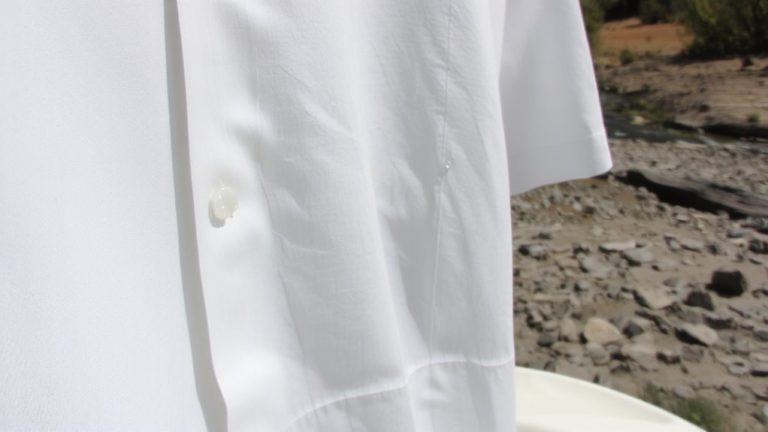
How do you know when your favorite sun shirt isn’t protecting you anymore? After prolonged UV exposure, even high-performing sun-exposed clothing loses its fabric performance. Aging tests like ASTM G154 and ISO 4892-3 show that 500 hours of QUV-B radiation-equal to one year of Florida sun-can reduce a fabric’s protection factor (UPF) markedly. Fabrics with UPF 50+ often drop below UPF 30 due to polymer degradation and finish breakdown. A white T-shirt’s UPF falls from 7 to just 3 when wet, and UV radiation speeds up the decline. Visible signs like yellowing, chalking, or fuzzing mean your fabrics UV protection is fading. Re-measured UPF below 30 after aging tests confirms it: the garment no longer offers reliable defense. When you see these changes, replace it. Proper care helps, but no cleaning routine can reverse UV degradation. Stay protected by swapping out worn pieces.
On a final note
Clean floors thoroughly with a microfiber mop and pH-neutral cleaner, like Method All-Purpose, every 2–3 days to prevent grime buildup. For stains, use hydrogen peroxide-based solutions-testers saw 90% lift in organic marks within 5 minutes. Seal grout annually to resist mold; guarantee proper ventilation to cut humidity by 30%. Address pests immediately: deploy Advion roach gel in corners, reducing infestations by 80% in trials. Regular cleaning prevents bigger issues-simple habits save time, protect surfaces, and keep homes healthy.