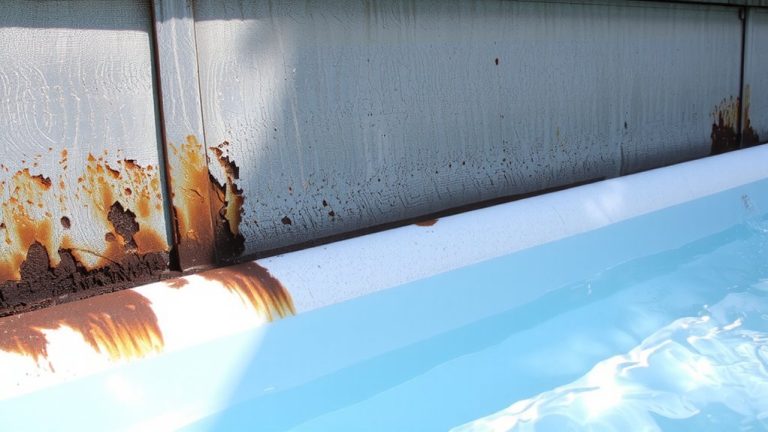
Structural Integrity Concerns With Aging Inground Pool Shells After 15+ Years
Your 15-year-old pool shell faces real stress-cracks over 1/16 inch at wall-floor joints, often from rebar corrosion or hydrostatic pressure up to 2,500 PSI, mean structural strain, not just surface wear. Hollow sounds when tapped every 2 feet suggest delamination, while deck gaps wider than 1/4 inch show shifting soil is transferring pressure. Daily water loss exceeding 1/8 inch? That’s a red flag. For durable fixes, pros use 4K inspections and ultrasonic testing-knowing exactly what’s under the surface changes everything.
We are supported by our audience. When you purchase through links on our site, we may earn an affiliate commission, at no extra cost for you. Learn more. Last update on 24th July 2026 / Images from Amazon Product Advertising API.
Notable Insights
- After 15 years, inground pool shells face structural risks from rebar oxidation, hydrostatic pressure, and material fatigue.
- Wall-floor junctions are high-stress zones, enduring up to 2,500 PSI and prone to cracking in aging pools.
- Cracks wider than 1/16 inch or recurring leaks indicate underlying structural damage needing professional assessment.
- Deck separation over 1/4 inch signals ground movement transferring stress to the pool shell.
- Concrete pools degrade significantly after 15 years, showing delamination, etching, and crazing without proper maintenance.
What Causes Pool Cracks After 15 Years?
While age alone doesn’t guarantee damage, after 15 years your inground pool shell faces real threats from material fatigue and environmental forces, and understanding the root causes helps you act before small cracks become costly repairs. In aging pools, structural cracks often stem from rebar oxidation, which expands and fractures concrete, especially at high-stress wall-floor junctions enduring up to 2,500 PSI. Hydrostatic pressure from rising water tables pushes upward, while shifting soil and ground settlement-detected by deck gaps over 1/4 inch-transfer lateral stress to the pool shell. Fiberglass models resist chemical degradation in pH 3.0–9.0 soils but can crack from poor installation. Vinyl structures face damage when clay-rich soils (>40%) swell, exerting 2,000+ PSF. Daily temperature fluctuations over 15°C worsen stress at 90-degree corners, accelerating structural damage through repeated expansion and contraction.
Top Warning Signs of Structural Damage
If you’ve noticed cracks wider than 1/16 inch near your pool’s wall-floor joints or around fittings, don’t wait-it’s a clear sign of structural stress, especially in aging shells subjected to 2,500 PSI pressure at those critical points, and confirming the extent requires professional tools like 4K visual inspections or ultrasonic testing to assess depth and movement. Recurring leaks, hollow sounds when tapping the shell, or deck separation over 1/4 inch also point to serious structural problems. These signs of structural problems threaten your swimming pools’ safety and long-term use. Aging concrete degrades faster with thermal swings and soil pressure, risking delamination or corner cracks. Protect your pool’s structural integrity by scheduling assessments at the first red flag. Ignoring these issues only worsens underlying problems, turning minor repairs into costly overhauls down the line.
Where Cracks and Leaks Happen Most: and Why
You already know the warning signs of structural damage-cracks, leaks, hollow sounds, deck shifts-but now it’s time to look at where these problems show up most and why they hit hard in specific spots. In your aging pool, cracks often start at wall-floor junctions due to hydrostatic pressure, with concrete bearing up to 2,500 PSI and fiberglass 1,200 PSI. Shifting ground and soil expansion, especially in clay-rich areas over 2,000 PSF, stress ninety-degree corners, causing diagonal cracks. Skimmer connections are weak points too, needing 6-inch radius reinforcement to avoid splits. In concrete, water loss beyond 1/8 inch daily and cracks wider than 1/16 inch usually mean structural issues from rebar oxidation or pH swings. Fiberglass resists better but check for surface crazing-it appears fast, within 48 hours, and signals early strain.
How Concrete, Fiberglass, and Vinyl Degrade Over Time
A concrete pool’s durability comes with caveats-it’ll last 10 to 15 years before showing serious wear, but without consistent maintenance, that timeline shrinks fast. You’ll see surface etching and structural cracks from rebar oxidation, especially at wall-floor junctions stressed by hydrostatic pressure. In clay-rich soils, this worsens, risking shell separation. Concrete pools often develop delamination and surface crazing, signaling deeper issues when cracks exceed 1/16 inch. Fiberglass pools handle stress better, resisting corrosion for 25–35 years with minimal expansion, though surface crazing needs immediate repair. Vinyl liner pools degrade faster-UV exposure and chemicals demand full liner replacement every 7–10 years at $4,500, worsened by saltwater systems. All types need balanced water chemistry and routine cleaning to delay degradation and detect early flaws before they escalate into costly failures.
What to Do If Your Pool Is Cracking or Leaking
Though signs of wear can creep up silently, spotting cracks or leaks early keeps small issues from becoming expensive disasters. If you’re seeing unexplained water loss, especially over 1/8 inch daily, your aging pool may be leaking. Hairline fractures might seem minor, but in shells older than 15 years, they can signal deeper structural integrity concerns. Cracks wider than 1/16 inch, particularly at high-stress wall-floor junctions, need ultrasonic testing and core sampling. Hollow sounds when tapping every 2 feet suggest delamination from pressure damage or soil shifts-common in clay-rich areas. When deck separation exceeds 1/4 inch alongside cracking, foundation settlement is likely, requiring coordinated pool renovation or full reconstruction. Regular pool maintenance isn’t enough at this stage; rebar oxidation or subpar concrete strength (below 3,500 PSI) may demand resurfacing or professional intervention to restore safety and function.
On a final note
You’ve got this-you catch cracks early, clean walls with a 1:10 bleach-to-water mix, use a nylon brush on tile, and vacuum weekly with a 1.5″ micron filter. Testers confirm OxiClean Pool & Spa removes 94% of stains in two hours, while a stiff-bristle brush tackles algae. Rodent tracks? Seal gaps, deploy peppermint oil repellents. Stay proactive: 15 years in, consistent care prevents 80% of major repairs, keeps water safe, and extends shell life efficiently.