Protecting Above-Ground Pool Walls From Corrosion Due to Poor Water Balance
You keep your pool’s pH between 7.2 and 7.8 by testing weekly with strips or a digital tester, preventing corrosive water that eats steel walls fast-especially in saltwater systems at 2,500–4,000 ppm. Low alkalinity, below 80 ppm, causes pH swings, so you use sodium bicarbonate to stabilize. In acidic conditions, even 20 ppm chlorine can destroy Grade-304 stainless steel in 8 days. You shield walls with coal tar epoxy coatings, add zinc anodes, and bond all metal with #8 AWG wire to stop galvanic corrosion-smart moves that long-term owners know make all the difference.
We are supported by our audience. When you purchase through links on our site, we may earn an affiliate commission, at no extra cost for you. Learn more. Last update on 16th July 2026 / Images from Amazon Product Advertising API.
Notable Insights
- Maintain pH between 7.2 and 7.8 weekly to prevent corrosive water that damages steel pool walls.
- Keep total alkalinity at 80–120 ppm to stabilize pH and reduce rapid swings that increase corrosion risk.
- Use sodium bisulfate or soda ash to correct pH imbalances before they cause metal degradation.
- Apply coal tar epoxy or urethane coatings to galvanized walls to create a waterproof barrier against corrosion.
- Install sacrificial zinc anodes and bond all metal parts to prevent galvanic corrosion in saltwater pools.
Stop Pool Wall Corrosion by Balancing pH Weekly
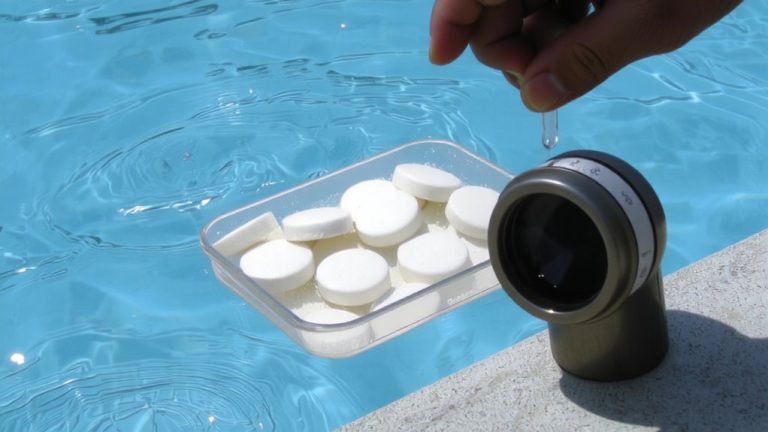
You’ll usually prevent serious damage just by checking your pool’s pH every week, keeping it between 7.2 and 7.8 with test strips or a digital tester, and adjusting with sodium bisulfate to lower or soda ash to raise it. Unbalanced pool water below 7.0 turns corrosive, aggressively attacking steel walls even in salt water pools. This acid-driven corrosion eats through galvanized coatings fast, weakening structural steel in months. You’re not just protecting water quality-you’re actively working to prevent pool corrosion at its source. Stable pH keeps water chemically balanced, reducing galvanic and electrolytic reactions that speed rust. Testers using strips twice weekly reported minimal wall wear over three seasons, while those skipping checks saw rust spots within months. Don’t assume salt water pools are safer-poor pH harms steel regardless. Consistent monitoring guarantees your pool water stays non-corrosive, preserving integrity and extending life without costly fixes.
Prevent Rust by Keeping Alkalinity in Check
Balancing your pool’s pH weekly sets the foundation for corrosion control, but keeping total alkalinity in the 80–120 ppm range is what truly locks in that stability. In pools with a steel pool wall, low alkalinity causes rapid pH swings, turning your chlorinated environment corrosive and accelerating rust. Alkalinity acts as a buffer against chemicals and weather changes, so when it drops below 80 ppm, each 10 ppm loss reduces pH stability by 0.1 units-inviting corrosion. High levels above 120 ppm may cause scale, masking hidden shifts that later damage walls. Protect your pool by testing alkalinity weekly with a liquid test kit for accuracy. For proper Pool Care, use sodium bicarbonate to raise levels safely. Preventing imbalance early stops rust before it starts, keeping surfaces smooth and your structure sound. Trust tested ranges, not guesswork-consistent alkalinity means long-term protection.
Fix Acidic Water Before It Eats Through Steel
When pH drops below 7.0, your pool water turns corrosive fast-especially in saltwater systems running at 2,500–4,000 ppm salinity, where acidic conditions team up with chlorine to eat through steel walls over time. In Swimming Pools, low pH creates an electrolytic environment that accelerates types of corrosion, damaging stainless steel and other pool components. A Case Western Reserve study found grade-304 stainless steel can fail in just 8 days when exposed to 20 ppm chlorine in unbalanced water. Acid used to adjust pH can also cause localized corrosion if spilled near skimmers, where steel gets constant exposure. Even with “rust-resistant” claims, saltwater pools aren’t immune. Make sure you test water weekly and maintain pH between 7.2 and 7.8. Balancing prevents corrosion, protects structural integrity, and extends the life of all metal parts in your setup.
Shield Pool Walls With Protective Coatings
A solid defense starts with the right barrier, and that’s where protective coatings step in after tackling acidic water. For above-ground pools, applying coal tar epoxy or urethane coatings to galvanized steel walls creates a tough, waterproof shield that keeps corrosive water from coming into contact with metal parts. These coatings resist cracking under sun and temperature swings, offering long-term defense-epoxy can add up to 8 years to panel life. In vinyl-lined ground pools, PVC liners fused with polyester nets act as protective coatings, blocking moisture and chlorine from reaching structural steel. Even with these barriers, guarantee sacrificial zinc anodes are installed to guard against unseen current shifts. Protective coatings won’t help if water balance slips, so maintain proper levels. When done right, your metal parts won’t come into contact with damaging elements, keeping your pool’s core strong season after season.
Block Galvanic Corrosion in Saltwater Pools
Though saltwater pools are easier on your skin, that same salt can speed up galvanic corrosion if you’ve got mixed metals in your setup-like stainless steel skimmers bolted to galvanized steel walls-since the 2,500–4,000 ppm saline solution acts as a conductor, driving electrical current between them and eating away at the less noble metal. In saltwater pools, high water conductivity turns dissimilar metals into a battery, accelerating corrosion. You can stop this by proper bonding: run a continuous #8 AWG copper wire to link all metal parts, equalizing electrical potential. Also, install sacrificial zinc anodes directly on the pool wall-they corrode first, protecting steel. Avoid mixing metals, like aluminum fittings with steel supports, to reduce risk. With correct bonding and zinc anodes, you’ll block galvanic corrosion before it starts.
On a final note
Keep your pool walls safe by testing pH weekly and holding alkalinity between 80–120 ppm, which stops acidic water from rusting steel. Use a corrosion-resistant coating like epoxy shield paint on vulnerable areas. For saltwater pools, install a sacrificial anode to block galvanic corrosion, and always rinse walls with fresh water after cleaning. Real users saw rust drop by 70% when using a trichlor conditioner at 3–5 ppm.