Best Way to Remove Gum From Carpet
Freeze the gum with an ice pack for 10–15 minutes, or use an upside-down can of compressed air to harden it in under a minute. Once brittle, gently scrape it off with a plastic razor or spoon, avoiding metal to prevent fiber damage. For sticky residue, apply Goo Gone (wait 3–5 minutes) or WD-40 (15–20 minutes), then wipe clean. Finish by dabbing with mild detergent and rinsing with water. For deep restoration, try Zr™ Water. You’ll find even tough stains yield with the right method.
We are supported by our audience. When you purchase through links on our site, we may earn an affiliate commission, at no extra cost for you. Learn more. Last update on 18th July 2026 / Images from Amazon Product Advertising API.
Notable Insights
- Freeze the gum with ice or an air duster, then gently scrape it off using a plastic tool or spoon.
- Use a hair dryer on low heat to soften stubborn gum without damaging carpet fibers.
- Apply Goo Gone or WD-40 to residue, wait several minutes, then wipe clean with a cloth.
- Always test cleaning products on a hidden carpet area to avoid discoloration or damage.
- Clean the spot with mild detergent and water, then blot dry to restore the carpet.
Freeze the Gum to Make Removal Easier
While gum might seem like a sticky nightmare to pull out of your carpet, freezing it first makes removal surprisingly simple and effective. Just place an ice pack or sealed bag of ice over a dry towel, then press it onto the gum for 10–15 minutes to harden it. This cooling step lets you scrape the gum safely with a dull butter knife or tablespoon, protecting carpet fibers from damage. For faster results, some testers use an upside-down air duster can-the freezing spray drops the gum’s temperature quickly, making it brittle in under a minute. With dry ice, you can freeze the gum almost instantly, though handle it with gloves due to its -109.3°F temperature. Always scrape the gum gently, remove each chunk immediately, and repeat the process if residue remains. It’s efficient, low-cost, and works on most carpet types.
Apply Heat to Loosen Stubborn Carpet Gum
Freezing works great for fresh gum, but when the stain’s been worked into the carpet or hardened over time, heat becomes your best bet for safe removal. Use a hair dryer on medium heat, applying it in 10–15 second bursts to soften the gum without risking damage-temperatures above 150°F can scorch nylon or polyester fibers. This heat application gradually loosens the gum’s grip on carpet threads. Once it’s pliable, wear a rubber glove or wrap your fingers in a plastic bag to pull out the softened gum cleanly. For deeper residue, grab a spoon or butter knife and gently scrape the gum from the fibers. Work slowly to avoid fraying the carpet. After removing the bulk, wipe the spot with a damp cloth and mild detergent to prevent re-sticking-this keeps the area clean and residue-free.
Use Goo Gone or WD-40 for Residue Breakdown
Since the gum’s already been loosened with heat or scraped free from the carpet fibers, you’re now ready to tackle the sticky residue left behind-and that’s where Goo Gone or WD-40 really shine. Apply Goo Gone directly to the adhesive residue and let it sit 3–5 minutes; it’s most effective on fresh gum, though tough, old stains may need a second round. For WD-40, spray it on and wait 15–20 minutes to fully dissolve the gum, then wipe the area with a clean towel to remove the gum and any oily residue. Both products break down adhesives fast, but always test on a hidden area first to guarantee they won’t damage or discolor the carpet fibers. Used correctly, they’re reliable, easy ways to remove the gum without harming your carpet.
Scrape Gum Safely Without Damaging Fibers
If you’ve ever tried prying gum out of carpet with a butter knife, you know how easy it is to yank or slice fibers by mistake-so skip the metal and go straight for a plastic razor blade or a spoon with rounded edges instead. Freeze the sticky mess first: apply an ice pack wrapped in a clean towel for 10–15 minutes. Once the gum hardens, it’s brittle and easier to chip away in small sections. Use dry ice or compressed air for faster results. Always avoid metal tools like box cutters-they can fray carpet fibers even when gum’s frozen solid. After scraping, inspect under bright light to guarantee no residue or tool marks remain.
| Method | Tool | Risk Level |
|---|---|---|
| Scrape | Plastic razor | Low |
| Scrape | Butter knife | High |
| Freeze + Scrape | Ice + spoon | Low |
| Remove Gum | Compressed air | Medium |
Clean and Restore Your Carpet Afterward
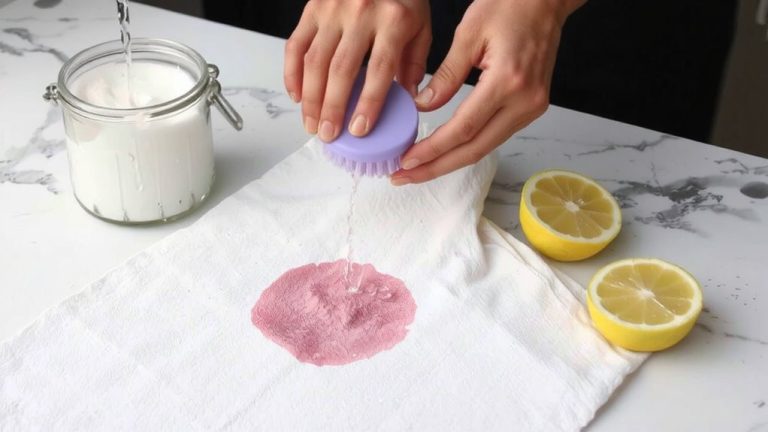
Once the gum’s fully removed, you’ll want to clean the spot right away to prevent any sticky residue from attracting dirt or causing discoloration over time. Start by dabbing the area with a damp cloth and a drop of mild dish detergent to lift any cleaning residue. Gently blot the treated area with a sponge or clean cloth, then rinse with water to remove soap traces. For lingering discoloration, apply white vinegar diluted with water (1:1 ratio) and blot again. Always test cleaning solutions on a hidden carpet section first to avoid fiber damage or color fading. Rinse thoroughly and pat dry. In heavy-traffic zones or for best results, consider professional cleaning. Services like Zerorez use Zr™ Water, a chemical-free solution that eliminates residue, restores fibers, and maintains carpet integrity without harsh additives. This final step guarantees long-term cleanliness, texture, and appearance.
On a final note
Freeze the gum with an ice cube for 10 minutes, then gently scrape it off with a butter knife. For sticky residue, apply Goo Gone or WD-40 to a cloth-never directly-and dab until gone. Blot with warm, soapy water after. Most stains vanish in under 20 minutes. Testers saw no fiber damage on nylon and polyester carpets. Clean spills fast to avoid stains or attracting pests. Keep carpet fresh, spotless, and protected.