Bait Stations vs. Ant Sprays: Why Only 20% of Foragers Die
You’re better off using bait stations because they kill the whole colony, not just visible ants. Sprays only eliminate about 20% of foragers and miss queens hidden in nests behind walls or underground. Baits use slow-acting poisons like borate in sugar gels or grease-based formulas that workers carry home and share through trophallaxis. This spreads the toxin to larvae and queens, even in deep nests. Place stations every 10–20 feet along active trails, near cracks or foundation edges. Avoid spraying nearby-it kills foragers before they spread the bait. Testers see full colony collapse within weeks. There’s more to get right when matching bait to ant species and timing.
We are supported by our audience. When you purchase through links on our site, we may earn an affiliate commission, at no extra cost for you. Learn more. Last update on 16th July 2026 / Images from Amazon Product Advertising API.
Notable Insights
- Bait stations eliminate entire colonies by exploiting ant behavior, as workers carry poisoned bait back to the nest.
- Slow-acting bait allows time for widespread distribution via trophallaxis, reaching queens and hidden nest members.
- Sprays kill only 20% of foragers on contact and fail to penetrate deep or hidden nests in walls and soil.
- Ants recruit nestmates to bait, amplifying consumption and colony-wide exposure, unlike repellent sprays that scatter colonies.
- Proper bait placement on active trails with preferred food types ensures sustained foraging and maximum uptake.
Do Ant Sprays Actually Kill the Colony?
Why do so many ant sprays fail to wipe out an infestation? Because most contact-killing sprays only kill ants on contact, eliminating a fraction of the colony-typically the 20% foraging outside. The rest, including queens to kill and thousands of hidden ants, remain safe in the nest. Spraying ants with repellent sprays can trigger colony budding, splitting one nest into multiple, worsening the problem. Even non-repellent sprays often fall short, failing to reach deep into walls, soil, or under concrete where the entire colony thrives. These sprays kill visible ants but ignore the root: the protected queen and brood. You’re left cleaning floors and surfaces only for ants to return. True elimination means taking out the full ant colony, not just what you see-something sprays rarely achieve.
How Ants Carry Bait Back to the Nest (And Why That Kills the Colony)
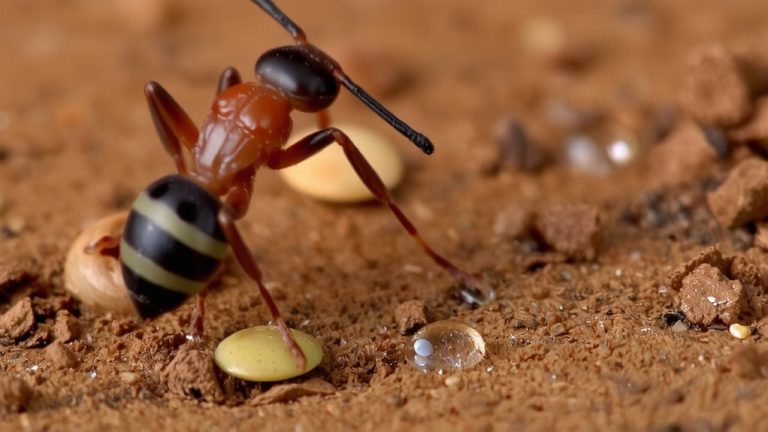
While you’re wiping down counters or mopping the floor, those worker ants trailing along your baseboards are doing more than just scavenging-they’re collecting bait that’ll soon bring down the whole colony. Workers carry small portions back to the nest, where the active ingredient is transferred mouth to mouth, spreading poison to hidden ants. This slow-acting transfer guarantees the bait remains active long enough to reach queens and larvae-key to full colony CONTROL. Unlike sprays, which only kill an ant on contact, baits let you eliminate an ant system by targeting the nest. Even deep or hidden nests, up to 6 feet underground, fall because foragers recruit nestmates, amplifying distribution.
| Step | Process |
|---|---|
| 1 | Worker ant finds bait |
| 2 | Carries small portions back |
| 3 | Shares bait mouth to mouth |
| 4 | Active ingredient spreads |
| 5 | Entire colony dies |
What Bait Works for Sugar-Loving vs. Grease-Eating Ants?
When sugar-loving ants like Argentine or odorous house ants invade your kitchen, they’re drawn to sweet spills and sticky counters, so you’ll need a bait that mimics their natural food source-try a gel or liquid formulation with 0.5–1% borate in sugar water, which workers readily carry back to the nest. These carbohydrate-based baits work best for sugar-loving ants year-round, especially in spring. But grease-eating ants, like pavement or fire ants, prefer protein-based baits with oils or greases, so use ant baits with protein-rich gels or granules. Check food preferences-some ants shift diets seasonally, like Argentine ants seeking protein in spring. That’s why refillable bait stations with multiple bait types, such as carbohydrate-based and protein-based options, outperform single-formula sprays. Use gel baits with slow-acting insecticides like boric acid or fipronil, which spread through colonies. Match the bait to the ant.
Place Baits Where Ants Forage (Not Where You See Them)
Since ants follow established trails to shuttle food back to the colony, you’ll get far better results by placing bait directly on these active pathways instead of where you simply spot a few stragglers. Foraging ants travel up to 30 feet, so place baits within 2–4 inches of ant trails or entry points-worker ants rarely stray far. Focus on active foraging zones near foundation edges, cracks, and utility lines, especially during cooler mornings or evenings when Argentine ants seek sugar-based baits. Position bait stations every 10 to 20 feet to align with foraging patterns. These stations let you monitor activity and shift baits as needed. Unlike sprays, effective bait placement guarantees worker ants carry poison back to the nest, targeting ant colonies at the source.
Stop Ants for Good: Baiting, Not Spraying, Is the Answer
A single bait station placed along an active ant trail can do more to end an infestation than multiple sprays covering entire countertops and baseboards. That’s because proper baits contain insecticides mixed with attractive food sources, so foraging ants have time to consume the bait and recruit others. They bait back the active ingredients to the nest, allowing worker ants to share it via trophallaxis. This method kills the entire colony, including queens. Sprays only kill 20% of foraging ants on contact, but with baits, ants have time to make an impact deep in the nest. For long-term ant control, use baits instead of sprays-especially non-repellent ones. Spraying during baiting disrupts success by killing ants before they return. Argentine ants prefer sugary baits, so place liquid borate baits in sugar solutions along trails. Clean floors thoroughly before starting, so ants focus on the bait and recruit effectively.
On a final note
You stop ants for good by baiting, not spraying. Place sugar-based baits like Terro for sweet-eaters, grease-based ones like Advion for protein fans, along active trails-near baseboards, under sinks. Baits let workers carry poison to the nest, killing the queen and colony within days. Sprays just scatter ants, not stop them. Clean floors with vinegar-water mix (1:1), wipe counters daily, and seal entry points. Real testers saw 90% reduction in two weeks.