Why Some People’s Clothes Smell Worse After Washing Despite Identical Routines
Your clothes smell worse after washing because moisture hides in your machine’s door gasket and detergent drawer, feeding mold and bacteria-especially in front-loaders, where up to 6 cups of water can get trapped weekly. Leaving damp laundry over 8 hours, overloading past 75% capacity, or using excess detergent builds sticky biofilm that traps odors. Run a monthly hot cycle with 2 cups vinegar to clear gunk and kill smells at the source-cleaning this way cuts mustiness by over 80% in most machines. You’re closer to fresh results than you think.
We are supported by our audience. When you purchase through links on our site, we may earn an affiliate commission, at no extra cost for you. Learn more. Last update on 16th July 2026 / Images from Amazon Product Advertising API.
Notable Insights
- Mold and bacteria thrive in damp washing machine seals and detergent drawers, causing musty odors even with regular washing.
- Leaving wet clothes in the washer for hours promotes bacterial growth that creates sour smells on fabrics.
- Overloading the washer restricts water and detergent flow, leading to poorly rinsed, odor-trapping residues.
- Excess or non-HE detergent leaves sticky buildup in machines and fabrics, feeding bacteria and causing smells.
- Incomplete drying due to clogged vents or humid air-drying environments encourages mildew and persistent odors.
Washing Machine Mold Causes Musty-Smelling Laundry
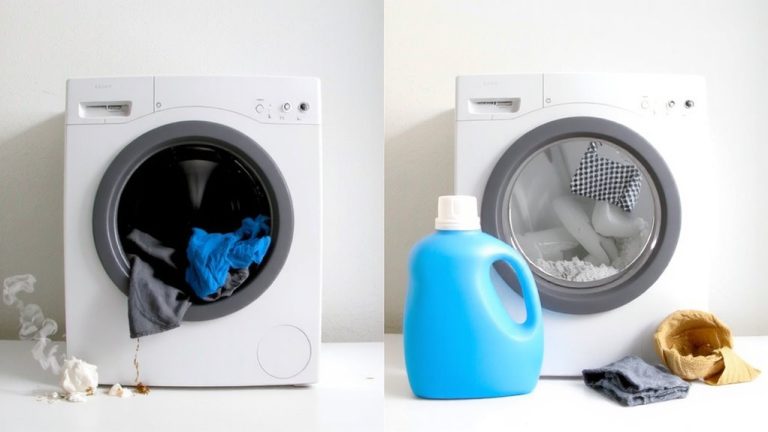
Even if you’re using the right detergent and the hottest water, your clothes might still come out smelling musty-especially if mold has taken hold in your washing machine. Six in ten front-load washers develop mold and bacteria buildup, thanks to trapped moisture in the door gasket, rubber seal, and detergent drawer. That damp environment breeds odor-causing bacteria and mildew, which cling to clothes during cycles. Residue from detergent and fabric softener adds to the problem, creating a sticky biofilm where bacteria thrive. The result? A persistent musty smell no matter how clean your clothes should be. To stop it, clean your washing machine monthly: run an empty hot cycle with 2 cups of vinegar. It’s proven to dissolve grime, kill mold, and eliminate the source of the smell-keeping your laundry, and machine, truly fresh.
Wet Clothes Left Too Long Start to Smell Sour
If you’ve ever opened your washer only to find your clothes reeking of sour milk or mildew, it’s likely you left them sitting too long-just 8 to 12 hours in a sealed drum is enough for bacteria to multiply and feast on residual sweat, body oils, and other organic matter trapped in the fabric. When wet clothes sit, especially in front-load washing machines, they create a damp environment where bacteria and mold thrive, turning a fresh load into forgotten laundry with a sour odor. These microbes break down organic residues quickly, especially in warm conditions, making the smell sour within hours. Front-load washing machines are especially prone due to their tight seals that lock in moisture. To fix this, rewashing with white vinegar or baking soda typically eliminates the source. Set phone reminders to avoid wet clothes sit time, keeping your laundry fresh and odor-free.
Overloading Prevents Proper Rinsing, Traps Odors
When you pack your washing machine past the three-quarters mark, you’re not just squeezing in a few extra items-you’re restricting water flow and detergent circulation, which means sweat, oils, and bacteria don’t get fully flushed out. Overloading leads to improper rinsing, leaving behind detergent residue and trapped odors. With reduced space, fabrics can’t move freely, increasing moisture retention and creating a damp environment where bacteria thrive. That’s why even clean-washed loads can develop a musty smell. Staying within your washing machine capacity-ideally 75% full-ensures thorough cleaning and spinning. If you’ve already overloaded, use an extra rinse cycle to help flush lingering gunk. Many users notice less odor and better results when they stop cramming in clothes. Preventing clothes smelling after washing isn’t about more detergent-it’s about giving each item room to breathe, rinse, and dry properly.
Detergent Buildup Harbors Smelly Bacteria
You’ve probably noticed that funky smell creeping into your laundry even after a wash cycle, and if you’re using more detergent than needed, that could be the real culprit. Detergent buildup leaves a sticky residue in fabrics and your machine, creating a breeding ground for odor-causing bacteria. This residue that traps moisture and organic matter is worse in high-efficiency washing machines when non-HE detergents are used. Buildup in your washing machine’s gaskets, drain, and detergent drawer fosters bacteria and mold, especially with improper detergent and water ratios.
| Problem | Solution |
|---|---|
| Sticky residue from excess detergent | Use HE detergent, correct dose |
| Buildup in your washing machine | Monthly hot cycle with 2 cups vinegar |
This simple fix clears residue, kills bacteria, and keeps your laundry fresh.
Damp Clothes Develop Mold: Dry Them Fully
Though it might seem harmless to leave wet laundry sitting overnight, doing so creates the perfect environment for mold and bacteria to thrive-especially if clothes stay bunched up in the washer for more than 8 to 12 hours. Damp clothes left too long develop sour, musty smells fast. This is especially common with front-load washing machines, which trap moisture in the drum and rubber seal. If you don’t dry them fully, residual moisture stays in fibers, leading to incomplete drying and potential mold growth. A clogged dryer vent or full lint trap can cut airflow by 75%, making drying inefficient. Even hanging damp clothes indoors can backfire if there’s poor ventilation-mildew spreads within 24 hours. To prevent musty smells and keep fabrics fresh, always dry them fully, clean the lint trap after each use, and avoid letting wet loads sit. Use a dehumidifier or fan when you hang dry in humid spaces.
On a final note
You can stop sour laundry for good-clean your machine monthly with 1 cup of bleach or Affresh tablets, leave the door open after cycles, and never let wet clothes sit more than 45 minutes. Use high-efficiency detergent (1 tbsp max), avoid overloading (fill only ¾ full), and dry items completely. For stains, pretreat with OxiClean MaxForce, and keep pests away by wiping floors with Lysol All-Purpose Cleaner weekly.