Why Sandstone Patios Fade and Crumble Over Time: Lifespan Expectancy and Warning Signs
Your sandstone patio fades and crumbles because UV rays break down iron oxides in tan or brown stones, dulling color in 2–5 years, especially with 6+ hours of sun. Water seeps into pores, freezes, expands by 9%, and cracks unsealed stone. Foot traffic accelerates wear, while moss and efflorescence signal trapped moisture. Clean monthly with pH-neutral soap or diluted bleach, seal every 3–5 years-or yearly if water soaks in fast-with a breathable penetrating sealer to cut absorption by 90%. Grey types like Kandla last longer. Spot fading, grittiness, or white powder early, and you’ll catch problems before they spread.
We are supported by our audience. When you purchase through links on our site, we may earn an affiliate commission, at no extra cost for you. Learn more. Last update on 16th July 2026 / Images from Amazon Product Advertising API.
Notable Insights
- UV rays degrade iron oxide pigments, causing tan and brown sandstone to fade within 2–5 years of sun exposure.
- Freeze-thaw cycles cause trapped water to expand, leading to cracking, spalling, and surface deterioration.
- High foot traffic and soft stone composition accelerate erosion, especially in sandstone with high silica void content.
- Salt and moisture crystallize in pores, increasing internal pressure and contributing to crumbling and efflorescence.
- Poor drainage and organic debris promote moss growth, staining, and long-term structural damage.
Why Do Sandstone Patios Fade and Crumble?
While you might not notice it right away, years of sun, rain, and foot traffic take a real toll on your sandstone patio. This sedimentary rock made from compacted sand grains is durable but vulnerable. Sandstone paving absorbs water easily, and when freezing temperatures hit, trapped moisture expands, causing spalling and surface flakes. UV rays break down iron oxide pigments, fading tan, brown, and yellow tones over time. High-traffic zones wear faster, especially in softer stones with high silica void content, leading to uneven, gritty textures. Unsealed areas absorb stains from leaves, oil, and fertilizers, trapping moisture and inviting algae. Salt from deicers or coastal air crystallizes inside pores, increasing internal pressure and spurring delamination. Regular cleaning with pH-neutral stone cleaners, not harsh chemicals, helps maintain integrity. Proper sealing every 2–3 years reduces water absorption by up to 90%, dramatically slowing deterioration.
Signs of Sandstone Patio Deterioration
You’ll likely start noticing problems with your sandstone patio through subtle but telltale changes in appearance and texture, especially if it’s been exposed to years of weather and use. Dark wet patches and moss growth mean your sandstone paving is absorbing moisture, common in wet climates where drainage is poor. That gritty feel underfoot? It’s surface flaking-erosion from foot traffic wearing down the natural stone. Check for white powdery efflorescence; it signals water’s pushing minerals to the surface. Over time, vibrant tan or brown tones fade as UV rays break down iron oxides, especially in Indian and Egyptian sandstone. Edges cracking or spalling? That’s freeze-thaw damage building up. These signs mean it’s time to assess your cleaning routine, avoid harsh chemicals, and consider sealed protection to preserve integrity.
Why Porous Sandstone Suffers Water Damage
Because sandstone’s natural pores act like tiny highways for water to travel through, your patio’s exposure to rain or sprinklers can lead to deeper damage than you might realize, especially without proper protection. Porous sandstone readily absorbs moisture, which carries dissolved minerals that leave white efflorescence stains when water evaporates. When trapped water freezes, it expands, forcing sand grains apart and causing cracks, spalling, and flaking. In coastal areas, saltwater crystallization increases internal pressure, worsening water damage over time. Without proper drainage, standing water feeds moss, mildew, and algae, accelerating surface wear. A breathable penetrating sealer-like silane-siloxane-repels moisture without trapping vapors, maintaining durability. Testers using 30-second sealers saw up to 70% less water absorption after three years. Regular cleaning with pH-neutral cleaners prevents buildup, while avoiding acid-based products preserves integrity.
How Sunlight Fades Sandstone Patios
Though you might not notice it right away, constant sun exposure can slowly drain the life from your sandstone patio, especially if it’s a warm tan, yellow, or brown variety rich in iron oxide pigments. UV rays break down these pigments, causing your sandstone paving to fade within 2–5 years, particularly in areas with over 6 hours of daily sun. You’ll see the natural look dull fast, especially with Indian or Egyptian sandstone. But grey and silver types, like Kandla grey, resist UV damage much better-often keeping their color for over a decade. Wondering how long does sandstone paving last before fading? It depends, but applying a UV-resistant sealer can cut color loss by up to 50%, preserving both appearance and value without altering the stone’s natural look.
Stop Algae, Moss, and Organic Stains
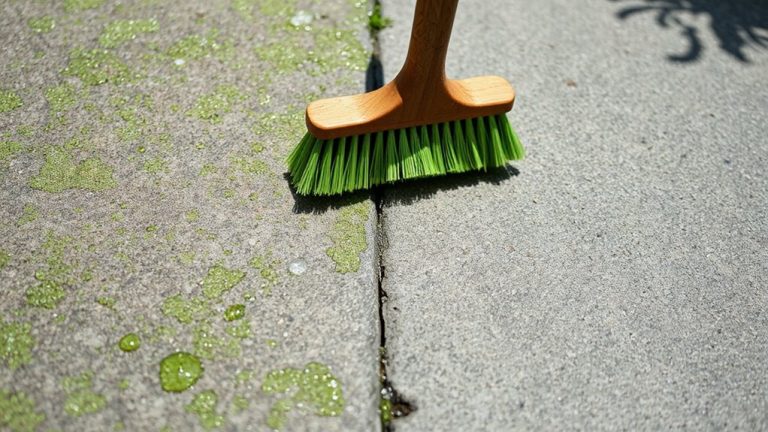
A well-maintained sandstone patio resists more than just fading-it also stays free of unsightly algae, moss, and organic stains that thrive in its porous surface. Since sandstone is a natural stone made of compressed sand grains, it’s highly absorbent, making your paving vulnerable to moisture and organic debris like leaves or pet messes. In wet climates, unsealed patios often develop dark patches and surface growths within 6–12 months. Prevent this by sealing with a breathable penetrating sealer-it reduces moisture absorption by up to 80%, blocking the damp conditions algae and moss love. Clean spills fast and sweep monthly to stop buildup. For existing stains, mix equal parts water and household bleach, apply, wait 30 minutes, then rinse thoroughly. This natural cleaning solution lifts stubborn organic stains without damaging your paving.
Can Freeze-Thaw Cycles Destroy Sandstone?
Ever wonder why your sandstone patio starts cracking after just a couple of winters? Freeze-thaw cycles are likely the culprit. When water seeps into the porous surface of your natural stones and freezes, it expands by up to 9%, creating internal pressure that leads to cracks, spalling, and delamination. Repeated cycles worsen the damage, especially in low-density sandstone or areas with frequent temperature swings above and below 0°C. If you’re in a region with harsh winters or near saltwater, the risk increases-salt crystallization adds even more pore pressure. Freeze-thaw cycles can destroy sandstone over time, and protecting your patio requires careful attention. While cleaning helps maintain appearance, structural harm runs deeper, so prevention matters. A breathable penetrating sealer reduces water absorption by up to 90%, making it one of the most effective defenses against freeze-thaw destruction.
How to Protect and Prolong Sandstone Patio Life
Since moisture and surface buildup are the biggest threats to your sandstone patio, sticking to a simple but consistent cleaning routine makes a noticeable difference over time. Clean monthly with soapy water or a 1:1 bleach-water solution, leaving it for 30 minutes before rinsing, especially in wet climates. Avoid harsh chemicals and pressure washing-they damage the stone. Instead, lightly brush and hose down often, making certain to prevent algae and moss. Choose dense paving material like Kandla grey for better durability. Apply a breathable penetrating sealer every 3–5 years, or annually if water absorbs in under a minute. Proper sub-base and drainage prevent pooling and spalling.
| Care Step | Recommendation |
|---|---|
| Cleaning | Monthly, with mild soap or bleach |
| Sealing | Every 3–5 years, or yearly if needed |
| Best paving material | Kandla grey, Raj green |
| Prevent damage | Avoid pressure washing, make certain drainage |
On a final note
You can keep your sandstone patio looking fresh with regular cleaning using a pH-neutral stone cleaner, like Lithofin Easy-Clean, and a 120-psi pressure wash every 12–18 months, testers say. Remove algae fast with a 3:1 water-to-bleach mix, then seal with a breathable impregnator (e.g., Storm Dry) every 3 years. Watch for cracks or flaking-these warn of freeze-thaw strain or pest erosion behind joints.