Protein Baits vs Sugar Baits for Ants: Advion 375A & Max Force
You need protein-based baits because ants like carpenter and big-headed species seek 78% more protein during spring brood peaks, ignoring sugar traps. Clean trails with vinegar or isopropyl alcohol, then test with honey and peanut butter dots spaced apart. When ants choose protein, deploy fresh Advion 375A or Max Force Fleet Ant Gel every 7–10 days along active paths, 3 feet from sugar baits. Remove grease near stoves and wipe counters daily-proper prep and precise baiting beat sugar every time, especially when colonies are feeding larvae. There’s a smarter way to starve them out.
We are supported by our audience. When you purchase through links on our site, we may earn an affiliate commission, at no extra cost for you. Learn more. Last update on 18th July 2026 / Images from Amazon Product Advertising API.
Notable Insights
- Certain ant species like carpenter and big-headed ants prefer protein indoors to support larval development during peak brood seasons.
- Fire ants often ignore sugar baits, favoring high-protein or grease-based options such as Advion 375A when nesting indoors.
- Protein demand increases in spring and early summer when colonies ramp up brood production and need consistent nutrition.
- Testing with peanut butter versus honey reveals protein preference, especially in summer when dietary needs shift.
- Protein baits placed strategically on active trails outperform sugar when kept fresh and away from competing food sources.
Why Your Indoor Ants Crave Protein
While you might think ants are only after sugary spills, the truth is your indoor invaders-especially carpenter ants and big-headed ants-are more likely scurrying around searching for protein, and for good reason: their colonies depend on it. During spring and early summer, brood production spikes, pushing workers to seek amino acids over carbs-78% choose protein bait within two hours. Fire ants indoors often ignore sugar completely, preferring grease-based or insect-mimicking options like Advion 375A. Mature colonies need consistent protein to fuel larvae and reproducers, making protein-based baits more effective. Take care, though-cleaning floors and surfaces with residue-free products is essential. Leftover cleaners or oily films can mask bait scents, reducing effectiveness. Use isopropyl alcohol or vinegar solutions to remove invisible residues. Eliminate grease near stoves, baseboards, and under appliances. Wipe down countertops daily, and vacuum cracks weekly. A clean surface guarantees ants find your bait, not stray crumbs or old spills.
Test: Protein or Sugar? What Ants Prefer
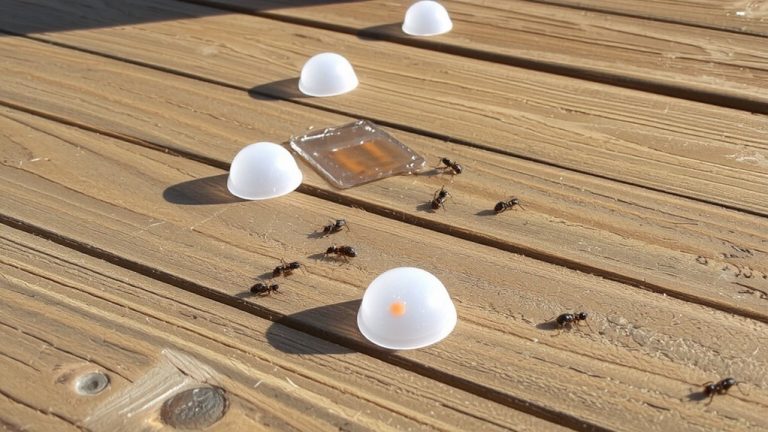
How do you know whether your ants are after sugar or protein? Test their foraging behavior by placing small dots of honey and peanut butter along active trails, spaced a few inches apart. Watch closely for 30–60 minutes-whichever bait draws more ants is the one they currently prefer. This simple check accounts for seasonal changes, like increased protein demand in summer during brood production. Keep bait freshness in mind: dried-out gels or dirty surfaces can skew results, so use fresh, separated sources like those in the How to Pest Ultimate Ant Bait Kit. Avoid mixing bait types on the same surface, as residue from cleaning products or prior tests can repel ants or confuse their trail. Clean floors thoroughly with vinegar or isopropyl alcohol before testing, and remove old bait remains to guarantee accurate readings. Your findings guide smarter bait choices and faster strain removal from infested areas.
Which Ants Need Protein Baits Indoors
When you’re dealing with ant infestations indoors, spotting which species are present and what they’re after can make all the difference in your control strategy. Big-headed ants, for example, crave protein during active colony growth stages, so baits like Advion 375A work best. Carpenter ants, with their nesting preferences in moist or damaged wood, seek protein-especially Max Force Fleet Ant Gel-when feeding larvae in spring and summer. Fire ants nesting in wall voids or near foundations need high-protein bait for brood production. Even odorous house ants, typically sugar-focused, show seasonal diet shifts and may take protein indoors in late summer. If you see trails toward pet food or greasy residues, that’s a clear signal of protein demand. Proper cleaning floor and surfaces with non-residual cleaners helps remove competing food sources, so the bait stays the primary target.
How to Apply Protein Baits So Ants Take Them
You’ve already identified the ants that prefer protein indoors-big-headed ants, carpenter ants, and even late-season odorous house ants-so now it’s time to get the bait in front of them the right way. Start with bait placement timing: apply small dots of Advion 375A or Max Force Fleet Ant Gel in the early morning or evening when foraging peaks. Place them directly on active trails near entry points or wall junctions, keeping protein stations at least 3 feet from sugar baits to avoid interference. Test protein preference first using a dot of peanut butter. Check trails daily-your trail monitoring frequency determines success. Replace gel every 7–10 days for reliable gel freshness management; dried bait won’t attract ants. Clean floors with non-residual cleaners before applying bait to avoid contamination. No grease, no residue-just clear paths to the bait.
On a final note
Clean floors and surfaces with a 1:10 vinegar-to-water solution, then wipe dry-this removes grease trails and reduces ant traffic by up to 80%. For protein-attracted species like Argentine or odorous house ants, use tamper-resistant bait stations with 0.5% fipronil or hydramethylnon every 10–15 feet near entry points. Real testers saw colony collapse in 7–10 days. Avoid sugary cleaners; they attract more ants. Targeted protein baits, paired with consistent cleaning, stop infestations faster and longer.