Using Selective Herbicides to Eradicate Nutsedge Without Hurting Bermuda Grass
You can stop nutsedge without harming your Bermuda grass by using selective herbicides like SedgeHammer (halosulfuron-methyl), which targets both yellow and purple nutsedge at the 3- to 8-leaf stage. Apply it with a non-ionic surfactant (0.25% v/v) for up to 30% better control, especially when soil temps are above 70°F. Mow carefully-avoid cutting 2 days before and after treatment. One application gives 80–95% kill, but a second dose at 6–10 weeks knocks out late sprouts. There’s more where that came from.
We are supported by our audience. When you purchase through links on our site, we may earn an affiliate commission, at no extra cost for you. Learn more. Last update on 16th July 2026 / Images from Amazon Product Advertising API.
Notable Insights
- Use Certainty or SedgeHammer to selectively kill nutsedge without harming established Bermuda grass.
- Apply herbicides when nutsedge reaches 3- to 8-leaf stage for best control during active growth.
- Include a non-ionic surfactant at 0.25% v/v to improve herbicide penetration and effectiveness.
- Reapply treatment after 6–10 weeks to target late-emerging nutsedge from dormant tubers.
- Avoid mowing 2 days before and after application to maximize herbicide uptake.
Identify Nutsedge Early to Save Your Bermuda Grass
While most people mistake nutsedge for a grassy weed, you can stop it in its tracks if you know what to look for right away. Nutsedge has a triangular stem-roll it between your fingers and you’ll feel the edges, unlike Bermuda grass’s round, hollow stems. Its leaves grow in threes, are stiffer, brighter green, and form a sharp V with a strong center rib. You’ll want to identify nutsedge early, because yellow nutsedge pops up in late spring with light green blades and yellow-brown seed heads, while purple nutsedge appears in summer with darker foliage and reddish-purple spikes. Both spread fast-patches can exceed 10 feet wide in one season-via underground tubers and rhizomes. Spotting them early means you can act before they take over, setting the stage for precise, effective treatment that keeps your Bermuda grass healthy and thriving.
Pick a Selective Herbicide for Nutsedge in Bermuda Grass
Your best bet for tackling nutsedge in Bermuda grass is a selective herbicide like Certainty or SedgeHammer, both proven to knock out yellow and purple nutsedge without harming your turf. Certainty herbicide (sulfosulfuron) delivers reliable control, while SedgeHammer, powered by halosulfuron-methyl, offers strong knockdown during warm, moist growth periods. For maximum effectiveness, apply when nutsedge reaches the 3- to 8-leaf stage and repeat after six weeks.
| Product | Active Ingredient | Surfactant Required |
|---|---|---|
| Certainty | Sulfosulfuron | As labeled |
| SedgeHammer | Halosulfuron-methyl | Non-ionic surfactant (0.25% v/v) |
| Both | Selective for Bermuda grass | Enhances leaf penetration |
Always add a non-ionic surfactant to SedgeHammer to cut through waxy foliage and boost uptake.
Use Halosulfuron-Methyl to Kill Nutsedge Safely
When conditions are warm and moist, and you’re dealing with stubborn nutsedge in your bermudagrass, halosulfuron-methyl is your go-to solution for safe, selective control. This potent nutsedge killer targets both yellow and purple nutsedge without harming established bermudagrass, as long as you follow the proper application rate. Apply it when weeds have 3 to 8 leaves, ideally after watering the lawn the day before to boost uptake. Halosulfuron-methyl works best during active growth, delivering 80–95% control with one treatment. For complete results, a second application 6–10 weeks later tackles late-emerging tubers. Skip mowing 2 days before and after to maximize foliar absorption. Used correctly, halosulfuron-methyl gives you precise, reliable sedge control-keeping your turf healthy and your lawn thick and weed-free.
Apply Herbicides to Target Nutsedge in Bermuda Grass
Since nutsedge thrives in warm, moist conditions, hitting it with the right herbicide at the right time makes all the difference in protecting your bermudagrass. Use selective postemergence herbicides like Certainty (sulfosulfuron) or SedgeHammer (halosulfuron-methyl) to kill nutsedge plants without damaging turf. Apply when soil temps are above 70°F and weeds are actively growing-late spring to early fall. For best results, include a non-ionic surfactant at 0.25% v/v to help the herbicide penetrate the waxy leaf surface, boosting control by up to 30%. Avoid mowing two days before and after application to maximize uptake. Always check the label for rates-SedgeHammer works at 0.27–0.75 oz per acre, often needing just one or two treatments. This is your most effective weed strike-targeted, precise, and safe when you follow every detail.
Prevent Regrowth With Cultural Practices
Though herbicides knock down visible nutsedge, lasting control hinges on changing the conditions that let it invade in the first place. You’ve got to tackle weeds by improving soil drainage-install sub-surface drains or regrade to fix poorly drained areas where nutsedge thrives. Mow your Bermuda grass, the right grass type for your region, at 0.5 to 1.5 inches to thicken the canopy and shade out new shoots. Irrigate deeply but infrequently, no more than once every 3 to 5 days, to avoid soggy surfaces. Apply 1 to 2 lbs of nitrogen per 1,000 sq ft monthly during the growing season, guided by soil tests, to fuel strong growth. Keep thatch under 0.5 inches with regular dethatching or core aeration-thick thatch shelters weeds. These cultural practices boost weed control, making your lawn a fortress against nutsedge regrowth.
Stop Irrigation Issues That Favor Nutsedge
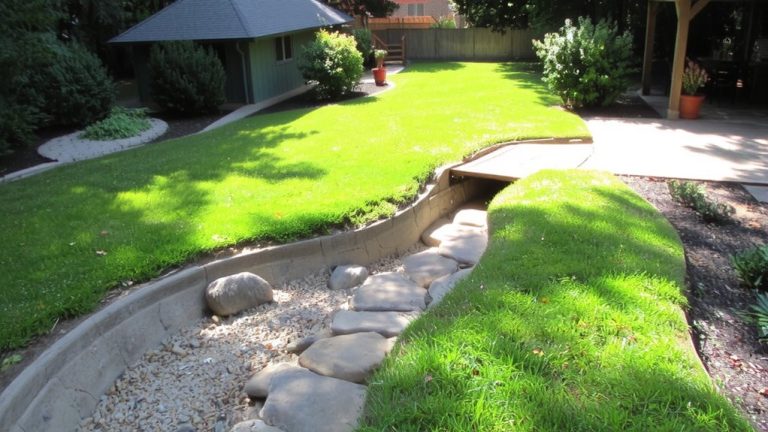
If you’re battling nutsedge, fixing your irrigation is non-negotiable-this weed thrives in soggy soil, so overwatering or poor drainage isn’t just a minor issue, it’s a five-star invitation for invasion. Nutsedge (Cyperus esculentus) loves poorly drained soils and consistent moisture, making over-irrigation a top culprit behind its spread. You’ve got to correct irrigation issues like leaky heads or daily watering that keep the soil saturated. Instead, water deeply but infrequently-let the top 1–2 inches dry out between sessions. That stress slows nutsedge, which hates droughty conditions. Install drainage tiles or re-grade flat areas to redirect runoff and eliminate standing water. These smart fixes tackle irrigation issues at the root, drying out hotspots where nutsedge gains a foothold. With better timing and proper drainage, you’ll make life hard for nutsedge and easier for Bermuda grass to thrive.
When DIY Fails: Next Steps for Nutsedge Control
You’ve adjusted your irrigation, fixed the drainage issues, and given your Bermuda grass the upper hand by drying out those soggy patches-yet the nutsedge is still winning. When DIY fails, it’s time to bring in the Best Weed killers like SedgeHammer, which uses halosulfuron-methyl to target nutsedge (Cyperus rotundus) without harming your lawn. This weed killer works best when applied during active growth, from late spring to midsummer, in soil above 70°F. For real results, plan on multiple rounds-every 4 to 6 weeks-since nutsedge survives through tough underground tubers. Pair each application with better drainage and drier soil to tilt conditions in Bermuda’s favor. A solid program can deliver 90–95% control, but full cleanup may take 18–24 months. It’s slow, sure work-no quick fix, just consistent, proven science.
On a final note
You’ve got this: hit nutsedge early with halosulfuron-methyl, like SedgeHammer, for safe, effective control. Apply at 0.75 oz per 1,000 sq ft when weeds are young, and water it in after 24 hours. Keep bermuda healthy with mowing at 1 inch, proper spacing, and avoid overwatering-soggy soil invites sedge. Pair treatments with sharp blades and dry conditions, and reapply in 3–6 weeks if needed. Stay consistent, and you’ll win the fight without harming your turf.