Inspecting Multiport Valve O-Rings Annually to Prevent Internal Leakage Paths
You should check your multiport valve’s stem and lid O-rings every year to catch cracks, shrinkage, or compression wear before leaks start. Look for bubbles around the lid or wet seams-signs of failing O-rings. Cold climates and pH outside 7.2–7.8 speed up damage. Replace them with a Go-Kit (like Hayward SPX0710XBA), use silicone lube such as Jacks 327, and reassemble carefully. Doing this yearly, even if they look fine, keeps pressure stable and stops internal bypass. There’s more to get right for long-term performance.
We are supported by our audience. When you purchase through links on our site, we may earn an affiliate commission, at no extra cost for you. Learn more. Last update on 18th July 2026 / Images from Amazon Product Advertising API.
Notable Insights
- Inspect stem and lid O-rings annually for cracks, dryness, or compression to prevent internal leakage paths.
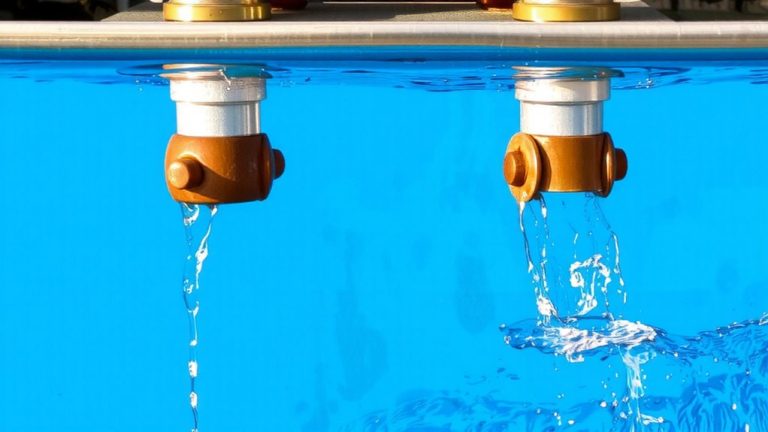
- Check for water bubbling around the valve lid during pump operation, indicating stem O-ring failure.
- Replace both stem O-rings and lid gasket yearly, even if no visible damage is present.
- Lubricate all O-rings with silicone or Teflon-based lube during reassembly to ensure a watertight seal.
- Avoid petroleum-based products and inspect more frequently if pool pH is outside 7.2–7.8.
Signs Your Multiport Valve O-Rings Are Failing
Wondering why your multiport valve isn’t holding pressure or water keeps seeping around the handle? You’re likely dealing with multiport valve leaks from failing O-rings. If water exits near the valve handle during operation, it’s probably due to worn Two small O-rings on the diverter stem. Wet spots around the lid seam? That points to a dried or cracked lid O-ring, especially if pressure stays under 10 PSI above baseline. A stiff or floppy handle often means internal parts like springs or seals have failed. Even if the valve body isn’t cracked, bad O-rings create internal bypass, worsening after backwash cycles. Cold climates speed up O-ring shrinkage, so annual replacement prevents leaks. Remember, Spider gaskets can look fine but still leak. Check all seals-even if no visible damage, dried-out rubber won’t seal.
Inspecting Stem and Lid O-Rings in Your Multiport Valve
To keep your multiport valve running smoothly, start by inspecting the stem and lid O-rings-they’re common trouble spots that can lead to leaks and pressure loss if overlooked. If you see water bubbling up around the valve lid when the pump runs, worn stem O-rings are likely the culprit, especially in cold climates where they shrink and lose seal. These small gaskets sit on the diverter shaft under the handle and keep water from escaping the system. The lid O-ring, which seals the cover to the valve body, should be checked yearly for cracks or dryness-replace it if damaged. Always use silicone or Teflon-based lube like Jacks 327 when reassembling; never petroleum-based products. Replacing both stem O-rings and the lid gasket takes about 20 minutes and can prevent having to replace the entire valve. Don’t confuse this fix with spider gasket issues-those require disassembling the multiport filter’s interior.
How to Replace Multiport Valve O-Rings
You’ll want to replace the stem O-rings every year, especially if you spot water bubbling up from the center of the valve lid while the pump runs-those quarter-sized seals tend to dry out or shrink over time, and cold climates make it worse. Always shut off the pump before removing the valve handle pin and lifting the cover to access the diverter stem. Replacing multiport valve o-rings starts here: remove the old stem O-rings and check for wear. Use a Go-Kit with correct sizes for your multiport valves, like Hayward SPX0710XBA or Pentair 261155. Install new ones and lubricate with silicone pool lube-never petroleum-based-to guarantee a tight seal and smooth diverter stem movement. Reassemble carefully, then check the pressure gauge for normal readings. If leaks persist, inspect the lid O-ring for cracks or misalignment.
| Part | Function |
|---|---|
| Stem O-rings | Seal around diverter stem |
| Valve handle | Controls flow direction |
| Lid O-ring | Seals lid to valve body |
| Go-Kit | Includes all needed seals |
Proper Lubrication to Prevent O-Ring Degradation
A well-maintained multiport valve hinges on one small but critical detail: proper O-ring lubrication. You should lubricate all O-rings annually using silicone or Teflon-based lubricants like Jacks 327 or Magic Lube to prevent drying, shrinking, and chemical breakdown. Never use petroleum-based lubricants or WD-40-these cause rubber O-rings to swell, crack, and fail prematurely. When reassembling, apply fresh pool-grade silicone lube to both the diverter stem O-rings and lid seal to guarantee smooth operation and a watertight fit. For Pentair FullFloXF models, lubricate internal diverter seals every six months to avoid handle stiffness and stem O-ring wear. Properly treated, O-rings last up to a year, but replace them annually if you notice cracking, flattening, or pH exposure outside 7.2–7.8.
When Repeated O-Ring Failure Means a New Valve
Even with regular lubrication using pool-grade silicone or Teflon-based lubes like Jacks 327, you might still face persistent O-ring failures-and when that happens, it’s a sign something deeper is wrong. Repeated O-ring failure, especially alongside handle misalignment or cracked housing, points to serious valve problems. If you’re replacing spider gaskets twice and still getting internal leaks, you likely have a warped valve seat. Chronic stem and cover O-ring failure suggests the valve body itself is compromised. Cracked PVC fittings or overtightened ports add stress, worsening seal issues. In Hayward or Pentair multiport valves, recurring spring and gasket wear often means structural defects or pressure imbalances. At this stage, patch fixes won’t cut it-you need to replace the entire valve. A new multiport valve saves time, prevents leaks, and restores reliable function without constant maintenance.
Why Bad O-Rings Lead to Leaky Multiport Valves
When your multiport valve starts leaking around the handle or showing signs of seepage along the cover seam, bad O-rings are usually to blame. Worn stem O-rings, located on the diverter stem beneath the handle, let water bubbling up during operation, especially in cold climates where rubber shrinks. These two small, quarter-sized seals degrade over time from age and chemical exposure, creating internal leakage paths. A damaged lid O-ring, which sits in the groove between the valve cover and body, causes water to weep under high pressure-typically above 8–10 PSI. Without proper O-ring lubrication, friction during reassembly accelerates wear. Use silicone lubrication every time to maintain seal integrity. For reliable performance, commit to annual replacement of all O-rings, including stem and lid seals, before minor damage leads to costly bypass issues.
On a final note
You should check your multiport valve O-rings every year to stop leaks before they start, especially where water meets the stem and lid. Use a silicone-based lubricant like Magic Lube, not petroleum, to keep O-rings supple and sealed. Replace cracked or flattened O-rings immediately with OEM-sized rings (typically 5/8″ inner diameter). If leaks persist after two replacements, the valve body is likely warped. Proper maintenance prevents internal leakage, saves water, and avoids costly backwash failures down the line.