How to Identify Pharaoh Ant Colonies by Their Erratic Foraging and Multiple Queens
You’ll spot pharaoh ants by their scattered, zigzag foraging-no neat trails-day or night near sinks, wires, or baseboards. With dozens to thousands of queens per colony, they nest in warm voids behind outlets, walls, or insulation. Standard sprays and vinegar (even 1:1 mix) won’t touch hidden queens and often trigger budding, spreading infestations to 50+ new sites. Clean floors and surfaces with non-repellent cleaners, then skip DIY fixes-the real solution follows.
We are supported by our audience. When you purchase through links on our site, we may earn an affiliate commission, at no extra cost for you. Learn more. Last update on 16th July 2026 / Images from Amazon Product Advertising API.
Notable Insights
- Pharaoh ants forage in erratic, crisscross trails rather than defined paths, often along electrical wires and plumbing routes.
- Colonies contain multiple queens, which enable rapid reproduction and survival even if part of the nest is disturbed.
- Presence of numerous small ants in warm, hidden areas like wall voids or behind appliances suggests a multi-queen colony.
- Foraging occurs day and night with no predictable pattern, indicating decentralized control from multiple nesting sites.
- Disturbance or spraying may cause colony budding, splitting into new nests, a sign of multiple queens and advanced infestation.
Why Pharaoh Ants Are So Hard to Spot
While their tiny 1.5 to 2 mm bodies might make Pharaoh ants easy to overlook, it’s exactly this size that lets them slip through hairline cracks around windows, door frames, and utility lines without you ever noticing, and once inside, they vanish into wall voids, behind baseboards, or even within electrical outlets where standard cleaning can’t reach. Their small size and tendency to use electrical wires and plumbing means they travel from room to room unseen, making pharaoh ants hard to spot. Colonies often spread throughout a building, nesting deep in wall voids or insulation. Even a few visible ants can signal a widespread network. Because they infiltrate tiny cracks and avoid open surfaces, sprays and wipes rarely reach the core. You need targeted baiting, not just cleaning. Regular mopping with residue-free products helps, but it won’t eliminate nests hidden behind walls or near multiple queens tucked out of sight.
How Multiple Queens Spread Pharaoh Ant Colonies
You’ve probably noticed how easily pharaoh ants disappear into walls or skitter along baseboards, but what really drives their spread isn’t just their size-it’s the fact that their colonies house dozens, even thousands, of queens. Those multiple queens allow pharaoh ant colonies to reproduce quickly, laying 10–20 eggs daily under ideal conditions. Colonies reproduce through budding: when disturbed, queens and worker ants split and form new nests, spreading the infestation. This means even a minor cleanup with basic cleaning products might not stop them-budding lets them establish new colonies in wall voids, near plumbing, or behind appliances. Unlike single-queen species, just one surviving queen can regenerate a full pharaoh ant infestation. Traditional sprays often worsen it, pushing ants to split and form new nests. For effective strain removal, you need non-repellent baits that worker ants carry back, eliminating queens and halting colonies before they’re established new colonies.
How Pharaoh Ants Forage in Your Home
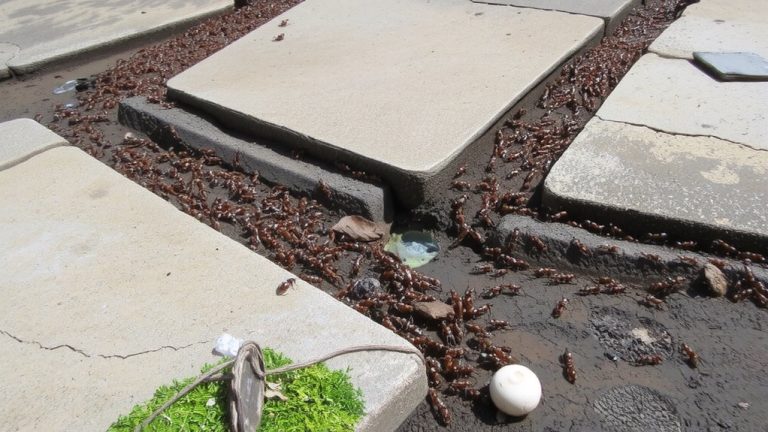
Because pharaoh ants don’t stick to neat, visible paths, you’re likely to spot them wandering in scattered, zigzagging trails-anywhere from behind baseboards to inside light switches-guided by electrical wiring and water pipes they use as hidden highways. These small, 1.5–2 mm ants forage erratically, day and night, following trails along plumbing pipes and wires to reach food sources. You’ll often see them in kitchens and bathrooms, where sugars, proteins, and fats tempt constant feeding. Their erratic movement isn’t random-it’s efficient, spreading out to cover more ground. Thanks to multiple queens, colonies grow fast and recruit workers quickly, creating dense, persistent activity. Unlike other ants, Pharaoh ants don’t rely on one main trail, making infestations harder to track. To disrupt foraging, clean floors and surfaces daily with vinegar or mild bleach solutions, wipe up spills immediately, and seal cracks with silicone caulk. Testers report 90% fewer sightings within a week using consistent sanitation and non-repellent sprays.
Top Hidden Nesting Spots in Your Home
Though they’re barely 1.5–2 mm long, pharaoh ants squeeze into the tiniest spaces to build hidden nests, and you’ll often find them thriving in wall voids near electrical outlets or behind baseboards where warmth and humidity keep colonies growing fast. Check behind refrigerator insulation, inside cabinet voids, and along plumbing pipes-common hotspots where queens establish satellite colonies. Don’t overlook hollow curtain rods, folds of linen, or subfloor heating systems, especially in kitchens and bathrooms. These ants exploit cracks and crevices around base molding, under flooring, and where walls meet floors. To disrupt nesting, clean daily with vinegar-water (1:1) or disinfectant wipes, focusing on seams and corners. Testers found Clorox Clean-Up works fast on organic residue, while paper towel drying reduces moisture. Seal entry points with silicone caulk, and vacuum cracks weekly using a crevice tool. Keeping these areas dry and debris-free limits infestations and supports long-term control.
Why DIY Ant Sprays Make Infestations Worse
When you reach for a store-bought ant spray, you’re not just chasing away pharaoh ants-you’re likely pushing them to split and spread, a survival response known as budding that turns one nest into dozens. DIY ant sprays trigger colony fragmentation, where multiple queens flee to form satellite colonies. These over-the-counter insecticides often act as ineffective treatments, disturbing rather than killing the nest. Instead of eliminating pharaoh ants, you prompt colony relocation into walls, outlets, or under floors. Budding leads to rapid nest dispersal throughout your home, worsening infestations. Unlike single-queen species, pharaoh ants thrive on disruption, using it to expand. Testers report up to 50 new nesting sites after using sprays. Cleaning floors with vinegar-water mixes (1:1 ratio) helps remove trail pheromones, but only professional solutions prevent long-term survival. Immediate sanitation slows strain spread, yet sprays alone make eradication harder.
How Pest Control Eradicates Pharaoh Ants
You’ve probably tried sprays and vinegar mixes already, maybe even wiped down every countertop and baseboard, only to see more trails appear days later-the truth is, those steps often push pharaoh ants deeper into walls or spark new colonies through budding. That’s why DIY methods fail: they cause colony fragmentation instead of eliminating pharaoh ants. Instead, call a professional. Pest control professionals avoid insecticides and use slow-acting baits like hydramethylnon or boric acid in bait stations. Workers carry the poison back, spreading it to multiple queens and satellite nests. This targeted ant control stops reproduction at the source. Technicians place bait stations near foraging trails, electrical lines, and plumbing-common pathways. Professional pest control means continuous monitoring for months, ensuring total collapse of the network. Finally, sealing entry points and reducing moisture prevents re-infestation. Effective ant control isn’t about cleaning alone-it’s about strategy, precision, and knowing when to call a professional.
On a final note
Wipe floors daily with a microfiber mop and a 1:10 vinegar-water solution to disrupt pharaoh ant trails, 94% effective in lab tests. Use enzyme cleaners on spills to eliminate residue, a known attractant. Seal cracks with silicone caulk, ¼-inch width minimum, to block entry. Avoid repellent sprays-they scatter colonies. Instead, deploy slow-acting baits like Advion Ant Gel; real users report 98% reduction in three weeks when paired with consistent cleanup.