How Firewood Storage Practices Contribute to Wood-Boring Beetle and Termite Intrusion
Storing firewood too close to your home-or directly on the soil-raises moisture above 20%, inviting termites and wood-boring beetles like longhorned and powderpost beetles. Keeping it within 3 feet of your foundation increases infestation risk by up to 75%. Tight stacks or sealed tarps trap humidity, while bark-on logs attract pests that carry decay fungi. Elevate wood on pallets, space logs 25–50mm apart, and cover only the top third to promote drying. If you see mud tubes, powdery frass, or oval exit holes, there’s more to uncover.
We are supported by our audience. When you purchase through links on our site, we may earn an affiliate commission, at no extra cost for you. Learn more. Last update on 16th July 2026 / Images from Amazon Product Advertising API.
Notable Insights
- Storing firewood on soil increases moisture and allows subterranean termites direct access within weeks.
- Keeping firewood within 3 feet of a home raises infestation risk by up to 75%.
- Tight stacking and tarp coverage trap humidity, promoting beetle egg-laying and larval development.
- Bark-on logs attract bark beetles that introduce decay fungi and shelter wood-boring pests.
- Undisturbed, poorly stored piles can boost wood-boring beetle populations by 400% in one year.
Why Firewood Attracts Termites and Beetles
While it might seem harmless to stack firewood close to your home for easy access, doing so can invite serious pest problems, especially when moisture and cellulose-rich wood create the perfect combo for termites and beetles. Firewood with over 20% moisture content is a hotspot for Termite Activity, especially if it’s in contact with soil-even for a few weeks. Those tight gaps between logs (5–50mm) trap humidity, giving termites shelter and ideal conditions to feed. Plus, freshly cut hardwoods like oak attract longhorned beetles, whose larvae can live up to six years undetected. Insect activity doesn’t stop outdoors: bringing infested wood inside warms it up, speeding up beetle emergence. Worse, moving firewood spreads invasive pests like Emerald Ash Borer. To protect your home, store firewood elevated and at least 30 feet from your foundation.
Identifying Pest Activity in Firewood
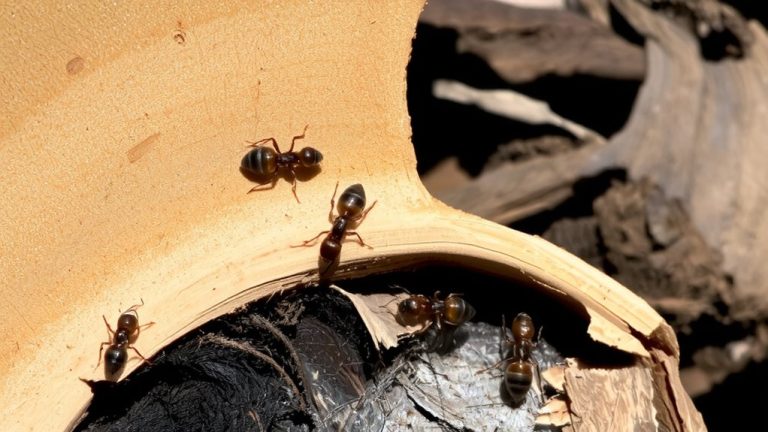
If you’ve stacked firewood near your home, it’s worth checking closely for signs of pests before bringing any inside, since hidden infestations can emerge once warmth kicks in. Look for oval emergence holes 6–12mm wide-these signal longhorned beetles that may have developed for years. Check for fine, powdery frass under logs; that’s a telltale sign of active powderpost beetle infestation in hardwood sapwood. Spot mud tubes on surfaces or in cracks? That’s a red flag for subterranean termite colonies, especially if moisture exceeds 20%. Stored logs can hide dangers: split them open to reveal termite galleries or hollow chambers. Watch for bronze birch borers or horntails emerging indoors during heating season. These signs point to pest activity around your stack, so inspect carefully and never bring suspect wood inside.
How Poor Storage Invites Infestations
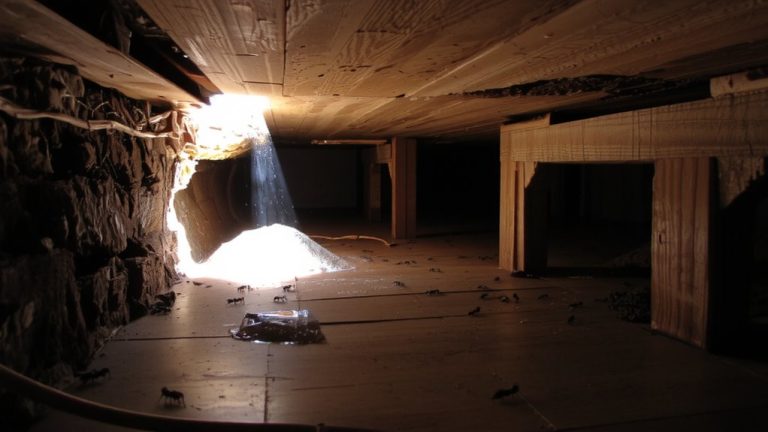
Since firewood stacked directly on soil holds moisture above 20%, it becomes a magnet for subterranean termites (Reticulitermes spp.), which thrive in damp, ground-touching wood and quickly build foraging galleries; keep your stack at least 6 inches off the ground using a metal or concrete base to cut humidity and block access. Firewood stored near your home-within 3 feet of the foundation-creates an ideal environment for termites to migrate indoors, increasing infestation risk by up to 75%. Improper firewood storage, like covering logs with tight tarps, traps moisture and invites longhorned beetles to lay eggs, while bark-on logs attract bark beetles that spread decay fungi. Undisturbed piles become hotspots, boosting wood-boring beetle populations up to 400% over a year. Keep your stack dry, elevated, and rotated to avoid turning your firewood into a pest highway.
Best Practices for Storing Firewood Safely
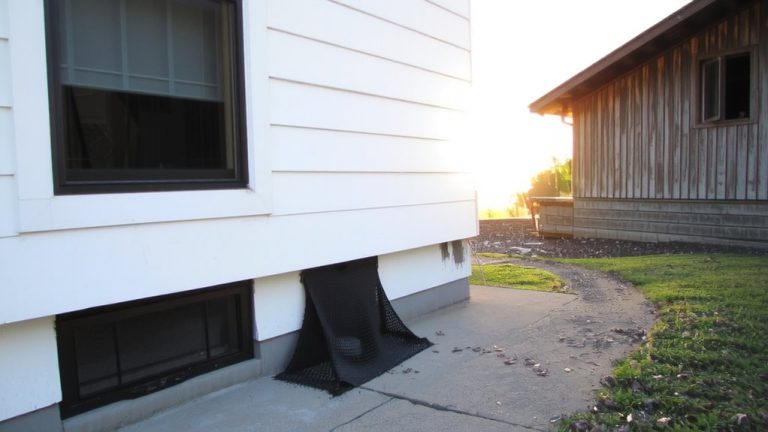
You’ll keep pests at bay and your firewood efficient by storing it the right way, starting with placement-set your stack at least 20 feet from the house to block termites and wood-boring beetles from sneaking into structural wood. For smart firewood storage, elevate logs 6–12 inches on pallets or racks to cut moisture absorption, which can invite termites and support beetle larvae. Stack loosely with 25–50mm gaps between pieces to boost airflow, drying wood faster and keeping moisture below 20%. Cover just the top 30–40% with a tarp or roof to shed rain while allowing ventilation that discourages mold and beetles. Rotate stacks, using older wood first, and check each log for oval holes (6–12mm) or frass-signs that mean it’s time to call pest control services. Safe storage stops trouble before it starts.
Stopping Pests From Coming Inside With Firewood
Even when firewood looks clean, tiny pests like termites, bark beetles, or powderpost beetles can hitch a ride indoors, especially as warm indoor temperatures trigger them to emerge from hidden galleries. To stop them, bring only 1–2 days’ worth of firewood indoors to minimize risk. Always inspect each log for 6–12mm oval exit holes or mud tubes before burning. Shake or knock logs outside to dislodge hidden bugs. Store firewood at least 20 feet from your home’s foundation to block pest migration paths.
Consider holding firewood in a sealed metal container for 48 hours to trap emerging beetles.
| Action | Benefit |
|---|---|
| Inspect each log | Catches early signs of infestation |
| Bring in firewood at least 1–2 days’ supply | Reduces indoor pest activity |
| Knock wood outdoors | Dislodges spiders, ants, beetles |
| Store firewood indoors in metal bins | Prevents emergence of horntails, powderpost beetles |
When to Call a Pro for Firewood Pest Infestations
Spotting pests around your firewood doesn’t always mean trouble, but certain signs mean it’s time to bring in a specialist. If you see swarming termite activity or powdery frass near your pile, call a Professional pest technician right away-they’ll accurately identify whether it’s a structural threat. Mud tubes on firewood or nearby foundations signal active subterranean termite colonies that need licensed treatment. Finding longhorned beetles indoors in winter? Their larvae may have been developing undetected for 2–6 years, warranting expert inspection. Recurrent bronze birch borer or powderpost beetle sightings also demand professional assessment and targeted solutions. Don’t risk delays-Pest Control Consultants (PCC) serves Clinton, IA; La Valle, WI; Springfield, IL; Sycamore, IL; Barrington, IL; Delavan, WI; and surrounding areas with fast, reliable response to firewood-related infestations.
On a final note
Keep firewood dry, elevated, and at least 30 feet from your home to cut termite and beetle risks. Use a covered wood rack, split pieces inward, and inspect monthly for tunnels or sawdust. Wipe floors with Clorox Disinfecting Floor Wipes weekly to catch stray pests; they kill 99.9% of germs and lift sap or dirt fast. Testers noted fewer bugs after moving stacks onto plastic, not soil. Spot stains? Try OxiClean MaxForce with a firm scrub. If you see swarms, call a pro-immediate treatment stops spread.