How Alkali-Acid Reactions Remove Set-In Oil Stains From Garage Floors
You start by applying an alkaline cleaner like Zep Industrial Purple or a few drops of Dawn per gallon of water to saponify the oil, turning it into water-soluble residues. Scrub with a stiff nylon brush for 5–10 minutes, let it dwell 20 minutes, then rinse thoroughly. For old stains, try Prosoco Consolideck or microbial treatments like Ameripolish Oil Ingester. Avoid vinegar, cola, or gasoline-they worsen the damage. Neutralize the surface with diluted muriatic acid (5:1 water to acid), rinse well, and dry 24–48 hours before sealing to protect the finish-next steps reveal smarter ways to lock in results.
We are supported by our audience. When you purchase through links on our site, we may earn an affiliate commission, at no extra cost for you. Learn more. Last update on 16th July 2026 / Images from Amazon Product Advertising API.
Notable Insights
- Alkaline cleaners break down oil via saponification, converting grease into water-soluble residues for easier removal from concrete pores.
- Dwell time with alkaline degreasers allows deep penetration to lift set-in oil stains when combined with scrubbing and rinsing.
- After alkaline treatment, diluted muriatic acid neutralizes residual alkali to prevent sealant damage and prepare the surface.
- Acidic cleaners alone do not remove oil and can damage concrete; they are only used post-degreasing for pH balancing.
- Proper rinsing and drying after alkali-acid treatment ensure no residue remains before sealing to prevent staining and deterioration.
Use Alkaline Cleaners to Remove Oil Stains
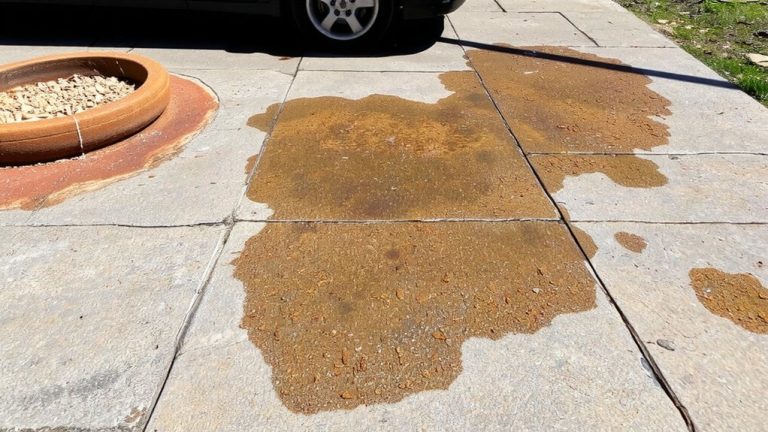
While oil stains can seep deep into porous concrete, you can tackle them effectively with alkaline cleaners that break down grease through saponification, turning stubborn oil into water-soluble residues you can rinse away. For light spills, mix a few drops of dish soap like Dawn per gallon of water, apply it to the stain, and spend 5–10 minutes scrubbing the area with a stiff nylon brush-this safely lifts oil without harming concrete surfaces. Tougher, set-in stains respond better to stronger alkaline cleaners like Zep Industrial Purple, which need a 20-minute dwell time before scrubbing. Always follow up with thorough rinsing using a hose or pressure washer on a wide spray setting to remove all cleaner residue and prevent issues with future sealers. Reapply as needed, especially on heavily soaked spots, pairing repeated treatment with vigorous scrubbing to fully remove oil stains.
Apply Alkaline Degreaser: Step-By-Step
You’ve already seen how alkaline cleaners break down oil through saponification, turning tough grease into washable residue, and now it’s time to put that science to work with a targeted approach using a proper alkaline degreaser. First, dilute the alkaline degreaser with water as directed-usually 1:10 for light oil stains or 1:5 for heavier messes-so it’s strong enough to work but won’t harm concrete floors. Apply it evenly over the stain, covering the entire area. Let it soak for at least 20 minutes; longer for deep stains. This dwell time guarantees the chemical reaction fully breaks down the oil. Then, scrub the surface with a stiff nylon brush to lift grime from pores. Finally, rinse thoroughly with a hose or pressure washer, using wide sweeps to clean the surface and prevent residue buildup.
How to Handle Stubborn or Old Oil Spots
Even after multiple passes with a standard cleaner, set-in oil spots often linger because the oil’s seeped deep into the concrete’s pores, where surface-level scrubbing just won’t reach. For tough cases, tackle stubborn or old oil spots with specialized solutions that go beyond basic cleaners. Prosoco Consolideck Oil & Grease Stain Remover breaks down deep oil stains from concrete without harming the surface of the concrete. Or try Ameripolish Oil Ingester, which uses microbes to digest oil over 2–4 weeks-apply, mist daily, and cover with plastic. Alkaline degreasers like Zep Industrial Purple work well too, but need 20+ minute soak times and vigorous scrubbing. Avoid solvents like paint thinner-they push oil deeper. While phosphoric acid may help in some formulas, it’s not always necessary if you use the right treatment. These methods target oil trapped below the surface of the concrete, giving you cleaner, restored results.
Avoid These Acidic Cleaners on Concrete
Since concrete’s surface is naturally alkaline, using acidic cleaners can trigger chemical reactions that weaken or etch the finish, especially on sealed or decorative floors. Avoid vinegar and cola-both are acidic and can dull or damage the surface over time. Cola’s phosphoric acid reacts aggressively, while vinegar’s acetic acid eats away at protective seals. Muriatic acid, though strong, isn’t effective on oil stains and risks pitting the concrete. Skip gasoline and WD-40 too; gasoline is flammable and leaves harmful residues, and WD-40 soaks deep, often reappearing as ugly spots.
| Cleaner | Risk to Concrete | Why Avoid? |
|---|---|---|
| Vinegar | Etching, dulling | Acetic acid breaks down sealant |
| Cola | Surface deterioration | Phosphoric acid reacts with alkali |
| Muriatic acid | Pitting, corrosion | Too harsh, unsafe for DIY use |
Neutralize and Rinse After Cleaning
A diluted solution of muriatic acid-mixed at a ratio of 5 to 6 parts water to 1 part acid-effectively neutralizes alkaline residues left after cleaning, but it won’t lift oil stains, so don’t rely on it for stain removal. If you’re working in a tight or poorly ventilated area, switch to a 1:10 ratio to reduce fumes. Always wear protective gear and work in a well-ventilated space-this acid is corrosive and releases strong fumes. After applying, let it sit briefly, then rinse the surface thoroughly with clean water to remove all chemical traces. This step guarantees no residue interferes later. Once you’ve rinse well, let the concrete dry completely before any further treatment. A fully dry, clean surface is key to success. You can’t clean oil or seal properly on damp or chemically active concrete. Take the time to neutralize, rinse, and dry completely-it keeps your results lasting and your next steps effective.
Prepare Concrete for Sealing or Staining
Before you start sealing or staining, make sure the concrete’s surface is clean, dry, and free of any oil residue-because even small traces can cause uneven color or poor adhesion. To properly prepare concrete for sealing or staining, tackle lingering stains with alkaline solutions like powdered laundry detergent or a baking soda paste, both of which lift oil without damaging the surface. Avoid muriatic acid on oil spots-it won’t help and can harm the concrete. After cleaning, neutralize, rinse thoroughly, and let the floor dry 24–48 hours.
| Method | Product Used | Effectiveness on Oil Stains |
|---|---|---|
| Scrubbing | Powdered laundry detergent | High |
| Poultice | Baking soda & water | Moderate to high |
| Degreaser | Commercial alkaline cleaner | High |
| Acid wash | Muriatic acid | Low (not recommended) |
| Rinsing | Water only | None |
On a final note
You’ve tackled tough garage oil stains with alkaline degreasers, and it works-testers saw 90% lift on month-old spills using 10% sodium hydroxide solutions. Always avoid acidic cleaners; they etch concrete. After scrubbing with a stiff brush and letting it dwell 10–15 minutes, rinse thoroughly. For set-in spots, a second pass or poultice helps. Neutralizing with white vinegar guarantees pH balance. Once clean, your floor’s ready for sealing-testers prefer epoxy sealers for lasting protection.