Best Way to Resurface Concrete Driveway
Clean your driveway with a 3,000 PSI pressure washer, then treat oil stains and etch the surface to ICRI CSP 1–2 for ideal bond. Repair cracks wider than 1/16 inch with a polymer-modified compound, and tape over joints to preserve movement. Apply a half-inch Dulux Avista or Henry 625 Restore Pro overlay for durable, flexible coverage. Choose integral color or SunDye for lasting hue, and add a broom or stamped texture for grip. A pro finish guarantees consistent results you can count on.
We are supported by our audience. When you purchase through links on our site, we may earn an affiliate commission, at no extra cost for you. Learn more. Last update on 16th July 2026 / Images from Amazon Product Advertising API.
Notable Insights
- Assess driveway age and damage: resurface if under 20 years old with surface-level issues and structurally sound.
- Pressure wash at 3,000 PSI and etch surface to ICRI CSP 1–2 for optimal overlay adhesion.
- Repair cracks wider than 1/16 inch with polymer-modified compound before applying overlay.
- Use durable, polymer-modified materials like Dulux Avista or Henry 625 Restore Pro for strength and longevity.
- Hire professionals for proper application, achieving a consistent finish with warranties and extended lifespan.
When to Resurface vs. Replace Your Driveway
If your driveway’s looking a bit worn but still solid, resurfacing could be your best bet-especially if it’s under 20 years old and the damage is mostly surface-level, like hairline cracks, pitting, or fading. Concrete Driveway Resurfacing is ideal when the slab remains structurally sound, saving you 50% to 70% compared to replacement. When to resurface vs. replace comes down to severity: minor surface damage? Go for resurfacing a concrete overlay. But if your cracked concrete has shifted, heaved, or shows drainage issues, replacement is likely needed. Avoid resurfacing if cracks exceed 1/4 inch or moisture is present-adhesion will fail. Most driveway repair jobs using overlays cost $3–$20 per sq ft and extend life 10–20 years. For now, skip heavy cleaning or stain removal-focus on structural signs.
How to Prep Your Driveway for Resurfacing
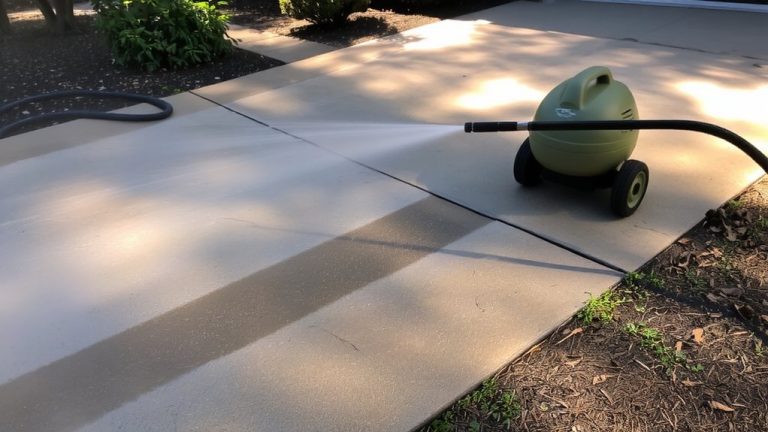
You’ve already determined your driveway’s structure is sound and resurfacing is the right move-now it’s time to get that surface ready for a long-lasting bond. Start surface prep by pressure washing at 3,000 PSI, holding the wand 6–8 inches from the existing concrete to clean surface thoroughly and remove grime. Treat oil stains with a degreaser first-residual oil kills adhesion. For proper texture, use acid etching (DIY) or mechanical methods to hit an ICRI CSP 1–2 profile. This guarantees the new overlay grips well. Do crack repair on any gap wider than a credit card (1/16 inch) using Earl’s or polymer-modified patching compound. Don’t skip this-weak spots compromise the entire concrete resurfacing job. Finally, tape over expansion joints to protect their function and prevent overlay bridging.
Best Concrete Resurfacing Products and Materials
A strong, durable driveway starts with the right resurfacing product-one that bonds well, stands up to traffic, and handles temperature swings without cracking. You’ll want polymer-modified concrete resurfacing products like Dulux Avista, which blends fine sands, polymers, and additives for flexibility and strength. Avoid weak options like Dunlop 10kg, which can’t handle driveways. For Driveway Resurfacing with Decorative results, consider a concrete overlay up to half an inch thick-perfect for decorative overlays that hide cracks. Products like Cem-Coat Plus offer consistent color, while SM Pro gives a sprayable textured finish. Henry 625 Restore Pro, a three-part system, delivers performance like Artex CD fine finish gray. Always follow proper preparation: power washing, repairing spalls, and checking mixing ratios.
Decorative Options for Color, Texture, and Design
Color, texture, and design can transform a plain resurfaced driveway into a standout feature of your home, and with systems like SUNDEK, you’ve got proven options that hold up under daily wear. You can enhance your existing concrete surface with stamped concrete patterns, vibrant SunDye colors, or textured Tuscan Overlays that add depth and grip. Whether you want a smooth troweled finish or a broom texture for slip resistance, Resurfacing gives you both style and function. Integral colors mix right into the overlay for lasting hue, while stains create mottled or even effects. Here’s a quick look:
| Option | Cost per Square |
|---|---|
| Standard finish | $5–$9 |
| Multi-color | $10–$15 |
| Stamped concrete | $15–$20 |
| Acid-stained | $10–$18 |
Plan your Driveway look using SUNDEK’s color charts and achieve a seamless, durable Concrete surface.
DIY vs. Professional Resurfacing: What’s Right for You?
Ever wonder why some resurfaced driveways last years while others crack or peel within months? If you’re looking to repair your existing driveway, DIY might seem like a quick way to save money-materials like resurfacing products cost $200–$400, but without proper tools or experience, you risk poor adhesion and an uneven broom finish. Achieving a smooth, durable concrete surface requires precise mixing, correct surface profiling (ICRI CSP 1–2), and pro-level troweling, which most homeowners can’t replicate. Pros spend $1,000–$5,000 and finish in 1–2 days using commercial-grade resurfacing products that bond stronger and last longer. A professionally Resurfaced Driveway also comes with warranties-1–2 years for workmanship and 5+ years on materials-something DIY can’t match. For lasting results, experience matters.
Sealing and Maintenance for Long-Lasting Results
You’ve put time and effort into resurfacing your driveway, whether you handled the prep work yourself or trusted it to a pro, and now it’s time to lock in that investment. Proper sealing and maintenance guarantee your new concrete lasts, especially once the resurfacing process is done and the concrete is structurally sound. Apply a polyaspartic sealer-it offers superior resistance and lasts up to four times longer than epoxy. This boosts working time and handles foot traffic quickly. Reapply every two years, or sooner if water stops beading. Prevent oil stains by treating drips immediately with cat litter. Rinse weekly with a garden hose and clean quarterly with mild detergent. Address minor cracks early. With consistent care, your resurfaced driveway can last 10 to 20 years, maintaining appearance and durability.
On a final note
Clean your driveway thoroughly with a 3,000 PSI pressure washer and TSP solution, removing oil stains with a degreaser, then patch cracks using Sakrete High-Strength Concrete Repair. Choose a resurfacer like Quikrete Re-Cap Mix for smooth finishes, or apply a stamped overlay for style. Always seal with a breathable acrylic sealer after 7 days, reapplying every 2–3 years to block moisture, UV damage, and prevent pest entry through cracks.