Best Way to Clean up Syrup
Start by scraping fresh syrup with a metal spatula at a 45-degree angle to push it toward the center, keeping it out of grout lines and cracks. On hard surfaces, follow with a sponge soaked in hot, soapy water-use real dish soap and near-scalding water for best results. For dried spills, sprinkle kosher salt or flour to harden the residue before lifting it. On carpet, blot with a mix of 1/2 tsp neutral detergent, 1 cup warm water, and 1 tbsp white vinegar, then cover with dry absorbent material for hours. For upholstery, dilute first with clear water, then apply a Wet Spotter (1 part glycerin, 1 part dish soap, 8 parts water) plus vinegar drops. Blot thoroughly after each step and let the area air dry completely to prevent mold or re-soiling, keeping your space clean and ant-free. More detailed methods are just around the corner.
We are supported by our audience. When you purchase through links on our site, we may earn an affiliate commission, at no extra cost for you. Learn more. Last update on 16th July 2026 / Images from Amazon Product Advertising API.
Notable Insights
- Scrape excess syrup immediately with a flat spatula at a 45-degree angle to prevent spreading.
- Use hot soapy water and a damp sponge to press on residue, avoiding smearing on hard surfaces.
- Apply salt to dried syrup to harden it, then scrape after letting it sit for one minute.
- For carpets, blot with a vinegar-detergent solution, rinse, and use absorbent material to draw out moisture.
- On upholstery, dilute with water, apply a mild wet spotter, and blot thoroughly before air drying.
Scrape Off Syrup With a Spatula
A good amount of syrup cleanup time gets cut in half the moment you grab a flat, rigid spatula and work it at a 45-degree angle across the spill, pushing excess toward the center for quick collection. You can easily scrape off syrup before it spreads, especially on hardwood or tile, using a metal spatula or even a paint scraper for stubborn patches. This method keeps syrup from seeping into grout or floor cracks, reducing pest risks. Testers found that combining a dough scraper with a spatula creates a squeegee effect, lifting nearly 90% of the mess in seconds. Save the wipe-down for later-don’t use hot soapy water yet. Just focus on removing bulk syrup first. Wax paper pressed over the pile afterward lifts trace amounts when flipped. Immediate scraping means less strain on surfaces and faster results. Your spatula becomes the most efficient tool in your cleaning arsenal.
Wipe Residue With Hot Soapy Water
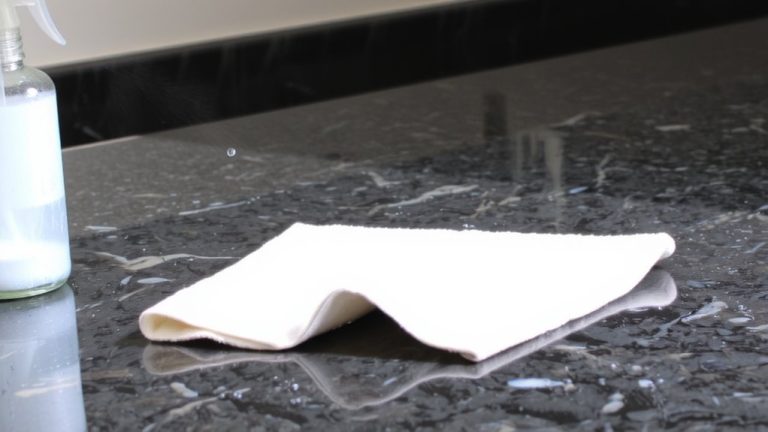
Now that you’ve removed the bulk of the syrup with a spatula, it’s time to tackle the sticky residue left behind. Grab a sponge soaked in hot soapy water-use real dish soap and hot water just shy of scalding-to clean up maple or pancake syrup effectively. Press the damp cloth onto the area instead of wiping right away; this lifts the residue without spreading it. You’ll need to repeat the press-and-soak step two or three times on tougher spots. Always wear rubber gloves to protect your hands from the hot water. This method works best on non-porous surfaces like countertops, laminate shelves, or tile floors. The heat dissolves the sugars while the soap cuts through stickiness, leaving no film behind. Properly applied, you’ll wipe residue clean without scratching or streaking.
Try Salt or Flour for Dried Spills
If the syrup’s already dried into a stubborn, glue-like film, don’t reach for the scrub brush just yet-start with something from your pantry. Sprinkle kosher or table salt over dried spills to draw out moisture and harden the residue, letting it sit for at least one minute before scraping. The salt makes cleaning up spilled syrup way easier by keeping it from smearing. For larger messes, like pooled maple syrup on tile, spread a full bag of flour to soak it up and solidify the gunk into a scoopable mass. Let it sit undisturbed-no touching-then lift most of it with a spatula and dustpan. You’ll be left with just a small sticky patch, not a full-on stain. Both salt and flour are cheap, safe absorbents that keep dried spills from turning into pest magnets. This trick works fast and beats scrubbing, especially on sealed floors and countertops.
Clean Syrup From Carpet and Upholstery
Tackle syrup spills on carpet or upholstery right away to prevent stickiness from turning into a full-blown stain or attracting pests. For a carpet syrup spill, scrape off excess with a spatula, then blot with a mix of 1/2 teaspoon neutral detergent, 1 cup warm water, and 1 tablespoon white vinegar. Rinse with clean water, blot again, and cover with a 1/2-inch layer of dry absorbent material, weighted down for hours. On upholstery, sponge with clear water first, then apply Wet Spotter (1 part glycerin, 1 part dish soap, 8 parts water) plus a few drops of vinegar using a medicine dropper. For wool or delicates, use a hydrocarbon-based cleaner like Guardsmans Afta-pretest first. Always blot with paper towels after each step, lift residue, brush pile, and let the area air dry completely to avoid mold or re-soiling.
On a final note
Wipe fresh syrup fast with a damp microfiber cloth, then use warm soapy water (1 tsp dish soap per cup of water) on hard surfaces. For dried spots, gently scrub with a soft brush after sprinkling baking soda or flour. On carpets, blot with a vinegar-water mix (1:3 ratio), then vacuum. Always dry thoroughly-sticky residues attract ants. Test cleaners in a small area first. These steps prevent stains and pests, keeping floors and surfaces clean, safe, and smooth to the touch.