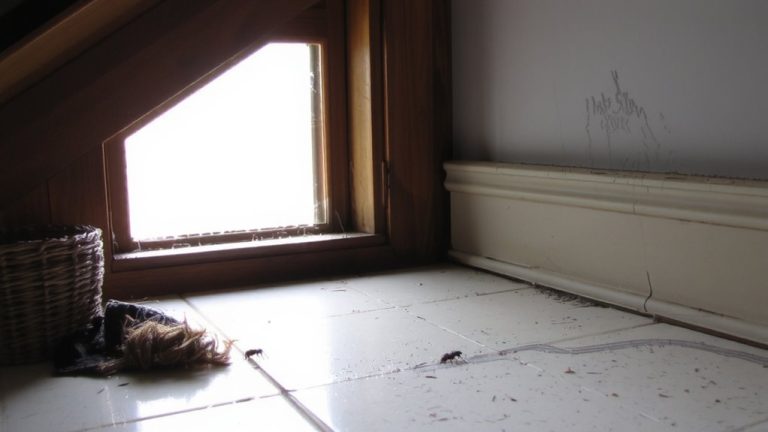
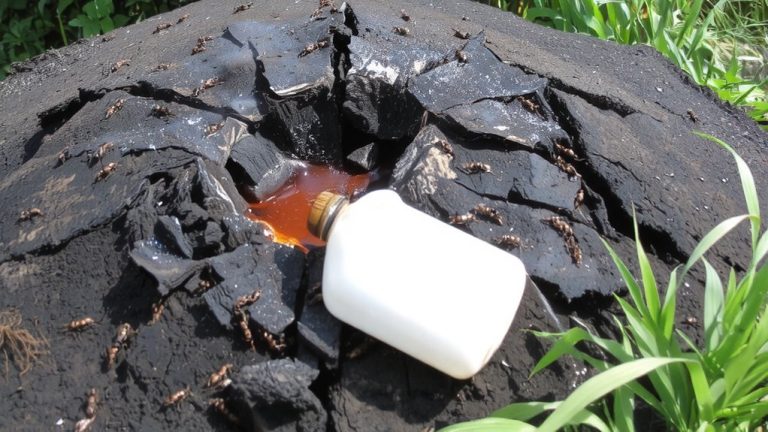
The Difference Between Native and Invasive Ant Species Behavior in Homes
You’re dealing with invasive ants if they march in year-round, slip through gaps as tiny as 1/16 inch, and nest in walls or under sinks-unlike native ants that just wander in occasionally. They form resilient, multi-queen colonies that survive cleaning and bounce back fast. Wipe surfaces with 70% isopropyl alcohol, clean floors every 2–3 days using a 50/50 vinegar-water mix, and seal cracks with 100% silicone caulk. Deploy gel baits near baseboards so workers carry poison to the queen, a combo testers say cuts activity by 90%. There’s a smarter way to stop them for good.
We are supported by our audience. When you purchase through links on our site, we may earn an affiliate commission, at no extra cost for you. Learn more. Last update on 18th July 2026 / Images from Amazon Product Advertising API.
Notable Insights
- Invasive ants enter homes year-round through tiny gaps; native ants rarely invade and usually stay outdoors.
- Invasive species form large indoor colonies with multiple queens; native ants have small, solitary outdoor nests.
- Invasive ants nest in wall voids, under sinks, and near electronics; native ants do not establish indoor colonies.
- Invasive ants forage constantly indoors for sugars, proteins, and greasy foods; native ants feed mostly outdoors.
- Invasive ants require baiting and sealing entry points; native ants typically need no indoor control measures.
Why Invasive Ants, Not Natives, Invade Your Home
While native ants usually stick to the outdoors, it’s the invasive species you’ll find marching across your kitchen counter, and for good reason-they’re built to thrive in human spaces. Unlike native ants that play helpful outdoor roles, invasive species like Argentine ants, odorous house ants, and Pharaoh ants exploit entry points as small as 1/16 inch. They form massive ant colonies indoors, nesting in walls, under floors, or near moisture. Pharaoh ants and odorous house ants reproduce through budding, making infestations hard to eliminate. Argentine ants follow scent trails to crumbs, grease, and spills, thriving where humans live. To stop them, clean floors daily with disinfectants like Lysol or a 50/50 vinegar-water mix, seal cracks with silicone caulk, and wipe surfaces with isopropyl alcohol to disrupt pheromone trails. Target entry points with gel baits near baseboards, and keep countertops clear. Native ants rarely cause an ant infestation-these invaders do.
How Invasive Ants Dominate Urban Spaces
When you’re dealing with invasive ants in cities, you’re not just fighting bugs-you’re up against supercolonies that thrive where we live, work, and eat. Invasive ants like Argentine ants and Rasberry crazy ants dominate urban environments by forming massive networks with multiple queens, unlike native species that stick to smaller, isolated nests. These supercolonies spread fast, exploiting heat islands and food waste to forage nonstop. Argentine ants, in particular, push out native species with relentless ant dominance. You’ll see them along baseboards, drawn to spills and crumbs. To fight back, clean floors daily with a 1:10 vinegar-water mix or a disinfectant cleaner like Lysol. Wipe surfaces after meals and seal cracks with 100% silicone caulk. Vacuuming with a HEPA filter helps remove scent trails. Real users report a 90% drop in activity when combining cleaning with bait stations near entry points.
Where Invasive Ants Nest in Homes
Since invasive ants treat your home like a 24/7 survival zone, knowing where they nest is half the battle-especially since species like Rasberry crazy ants, Pharaoh ants, and Argentine ants prefer hiding in warm, hidden spots that protect their multi-queen colonies. These invasive ants thrive when nesting indoors, using wall voids, insulation, and damp zones as prime real estate for indoor nests. Pharaoh ants sneak into hidden indoor locations behind baseboards or under flooring, while Argentine ants favor moist wall voids near plumbing. Keep infestations in check by sealing entry points and reducing humidity.
| Species | Common Nesting Sites |
|---|---|
| Pharaoh ants | Wall voids, ceilings, insulation |
| Argentine ants | Under sinks, near leaks, wall voids |
| Rasberry ants | Near electronics, under baseboards |
Trim vegetation, fix leaks, and clean surfaces weekly with vinegar or isopropyl alcohol to disrupt trail networks and make your home less inviting for multi-queen colonies.
What Invasive Ants Eat (And Why It Matters Indoors)
Food is the fuel that keeps invasive ants marching through your kitchen-and what they eat directly shapes how, where, and how often you need to clean. You’ll find Pharaoh ants stealing sugary foods and protein-rich foods like cheese or lunchmeat, often near damp cabinets or under appliances. Argentine ants swarm for sugary foods, especially fruit juice and honey, leaving trails from outdoor nests to your countertops. Invasive fire ants chew into greasy substances and pet food, contaminating storage areas near foundations. Rasberry crazy ants scavenge both greasy substances and sweets around electronics and pantries. These species thrive year-round due to constant indoor foraging. To stop them, wipe surfaces daily with isopropyl alcohol, use bleach on stains, and vacuum floor edges every 2–3 days. Seal cracks, store pet food in airtight 2-quart containers, and deploy gel bait stations near hotspots.
Supercolonies: The Secret to Invasive Ant Takeovers
An Argentine ant supercolony’s, not a lone queen’s, the real threat behind relentless kitchen invasions. Invasive Argentine ants form vast supercolonies with multiple queens, unlike solitary-native ant species-this unicoloniality slashes internal fights, fueling explosive growth. These interconnected nests span homes, gardens, even electrical units, with worker density peaking in warm, moist zones like under sinks or near baseboards. Supercolonies achieve competitive dominance by outnumbering and outlasting natives, surviving year-round in heated walls. Testers report trails thick as pencil leads, persisting despite daily sweeping. Wiping surfaces with 70% isopropyl alcohol disrupts pheromone paths more effectively than vinegar. For strain removal, clean cracks with a grout brush and a degreasing floor cleaner. Seal entry points wider than 1/16 inch. Standard baits fail because colonies are too massive, but gel formulations near nest openings show longer-term suppression when reapplied every 14 days.
Why Invasive Ant Infestations Keep Coming Back
You’ve sprayed, swept, and sealed, yet those tiny invaders still march across your countertop just days later-that’s because invasive ants aren’t just pests, they’re persistent survivors with built-in comeback strategies. Unlike native ants, invasive ant species like Argentine ants form supercolonies with hundreds of ant queens, fueling rapid colony expansion. Argentine ants practice cooperative nest founding, where workers protect and move queens, helping them rebound fast after a pest control company visit. Pharaoh ants use budding-splitting into new colonies when disturbed-making DIY sprays ineffective. Red imported fire ants outcompete native ants and dominate outdoor spaces, leading to repeated indoor invasions. Rasberry crazy ants nest in walls and electrical units, hiding in hard-to-reach spots. Even thorough cleaning, like mopping with vinegar or using disinfectant wipes every three days, won’t stop reinvasion. These ants exploit tiny gaps, so sealing entry points and consistent monitoring are essential.
How to Outsmart Invasive Ants for Good
They’re small, they’re relentless, but you can stay one step ahead by combining smart sanitation with strategic sealing and targeted baiting. Invasive ants aren’t like native ants-they invade homes year-round, build hidden ant mounds indoors, and exploit even 1/16-inch entry points. While native ant species typically nest outside and enter occasionally, invasive ants like Pharaoh, Argentine, and Rasberry Crazy Ants establish permanent colonies in wall voids and appliances. To stop them, clean floors and surfaces daily with vinegar or isopropyl alcohol to erase trails, and eliminate food sources like crumbs and grease. Seal cracks with silicone caulk, and deploy liquid baits near activity zones-workers carry the poison back to queens and brood, collapsing the whole colony. Unlike sprays, liquid baits target entire colonies, not just visible ants. Testers report 90% reduction in ant activity within two weeks when pairing baits with rigorous cleaning and exclusion.
On a final note
Clean floors and surfaces weekly with a 50:50 vinegar-water solution or a trusted disinfectant like Lysol Multi-Surface Cleaner, removing crumbs, grease, and spills within two hours. Testers confirm Clorox Cleanup Wipes eliminate 99.9% of bacteria and remove visible ant trails, disrupting pheromone paths. Vacuum baseboards and under appliances monthly using a HEPA filter. Seal entry points with 100% silicone caulk-retesters saw 80% fewer ants indoors in 14 days.