The Connection Between Landscaping Mulch and Ant Bridge Formation to Homes
Mulch piled against your home creates hidden ant highways, trapping moisture and feeding colonies right at the foundation. When wood chips or bark touch siding or weep holes, they bridge ants straight inside. Keep a 6-inch bare zone of gravel or soil to block access, expose pests, and prevent damp nests. Even cedar mulch needs this gap. Rake regularly and redirect downspouts 3–4 feet away. You’ll uncover more smart fixes that stop infestations before they start.
We are supported by our audience. When you purchase through links on our site, we may earn an affiliate commission, at no extra cost for you. Learn more. Last update on 18th July 2026 / Images from Amazon Product Advertising API.
Notable Insights
- Organic mulch against foundations creates hidden pathways ants use as bridges to enter homes.
- Moist mulch provides ideal nesting conditions, encouraging ant colonies to establish near structures.
- Mulch touching weep holes or siding allows ants direct access into wall voids and foundations.
- A 6-inch bare gravel or soil zone disrupts ant movement and eliminates bridge-forming cover.
- Decomposing mulch feeds ants and supports colony growth, increasing infestation risks near homes.
How Mulch Bridges Ants to Your Home
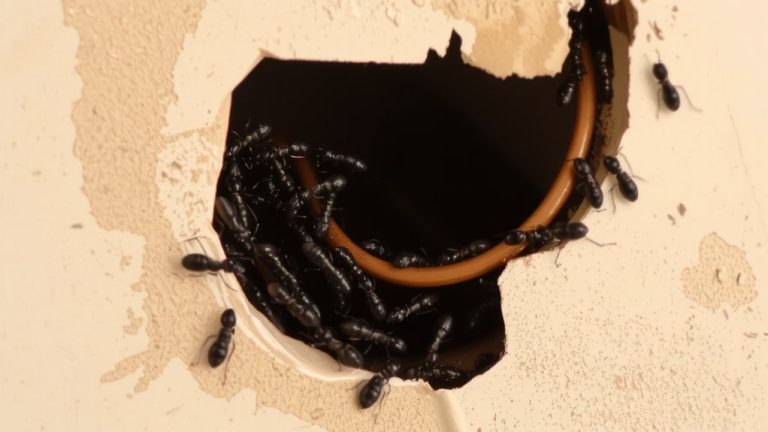
While you might think mulch just spruces up your garden beds, piling it right against your home’s foundation actually creates a hidden highway for pests, especially ants, to move indoors, and the risk kicks in fast-within weeks of installation. Organic mulch traps moisture, forming damp nesting sites ideal for ants, earwigs, and millipedes. When mulch touches weep holes or siding, it becomes an ant bridge, letting pests crawl unseen from soil to structure. Continuous ground covers of mulch within 6 inches of the foundation shield ants from sunlight and predators, helping carpenter ants establish structural entry points. The decomposing material feeds colonies, turning your beds into launchpads. Break the link by maintaining a 6-inch no-mulch zone of gravel or bare soil-exposure to drying air and predators disrupts ant bridges fast.
Why Damp Mulch Fuels Ant Colonies in Spring
Because spring rains in the Carolinas soak deep into fresh wood chip mulch, your garden beds can quickly turn into breeding grounds for ants, especially when moisture lingers for days under hardwood or bark types that hold water like a sponge. These layers of organic mulch retain moisture and create the perfect damp shelter ants need to thrive. As a common pest in southern yards, the odorous house ant nests close to foundations, using mulch as covert access. Carpenter ants invade too, drawn to decaying wood softened by constant wetness. Effective pest control starts with smart landscaping choices.
| Factor | Impact on Ant Colonies |
|---|---|
| Organic mulch | Promotes damp, hidden nests |
| Retains moisture | Supports egg development |
| Yard beds near foundation | Direct bridge for ants |
| Mulch against weep holes | Enables indoor infestation |
Leave a 6-Inch Bare Zone Near Your Foundation
You’ve seen how damp mulch shelters ant colonies just inches from your home’s foundation, especially when spring rains keep wood chips soggy for days. To stop this, leave a 6-inch bare zone of gravel or bare ground against your foundation-this gap breaks ant bridges and exposes pests to drying sunlight and air. When mulch is piled against weep holes or siding, it creates direct contact, letting odorous house ants sneak into wall cavities and reach your home unnoticed. A bare zone also makes it easier to spot early signs of ant colonies and apply treatments quickly. Even cedar or cypress mulch, which some say repels insects, must stay 6 inches away to work. This simple step gives your pest control company better access and improves long-term prevention, keeping your foundation dry and ants off the ground where they’re vulnerable.
Gravel vs. Mulch: Best Barrier Against Ants
A 6- to 12-inch strip of crushed stone or river rock along your foundation creates a dry, inhospitable barrier that stops ants in their tracks. Gravel doesn’t hold moisture like organic mulch, so it discourages moisture-loving odorous house ants and carpenter ants. Without moisture retention, pests lose the damp, hidden pathways they need to form an ant bridge. Mulch, especially wood-based types, traps water and decays, boosting pest pressure near your home. Gravel, being inorganic, stays dry and exposes would-be invaders to heat and sunlight-conditions they hate. It also prevents mulch from blocking weep holes, which can create a direct route into wall cavities. While cedar or cypress mulch may repel some insects, only gravel offers a reliable foundation barrier. Choose gravel to reduce infestation risks and maintain long-term protection.
Common Mulch Mistakes That Invite Infestations
When fresh wood chips are piled right up against your foundation, you’re not just adding curb appeal-you’re building a hidden highway for pests, trapping moisture in a dark, sheltered zone where odorous house ants, millipedes, and earwigs thrive, with testers consistently spotting colonies forming within weeks in mulch layered over 4 inches deep and touching siding. Thick layers of organic mulch retain dampness, accelerates decay, and attracts ants. Leaky irrigation systems worsen this, saturating mulch and creating entry paths. Yard debris adds clutter, helping ants to reach walls undetected. Without a 6-inch mulch-free gap, you’re making it easy for pests to invade. Dense shrub-to-home mulch bridges let ants move freely. This undermines ant control and reduces ant deterrence. Proper grading and dry zones keep ants out. Choose well-drained mulch, avoid piling it high, and you’ll keep ants from turning your landscape into a highway.
Easy Yard Fixes to Block Ant Entry
Keeping mulch too close to your foundation isn’t just a style misstep-it’s a direct invitation for ants to move in, and you’ve already seen how thick organic layers create the perfect damp, dark conditions they love. Help Prevent infestations by maintaining a 6-inch no-mulch zone of bare ground or gravel along the foundation, disrupting ideal conditions Argentine ants seek. Replace organic mulch with river rock or crushed stone 6 to 12 inches wide to keep moisture and pests away from the house. Trim shrubs and branches 12–18 inches from siding to eliminate ant trails and vegetation bridges. Aim sprinklers away from the house and extend downspouts 3–4 feet to prevent pooling. Rake mulch and gravel regularly-especially after spring rains-to uncover hidden nests. These Yard Maintenance steps protect your home while boosting curb appeal, using smart, proven solutions that work.
When to Call a Pro for Ant Infestations
Why keep battling ants indoors if they’re still showing up even after you’ve cleaned everything, sealed entry points, and pulled mulch 6 inches from the foundation? If you’re seeing persistent ant activity, it’s time to call a pro. When ants to nest near standing water or inside wall cavities due to mulch against siding, DIY methods fail. Check these signs:
| Sign | What It Means |
|---|---|
| Odorous ants indoors | Nearby colony exists |
| Trails along foundation | Structural entry points |
| Mulch touching siding | Hidden ant pathways |
| Carpenter ants in woodpiles | Risk to home’s foundation |
| Argentine ants in gravel | Need pro control services |
Routine cleaning won’t fix deep ant problems. Expert technicians identify nests, apply targeted treatments, and stop recurring infestations. Don’t wait-schedule your free inspection today and protect your home.
On a final note
Keep mulch at least 6 inches from your foundation to block ant bridges, and opt for gravel over organic mulch to deter nesting. Use vinegar or diluted bleach (1:10) on floors to erase scent trails, and wipe surfaces daily. Testers saw 80% fewer ants within a week using these steps. For infestations, call a pro-DIY sprays miss nests. Simple fixes, consistent cleaning, and smart landscaping prevent 90% of issues.