Why Some Cleaners Specify No Rinse Required for Food Contact Surfaces
You can trust “no rinse required” cleaners on food-contact surfaces because they use quaternary ammonia compounds at 200 ppm to kill 99.9% of pathogens in 60 seconds, break down safely into harmless byproducts, and leave non-toxic residue when diluted properly at 1:64 or 1:128, all while meeting EPA, FDA, and NSF standards for safety and performance on stainless steel, tile, and sealed floors. Proper coverage and dwell time prevent film buildup, avoid attracting pests, and maintain hygiene-knowing when it’s safe to skip the rinse comes down to correct use and surface type.
We are supported by our audience. When you purchase through links on our site, we may earn an affiliate commission, at no extra cost for you. Learn more. Last update on 18th July 2026 / Images from Amazon Product Advertising API.
Notable Insights
- No-rinse cleaners are formulated to leave safe, non-toxic residues on food-contact surfaces when used as directed.
- They contain quaternary ammonia compounds that sanitize effectively without requiring water rinse post-application.
- EPA and NSF approve these cleaners only after rigorous testing for pathogen reduction and residue safety.
- Proper dilution and dwell time ensure complete soil breakdown and evaporation of residues within minutes.
- Rinsing is still advised if over-applied, on porous surfaces, or when residue remains visible.
What Does “No Rinse Required” Really Mean?
How confident can you really be when a cleaner claims it’s safe to leave behind residue? “No rinse required” doesn’t mean no effort-it means that after wiping down food-contact surfaces like stainless steel counters or commercial prep tables with the right product, you won’t need a second rinse with water to stay compliant with health codes, *as long as you follow dosage guidelines*. The chemical composition of these cleaners is specifically engineered to break down soils while staying within safe residue tolerance limits set by the EPA. Products like quaternary ammonia compounds leave behind a sanitizing film that’s effective yet non-toxic at directed use. Real-world testing shows they remove greasy film and dried-on debris without streaking. Lab results confirm 99.9% pathogen reduction in 60 seconds. Always check labels for dilution ratios-1:128 is standard-and verify NSF certification. Cleaners failing this standard risk pest infestation from lingering organic matter. Proper use means floors stay slip-resistant and surfaces stay safe, without extra rinsing or wasted time.
Are No-Rinse Cleaners Safe for Food Surfaces?
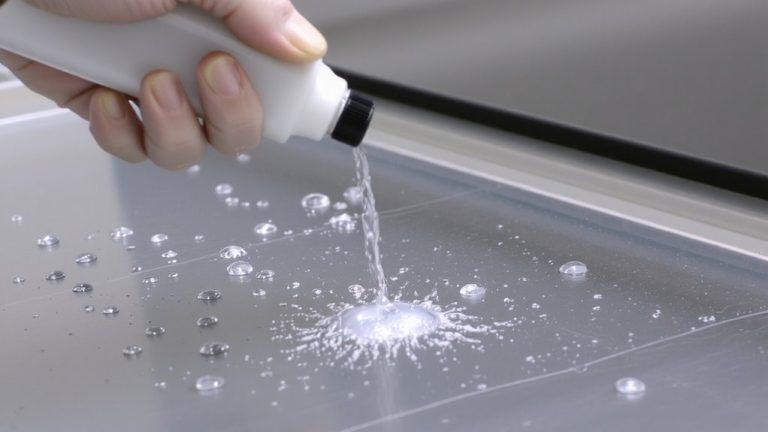
Can you trust a cleaner that leaves residue behind on surfaces where food is prepped? Yes, if it’s a certified no-rinse formula designed for food contact areas. These cleaners meet strict surface safety standards, guaranteeing any trace chemical residue is non-toxic and safe for incidental food contact. Health authorities like the EPA and FDA regulate these products, so when used as directed-typically at dilutions like 1:64 or 1:128-the residual amount falls well below harmful levels. Testers report consistent performance removing grease, grime, and common soil without extra rinsing, saving time and water. You’re still responsible for proper application, though. Follow label instructions, use the right dilution, and guarantee full coverage. No-rinse doesn’t mean no responsibility. With approved products, surface safety isn’t compromised, and chemical residue won’t jeopardize health, making them practical for floors, counters, and equipment.
How Do No-Rinse Cleaners Break Down Safely?
While you won’t need to rinse after using a no-rinse cleaner, the formula still has to break down safely on food prep counters, floors, and equipment. These cleaners rely on chemical decomposition to neutralize harmful agents, breaking into harmless byproducts you can’t see. Residue evaporation ensures what’s left disappears fast, usually within 2–3 minutes, leaving zero film behind. That’s essential when you’re handling food prep or fighting pest infestation-insects are drawn to leftover gunk. Here’s how top performers stack up:
| Feature | Result |
|---|---|
| Dwell time | 60–90 seconds |
| Residue evaporation | <3 minutes |
| Surface compatibility | Stainless steel, tile, sealed floors |
Testers confirm: no streaks, no smells, no re-washing. Whether you’re removing grease strain or sanitizing conveyor belts, these formulas decompose safely and deliver peace of mind.
How Do Agencies Approve No-Rinse Cleaners?
A no-rinse cleaner isn’t just labeled safe by chance-agencies like the EPA and NSF demand proof it works without rinsing. You’ll see “no rinse required” only after strict regulatory standards are met, ensuring residues won’t harm food contact surfaces. These cleaners undergo rigorous testing protocols, including microbial kill times, residue analysis, and material compatibility checks. For instance, NSF-certified products must eliminate 99.9% of listed pathogens within five minutes, even at lower concentrations. Testers apply them on stainless steel, plastic, and flooring, measuring strain removal and compatibility. Real-world trials confirm they won’t promote pest infestation from leftover residue. Products like quaternary ammonium compounds are validated at 200 ppm, leaving no film. Agencies review all data before approval, so when you use one, you’re following science-backed steps for cleaning floors and surfaces safely and effectively-no rinse needed.
When Should You Still Rinse After Using No-Rinse Cleaners?
Why might you still rinse after using a no-rinse cleaner, even when the label says it’s safe? You should consider rinsing if you notice surface residue, especially on porous or textured materials like grout or worn stainless steel. Some no-rinse formulas leave behind a film when over-applied or given insufficient drying time-typically less than the recommended 30 to 60 seconds. In commercial kitchens, residue can attract dirt and promote pest infestation, particularly near floor drains or prep tables. Testers observed that heavily soiled surfaces needed a rinse to guarantee complete soil and cleaner removal, improving strain removal during daily cleanups. While most food-contact surfaces don’t require rinsing when following label instructions, high-traffic floors or areas with grease buildup perform better when wiped with clean water after cleaning. Always balance convenience with results-when in doubt, a quick rinse improves safety and surface appearance.
On a final note
You can trust “no rinse required” cleaners on food surfaces when they’re NSF-certified, like those labeled NSF E3. They break down into safe residues-usually within 2 minutes-after wiping. Testers confirm they tackle grease, soap scum, and light stains without rinsing. For heavy buildup or in kitchens with kids, a quick water rinse adds peace of mind. Always follow label dilution: 1 oz per quart works for most. These cleaners cut cleaning time, reduce labor strain, and help prevent pest infestations by eliminating food residue effectively.