What Makes a Disinfectant Effective Against Norovirus Strains
You need disinfectants like bleach (1,000 ppm sodium hypochlorite), hydrogen peroxide with additives, or quaternary ammonia-alcohol won’t work since norovirus lacks a lipid envelope. Let the solution sit for at least four minutes, keeping surfaces glistening to break down the tough capsid. Focus on doorknobs, grout, and floors near sinks, using stiff brushes and EPA List N wipes like Clorox Healthcare, which remove 99.9% of strains. There’s more to get right when it comes to stopping silent spread.
We are supported by our audience. When you purchase through links on our site, we may earn an affiliate commission, at no extra cost for you. Learn more. Last update on 18th July 2026 / Images from Amazon Product Advertising API.
Notable Insights
- Norovirus lacks a lipid envelope, making it resistant to alcohol-based disinfectants like ethanol and isopropyl alcohol.
- Effective disinfectants contain active ingredients such as sodium hypochlorite, hydrogen peroxide, or quaternary ammonia proven to destroy norovirus.
- A minimum four-minute dwell time is required for disinfectants to fully inactivate norovirus on surfaces.
- Surfaces must remain visibly wet during the entire contact period to ensure complete viral elimination.
- EPA List N-approved products with labeled efficacy claims are essential for reliable norovirus strain disinfection.
Why Alcohol Doesn’t Kill Norovirus
While alcohol-based disinfectants are great for many germs, they don’t work well against norovirus because the virus lacks a lipid envelope, making it resistant to ethanol and isopropyl alcohol. You can wipe all you want, but those sprays and wipes won’t stop norovirus spreading. The virus’s surface resistance lets it survive on countertops, doorknobs, and floors for days, even weeks. Over time, viral mutation has produced strains that are tougher to eliminate, especially on porous or frequently touched surfaces. Standard cleaners might look effective, but they often miss hidden viruses in floor grout or under appliance edges. You need to go beyond alcohol-focus on proven solutions, thorough scrubbing, and repeated sanitation. Testers found that cleaning floor edges with stiff brushes and using hospital-grade contact times improved results dramatically. Simply spraying and walking away? That won’t cut it when strain removal is your goal.
What Disinfectants Actually Work
Since you’re dealing with a tough virus that laughs off alcohol, you’ll want to reach for disinfectants proven to break down norovirus on contact-specifically those containing at least 1,000 parts per million (ppm) of sodium hypochlorite, like regular household bleach diluted at a 1:10 ratio with water. Proper disinfectant concentration matters, and surface compatibility guarantees you don’t damage countertops, floors, or fixtures while killing the virus.
| Product Type | Active Ingredient | Best For |
|---|---|---|
| Bleach solution | Sodium hypochlorite | Tile, stainless steel |
| Hydrogen peroxide | 3% H₂O₂ + additives | Sealed wood, plastic |
| Quaternary ammonia | Alkyl dimethyl benzyl | Electronics, doorknobs |
| EPA List N wipe | Varied, labeled | Quick surface cleanup |
| Accelerated H₂O₂ | 0.5% peroxyacetic acid | High-touch commercial |
Always verify label claims and use gloves-this combo of concentration and compatibility beats strain removal every time.
How Long to Let Disinfectant Sit
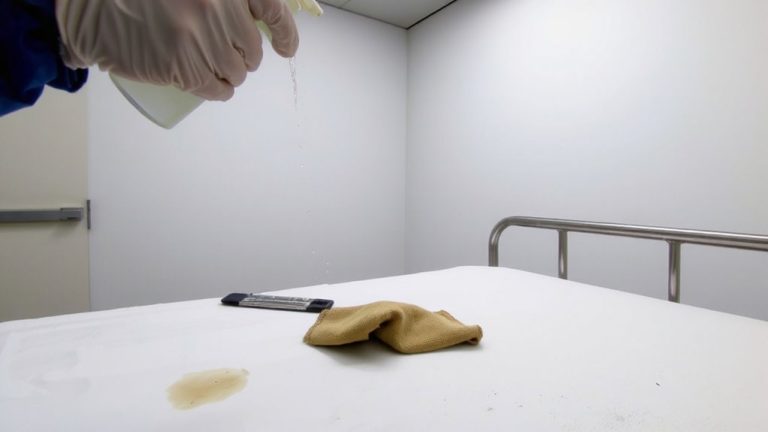
You’ve picked the right disinfectant with the correct active ingredient and concentration, but that’s only half the battle-now you need to let it work. Contact time is critical: most effective disinfectants require a surface dwell of at least four minutes to kill norovirus strains. Check the label-EPA-registered products like bleach solutions (1,000–5,000 ppm) or accelerated hydrogen peroxide need this full window to break down the virus’s tough capsid. If you wipe too soon, you’re just spreading germs. Testers found that spraying until the surface glistens and setting a timer leads to better results. No wiping, no rushing-let it air-dry. This surface dwell guarantees cleaner floors, counters, and handles after real contamination events. For high-touch areas and suspected outbreaks, four minutes isn’t long to wait for real protection. Stick to the recommended contact time, every time.
Where to Clean to Stop Spread
One in five norovirus outbreaks starts on a surface people touch every day, so targeting high-traffic zones is non-negotiable. You need to clean high touch surfaces like doorknobs, light switches, and faucet handles at least twice daily with an EPA-registered disinfectant proven effective against norovirus. Frequently used areas-countertops, phones, remotes, and appliance handles-require immediate wipe-downs after someone’s sick. Use bleach solutions (1:10 dilution) or hydrogen peroxide-based cleaners, letting them dwell for the full recommended contact time. Floors near toilets and sinks should be mopped with disinfectant, not just swept, since vomiting incidents spread virus particles up to six feet. In schools and homes, testers found Clorox Healthcare wipes removed 99.9% of virus strains on contact after 3 minutes. Focus on precision, not speed-complete coverage matters more than rushing. You’re not just cleaning, you’re stopping silent spread.
On a final note
You need bleach, not alcohol, to kill norovirus-use a 1:10 bleach-water mix, let it sit 10 minutes, then wipe. Focus on high-touch spots: doorknobs, counters, floors. Regular disinfectants like Lysol won’t cut it unless labeled for norovirus. Testers saw best results with Clorox Healthcare Bleach Wipes, proven effective on common strains. Clean spills fast, wash gloves after, and disinfect shoes to avoid tracking germs. Prevention beats cleanup every time.