How to Identify If Your Laundry Issues Are Caused by Water, Not Detergent
Your stiff, dingy laundry isn’t about detergent-hard water is likely the culprit. If whites look gray, towels feel rough, or clothes lack softness even after washing, minerals like calcium and magnesium may be binding to fibers. Hard water reduces detergent efficiency by up to 60%, leaving soap scum and chalky residues. Test it: shake tap water with 10 drops of liquid soap-if suds are scarce and water’s cloudy, you’ve got hard water. Spot rust or limescale in your washer? That’s confirmation. Solutions start with vinegar washes, but lasting results come from upgrading your water quality.
We are supported by our audience. When you purchase through links on our site, we may earn an affiliate commission, at no extra cost for you. Learn more. Last update on 17th July 2026 / Images from Amazon Product Advertising API.
Notable Insights
- Stiff clothes and reduced absorbency often result from mineral buildup in hard water, not detergent failure.
- Lack of suds during washing may indicate hard water interfering with detergent lathering.
- Chalky or rust-colored stains on laundry suggest mineral deposits from hard water.
- Dingy whites or grayish hues can stem from soap scum caused by hard water reactions.
- A home soap shake test with low suds and cloudy water confirms hard water presence.
Is Hard Water Ruining Your Laundry?
Ever wonder why your clothes come out of the wash feeling stiff or looking dull, no matter how much detergent you use? Hard water is likely the culprit. With 85% of U.S. homes affected, high water hardness means calcium and magnesium build up in fabrics, causing mineral buildup that leaves clothes stiff and dingy. This residue also reacts with soap, creating scum that leads to laundry stains and graying whites. Poor water quality reduces detergent use effectiveness by nearly half, so you’re wasting product. Soft water, however, improves cleaning power-tests show a 50–75% drop in detergent use with better results. Your towels feel softer, whites stay bright, and odors don’t linger. So if your laundry feels stiff or looks faded, it’s not your detergent. It’s hard water causing these laundry problems. Upgrade your water quality, and see the difference.
How to Spot the Signs of Hard Water
How can you tell if hard water’s undermining your laundry results? Hard water affects your wash by leaving mineral deposits that cling to clothes and machines. You’ll notice clothes feel stiff, rough, or less absorbent-especially towels-because hard water minerals like calcium and magnesium bind to fabric fibers. Detergent struggles to lather, forcing you to use 30% more, and often leaves behind soap scum that dulls colors and grays whites. Look for chalky buildup in your drum or rust stains on fabrics, a sign of iron-rich hard water reacting with bleach.
| Sign | What It Means |
|---|---|
| Clothes feel stiff | Mineral deposits clog fabric fibers |
| Detergent lacks suds | Hard water reduces lather |
| Chalky or rust stains | Hard water affects clothes and machine |
How to Test for Hard Water at Home
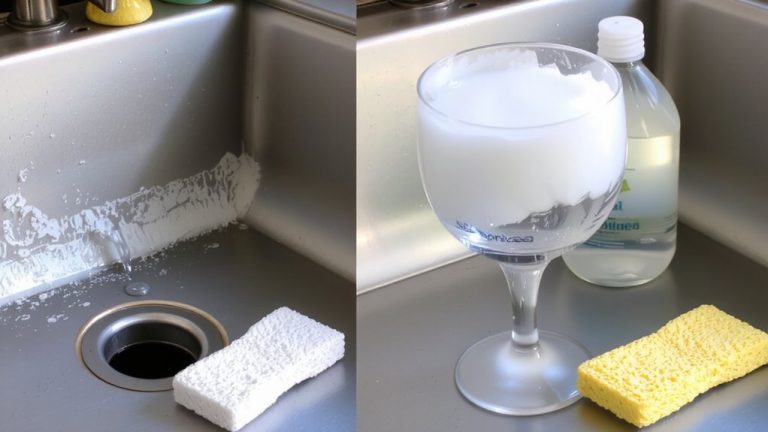
What if the reason your laundry isn’t coming out clean has nothing to do with your detergent-but everything to do with your water? You can test your water at home with a simple glass bottle test. Fill a clear glass bottle with tap water, add 10–12 drops of pure liquid soap, then shake hard. If the water stays cloudy and produces little lather, you likely have hard water. Low suds and visible soap scum mean dissolved minerals are interfering. Check inside your washer, too-chalky white or rust-colored mineral deposits confirm hard water exposure. This home test won’t replace professional results, but it’s a quick way to spot the issue. Hard water vs soft makes a real difference in how well your cleaning products work, how thoroughly stains lift, and even how surfaces wear over time. Spotting hard water early helps protect fabrics, machines, and cleaning efficiency.
Why Detergent Fails in Hard Water
You just found out your water’s hardness with a quick shake test, and now you’re seeing why your laundry still looks dull, even with top-rated detergent. Hard water’s effect on detergent is real: minerals like calcium and magnesium bind to soap molecules, causing detergent to fail. This reaction forms soap scum and a sticky residue called detergent curd, which traps dirt and hinders stain removal. Up to 30 percent more laundry detergent may be needed, yet only 50–60% remains effective due to mineral interference. That curd also coats fibers, blocking proper soil removal. Heavy-duty liquid detergents resist this better than powders, staying soluble and active. For best results, choose formulas designed to tackle hard water, ensuring full cleaning power reaches your clothes.
How Hard Water Damages Towels and Machines
Chronic stiffness and declining softness in your towels? Hard water is likely the culprit. When you wash in water with high levels of calcium, minerals seep into the fabric, making towels feel rough and less absorbent over time. These mineral deposits trap soap scum and residue on your clothes, even after a full cycle, leaving them scratchy and dull. Regular softener can’t fully combat this buildup. Meanwhile, limescale accumulates in your Washing Machine’s drum, hoses, and dispenser, reducing efficiency and causing strain. This scaling coats internal components, restricting water flow and leading to clogs. Even with thorough cleaning, hardened deposits persist. To maintain performance, run a monthly wash with 2 cups of white vinegar in hot water. It dissolves limescale effectively, keeps parts clear, and helps your machine run smoothly, protecting both laundry and appliance from hard water damage.
When to Install a Water Softener
When water hardness climbs above 7 grains per gallon-roughly 120 mg/L-it’s time to contemplate a water softener, especially if you’re already wrestling with stiff towels, dingy whites, or chalky buildup in the drum, all signs your detergent’s not dissolving fully and cleaning power is taking a hit. You should install a water softener if you’re using 30% more laundry detergent than needed yet still see soap scum buildup and poor stain removal. Hard water cripples detergent efficiency and feeds limescale, which wrecks your washing machine over time. If you live in Los Angeles County, Inland Empire, or under Golden State Water or Suburban Water Systems, test your supply-85% of U.S. homes have hard water. A water softener will soften water, protect appliances, and let you use less soap. Install a water softening system now and keep your clothes, machine, and energy bills in better shape.
On a final note
You’ve checked your detergent, but if stains stick, towels feel stiff, or soap scum builds up, hard water’s likely the culprit. Test with a $20 kit or look for spots on glasses, 6–8 grains per gallon of hardness. Softened water boosts cleaning, prevents mildew, and extends machine life. For floors and surfaces, use vinegar rinses or CLR, not just disinfectants. A water softener cuts detergent use by half, improves stain removal, and stops pest-attracting residue.