How Evaporation Rates Influence Season-Long Chemical Loss in Open Pools
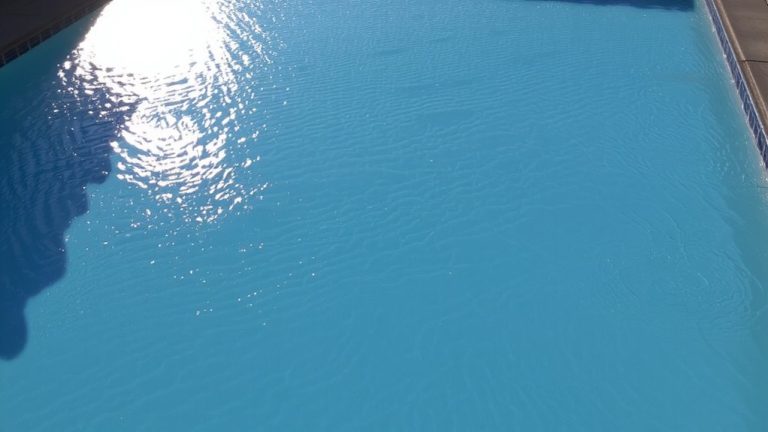
You lose ¼ to ½ inch of pool water daily to evaporation, and in dry, sunny areas, that jumps to ½ inch-up to 120 gallons a day on a 400 sq ft surface. As pure water evaporates, chemicals like cyanuric acid from trichlor and calcium from cal hypo concentrate, spiking TDS and reducing chlorine efficiency. Top-off water dilutes these, but frequent refills demand more sanitizer, algaecide, and pH adjusters over time. Wind above 10 mph triples evaporation, while low humidity and solar exposure accelerate losses, especially in heated pools. Without a solar or liquid cover-cutting evaporation by 90% or 30%-you’ll battle unbalanced water all season, needing more frequent testing, shock treatments, and scale removal near waterlines. Smart coverage use means fewer chemicals, stable CYA, and less strain on filtration. There’s a better way to maintain clarity and cut costs with the right evaporation control.
We are supported by our audience. When you purchase through links on our site, we may earn an affiliate commission, at no extra cost for you. Learn more. Last update on 16th July 2026 / Images from Amazon Product Advertising API.
Notable Insights
- Evaporation removes only pure water, concentrating chemicals like cyanuric acid and calcium hardness over the season.
- Higher evaporation rates in dry, hot, or windy climates accelerate chemical imbalances in open pools.
- Trichlor use combined with evaporation leads to rapid cyanuric acid buildup, reducing chlorine effectiveness.
- Reduced water loss with solar or automatic covers helps maintain stable chemical concentrations season-long.
- Heated pools experience 2–4 times faster evaporation, increasing chemical concentration and treatment costs over time.
What Causes Pool Evaporation?
While you might assume your pool loses water mainly from splashing or leaks, most of the loss actually comes from evaporation, driven by a mix of sun, heat, wind, and humidity, all of which you can manage with the right setup. Evaporation accounts for ¼ to ½ inch of water loss daily, influenced by solar radiation, air temperature, wind speed, and humidity-key environmental factors. Your pool’s surface area determines how much water is exposed, with larger pools losing more; a 400-square-foot pool can lose 60–120 gallons per day. Wind speed over 10 mph triples evaporation by moving dry air across the surface. Heated pools evaporate 2–4 times faster due to warmer pool water level and vapor pressure. In dry climates like Arizona, losses hit ½ inch per day, while humid Florida sees only ⅛. Controlling these factors helps maintain balance, reduces refills, and keeps surfaces cleaner longer.
How Evaporation Concentrates Chemicals
Because evaporation removes only pure water, every drop that escapes into the air leaves behind all the dissolved chemicals in your pool, steadily increasing their concentration over time. That means with normal pool water evaporation, chemical concentration rises fast-especially cyanuric acid and calcium hardness. Since evaporation only reduces water volume, not dissolved chemicals, even a modest daily water loss of 1/4 inch in a 400-square-foot pool boosts CYA levels markedly. If you use trichlor, which is 55% cyanuric acid, you’re adding more CYA with each dose, and evaporation rate magnifies this chemical buildup. The same goes for calcium hardness when using cal hypo. Over time, pooling pool chemicals without dilution can double TDS and reduce chlorine efficiency. That’s why managing evaporation is key to preventing chemical imbalance and maintaining clean, safe water.
How Much Daily Water Loss Is Normal?
You’re already know that evaporation leaves chemicals behind, making it harder to keep your pool balanced over time, especially when you’re using trichlor or cal hypo. Normal daily water loss typically ranges from ¼ to ½ inch, with anything over an inch per day signaling excessive evaporation. This kind of daily water loss can quickly impact your pool water level, especially in arid areas like Arizona, where evaporation rates hit ⅜ to ½ inch under average conditions. In humid subtropical zones like Florida, normal evaporation is lower-about ⅛ to ¼ inch per day-thanks to higher humidity. Wind exposure can triple your water loss, while a pool cover can cut evaporation substantially. Maintaining proper chemical balance starts with monitoring evaporation rate and topping off water to keep levels steady.
How Heat, Wind, and Humidity Speed Evaporation
When the sun’s beating down and your pool’s surface feels warm even in the evening, you’re dealing with more than just comfortable swimming conditions-heat’s actively driving evaporation, pushing water loss up to 0.50 inches per day during peak summer months. Solar energy heats the water, increasing water temperature and creating a larger vapor pressure difference between the pool and the air, so pool water evaporate faster. Higher wind speed, especially 10 mph or more, sweeps away humid air and replaces it with dry air, accelerating moisture loss. Low relative humidity-like 20% in Arizona-can boost evaporation rate by 60–120% compared to humid air in Florida. Heated pools lose water 2–4 times faster due to this vapor pressure difference. In dry climates, expect ⅜–½ inch daily loss. You’ll see higher chemical use later, even if that’s not the focus now.
Why Topping Off Uses More Chemicals
Though evaporation quietly siphons off pure water, it leaves behind every bit of chlorine stabilizer, calcium, and dissolved solid, slowly turning your pool into a chemical trap that’ll demand more effort than you might expect. Each day, the rate of evaporation drops your pool water level by up to 1/4 inch, meaning a 400-square-foot pool loses 60–120 gallons daily-pure water molecules, not chemicals. When you’re topping off, you’re not resetting CYA or calcium levels, so cyanuric acid (CYA) builds up fast, especially if you use trichlor, which adds 55% CYA by weight. That accumulation means you’ll need more chlorine just to stay effective. Plus, tap water adds fresh minerals, nudging pH and requiring extra algaecides or stain controllers. Even though you’re replacing moisture loss, you’re worsening chemical imbalance-so water loss from evaporation doesn’t just lower volume, it intensifies your chemical workload.
How to Cut Evaporation and Balance Chemicals
Because evaporation removes only water while leaving chemicals like cyanuric acid (CYA) behind, your pool’s chemical load grows more concentrated every day-especially in sunny, dry climates where a 400 sq ft pool can lose up to ½ inch of water daily, or over 1,800 gallons a month. You can reduce evaporation and protect chemical balance by maintaining proper pool water level and using a solar cover, which cuts water loss by 90–95%. An automatic safety cover overnight does nearly the same, slashing water evaporation by up to 95%. For lighter protection, a liquid pool cover reduces evaporation by 15–40% and helps stabilize CYA between refills, though it needs monthly reapplication. These tools don’t just save water-they prevent CYA spikes and keep your chemical balance steady, cutting long-term costs and maintenance.
Is It a Leak or Evaporation?
How can you tell if your pool’s water loss is normal evaporation or a hidden leak? Evaporation is a natural part of Pool Water Loss, with water evaporates at a rate varies from ½ inch per day in dry, hot air like Arizona to ⅛–¼ inch per day in humid Florida. When wind hits 10 mph, the rate can triple, increasing daily loss to over 1 inch per week. But if your pool loses more than ¼ inch per day with no features running, suspect a leak. For reliable leak detection, do the bucket test: float a filled bucket on a step, mark both water levels, wait 24 hours. If the pool drops more than the bucket, you’ve got a leak. Temperature, air movement, and surface area all impact evaporation, so check conditions first-don’t waste time and water chasing phantom leaks.
On a final note
You’ll keep your pool clear and balanced by managing evaporation, which concentrates chemicals and raises demand each time you top off. Daily losses of ¼ to ½ inch are normal, but heat, wind, and low humidity can double that. Use a solar cover to cut evaporation by up to 95% and reduce chemical use. Test water weekly, maintain free chlorine at 2–4 ppm, and shock with sodium hypochlorite as needed. A consistent routine prevents stains, algae, and pests-like mosquitoes-that thrive in stagnant edges.