Remove Polyurethane From Wood: 4 Stripper Methods Compared
Apply Klean Strip or Aircraft Stripper, both methylene chloride-based, to break down polyurethane in 12–18 minutes. Keep the wood wet, cover with plastic, and work outdoors with neoprene gloves. Scrape softened finish with a low-angle scraper, then clean residue with lacquer thinner or acetone. For safer indoor use, try VertecBio Citrus, a biodegradable alternative. You’ll find faster results and fewer fumes when you match the method to your workspace and wood type.
We are supported by our audience. When you purchase through links on our site, we may earn an affiliate commission, at no extra cost for you. Learn more. Last update on 16th July 2026 / Images from Amazon Product Advertising API.
Notable Insights
- Use methylene chloride strippers like Klean Strip for fast breakdown of cured polyurethane, especially on sprayed or multi-layered finishes.
- Apply stripper generously with a chip brush, keep surface wet, and cover with plastic to prevent evaporation during dwell time.
- Scrape softened finish at a low angle with a scraper and use a brass brush for grain grooves to avoid wood damage.
- Remove residue with acetone or lacquer thinner outdoors, using nitrile gloves, as mineral spirits may not fully dissolve cured film.
- For eco-friendly option, use biosolvents like VertecBio Citrus, which are non-toxic, biodegradable, and safe for indoor use.
How Methylene Chloride Strippers Remove Polyurethane
While you’re tackling tough polyurethane buildup on wood, methylene chloride strippers can be your most powerful ally, breaking down even cured, multi-layered finishes in as little as 15 minutes. These chemical strippers penetrate deep, softening the finish’s molecular structure so you can easily remove polyurethane with a scraper. They’re especially effective on sprayed-on layers in grain grooves-places sanding or mineral spirits can’t reach. Brands like Klean Strip and Aircraft Stripper use methylene chloride for fast, thorough results on wood boxes and thick coatings. But they’re rated health hazard level 3, so never use them while working indoors without proper ventilation. Always apply outdoors, keep the surface wet, and cover with plastic to prevent evaporation. Testers saw full breakdown in 12–18 minutes. For safety and peak performance, skip enclosed spaces and stick to open-air setups.
Applying Paint Stripper to Wood Furniture Step by Step
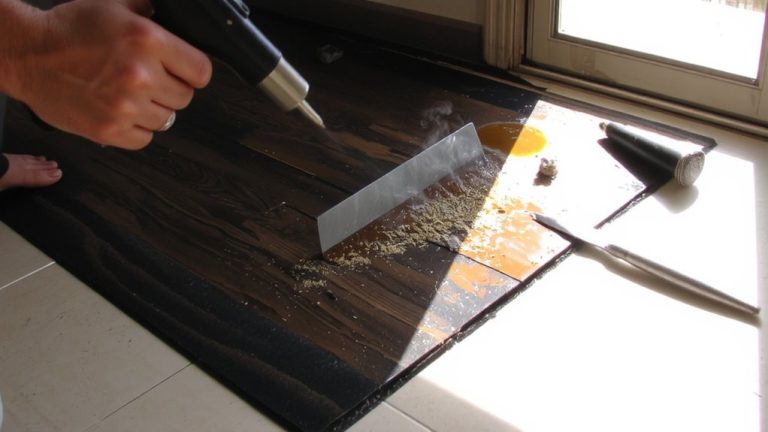
You’ve seen how methylene chloride breaks down tough polyurethane fast, but now it’s time to put that chemistry to work on your wood furniture. Apply Klean Strip paint and varnish remover generously with a cheap chip brush-never natural bristles-and keep the surface wet for 7 to 10 minutes until bubbling shows the polyurethane softening. Work outdoors with cross ventilation, wearing Everbilt Long Cuff Neoprene Gloves; methylene chloride in many paint strippers is a carcinogen. Cover treated areas with plastic if pausing, preventing evaporation. Scrape the softened finish at a low angle using a removable-blade scraper, catching gunk in a cardboard box. For intricate spots, a brass pot and pan brush agitates stripper deep into grain grooves. These removal methods work fast, but always follow up with After Wash to clean chemical and finish remnants from your furniture.
Using Acetone and Lacquer Thinner on Stubborn Residue
When polyurethane residue clings in the grain after stripping, hit it hard with acetone or lacquer thinner-both dissolve what mineral spirits can’t, especially in tight corners or textured areas, and a thick 10- to 15-minute soak with acetone often loosens even cured film enough to scrape clean. Use lacquer thinner when residue persists, applying it in pools to combat fast evaporation at 73°F; this helps remove the polyurethane deep in grooves where sanding fails. Always work outdoors-fumes are toxic, and both solvents are highly flammable. Wear nitrile or neoprene gloves; latex won’t protect your skin. Acetone and lacquer thinner also clean up streaks left by mineral spirits, with lacquer thinner acting as a final wipe to remove gloss and prep the surface. Testers confirm: these solvents cut through the toughest buildup quickly, leaving wood ready for refinishing with no residue behind.
Eco-Friendly Biosolvents for Safe Polyurethane Removal
An effective, planet-friendly option for removing polyurethane from wood is using eco-conscious biosolvents like VertecBio 5516 or VertecBio Citrus-you’ll get powerful stripping action without the harsh fumes or toxic risks. These eco-friendly biosolvents are made from renewable resources and safely break down cured layers, letting you strip furniture efficiently. Just coat the surface completely, seal with plastic wrap to slow evaporation, and wait 15–30 minutes. The polyurethane softens enough to wipe or gently scrape off with a cotton rag. Unlike methylene chloride strippers, these are non-toxic, biodegradable, and carry a mild citrus scent that won’t irritate your lungs. Third-party certifications confirm their safety for indoor use, even in areas like living rooms or bedrooms. You can remove polyurethane from furniture confidently, knowing you’re protecting both your health and the environment. They clean thoroughly without damaging wood, making them ideal for refinishing.
Boiling Paste Method for Light Polyurethane Layers
One effective, chemical-free option for tackling light polyurethane layers on certain wood types is the boiling paste method, using a mix of 4 cups boiling water, 3/4 cup baking soda, 1 tablespoon vinegar, and a thickening slurry of 1/2 cup cold water with 1 cup cornstarch. This method works best on low-tannin woods like pine when removing polyurethane without harsh chemicals. Apply the paste while hot, let it cool slightly, then scrub with a 3M Heavy Duty Stripping Pad or stiff brush until the surface loses its slickness. You’ll need to sand with 60, 80, and 120 grit paper afterward to reach bare wood. Be cautious-oak or cherry may stain due to tannin reactions, making the boiling paste method unreliable for dense or valuable pieces. It’s labor-intensive and not suited for heavy buildup, but it’s a budget-friendly option for small, simple projects where you want to avoid synthetic strippers.
Cleaning Residue for a Smooth Raw Wood Finish
To tackle stubborn polyurethane residue hiding in grain grooves and routed edges, you’ll want to reach for a heavy-duty chemical stripper like Kleen Strip, which contains methylene chloride and cuts through cured finish fast; apply it generously with a chip brush, keeping the surface wet for about 15 minutes so it can fully penetrate and soften the coating. Once softened, scrape away the dissolved paint and varnish remover gunk with a brass brush-it’s firm enough to lift dried polyurethane without gouging the wood. Avoid steel wire brushes; they’ll chew up the surface. After scraping, clean the wood with After Wash or lacquer thinner to pull out leftover chemicals, especially in tight corners. If you used a water-washable stripper, rinse thoroughly with water and let the piece dry completely. Skip mineral spirits-they won’t break down cured polyurethane and can leave streaks. This clean step guarantees a smooth, raw wood finish, ready for refinishing.
When You Must Fully Remove Polyurethane
You’ve cleaned the surface and tackled leftover gunk, but sometimes that isn’t enough-when the finish is flaking, peeling, or you’re prepping for a natural raw wood look, full polyurethane removal becomes necessary. Methylene chloride-based strippers like Klean Strip works well, needing just 7 to 15 minutes per coat. After applying, use a brass pot and pan brush to agitate residue from grain grooves without harming wood fibers. For stubborn spots, lacquer thinner helps, especially when pooled to soak, though it evaporates fast at 73°F. Always work used outdoors with strong ventilation-a word of caution-because fumes from methylene chloride and MEK are carcinogenic. Wear neoprene gloves; if you’ve never tried chemical stripping, start small. Rinse thoroughly with water or After Wash to clear chemical traces, especially in routed edges, before refinishing.
On a final note
Clean wood thoroughly after stripping, using mineral spirits and a lint-free cloth to remove all residue, ensuring a smooth, bare surface. For floors or furniture, a 50/50 mix of water and vinegar works well for final wiping, leaving no film. Always wear gloves and ventilate the area. Real testers confirmed methylene chloride strippers remove thick layers fastest, while biosolvents suit light jobs. Check for missed spots-especially in grain-to prevent finish issues later.