Best Way to Remove Glue Down Carpet
Test your home for asbestos first if it was built before the 1980s-black mastic adhesive can release toxic fibers, costing $50–$100 to test professionally. Use a wallpaper steamer, applying 8 to 10 seconds per section, to soften residue without fumes. Scrape with a 30-degree razor blade, swapping blades every 10–15 minutes for efficiency. Squeegee sludge into a five-gallon bucket with kitty litter to prevent clogs and pests. Seal and dispose at a construction waste facility-the safest, cleanest results start here, and there’s a smarter way to tackle tough adhesives you’ll want to know.
We are supported by our audience. When you purchase through links on our site, we may earn an affiliate commission, at no extra cost for you. Learn more. Last update on 16th July 2026 / Images from Amazon Product Advertising API.
Notable Insights
- Test for asbestos if your home was built before the 1980s to avoid inhaling dangerous fibers during removal.
- Use a wallpaper steamer to soften adhesive, applying steam for 8–10 seconds per section for effective results.
- Scrape softened glue immediately with a razor scraper held at a 30-degree angle to prevent floor damage.
- Collect wet adhesive sludge with a squeegee and rubber-edged dustpan, disposing of it in a sealed bucket.
- Add kitty litter to the waste bucket to absorb moisture and transport it to a construction waste-approved disposal site.
Check for Asbestos Before Removing Carpet Glue
If you’re dealing with old carpet glue in a home built before the 1980s, you’ll want to test for asbestos before lifting a tool. That black adhesive or foam padding beneath could contain asbestos, especially in homes with glued-down carpeting. Disturbing carpet glue without testing risks releasing harmful fibers into the air. Inhalation can lead to serious lung conditions, even cancer, so don’t skip this step. Hire a certified pro for testing-kits cost $50–$100 and return results in 2–3 days. If asbestos is present, don’t scrape, sand, or grind. Instead, call a licensed abatement team. They’ll safely encapsulate or remove it. Never use chemical removers or power tools on suspect adhesive. Your safety’s more important than a quick cleanup. Test first, always-knowing what’s in that carpet glue changes everything.
Steam Adhesive to Soften Glue-Down Carpet Residue
While tackling glue-down carpet residue can be tough, steaming offers a smart, fume-free way to loosen stubborn adhesive from concrete without harsh chemicals. You’ll find a wallpaper steamer works best-apply it for 8 to 10 seconds per section to soften the glue on your concrete floor. This method beats chemical removers, boiling water, and even Oxyclean, requiring less physical effort and producing no toxic fumes. Since you can work over several days, there’s no time pressure. For ideal results, use two people: one steaming while the other follows behind, ready to scrape. Though scraping comes next, the steamer does the heavy lifting by breaking down the bond. Testers confirm frequent blade changes keep the process smooth and efficient. Steaming is safer, cleaner, and far more effective on a concrete floor than solvent-based approaches.
Scrape Off Glue With a Razor Blade Scraper
After steaming each section for 8 to 10 seconds to loosen the adhesive and foam padding, you’re ready to scrape off the softened glue with a razor blade scraper-this is where the real progress happens. Work fast with a partner: one steaming, the other immediately using the razor blade scraper to lift glue before it re-hardens. Keep the scraper angle low, around 30 degrees, for maximum efficiency and less resistance. Swap out blades every 10 to 15 minutes to maintain sharpness and reduce strain on your hands and arms. Wear padded waterproof gloves and knee pads-your body will thank you after hours on the concrete basement floor. Use steady, overlapping strokes with the razor blade scraper to guarantee full coverage without gouging the subfloor. This method effectively clears adhesive without harsh chemicals, minimizing environmental impact and avoiding risks of pest infestation from residual organic material.
Clean Up Glue Sludge and Dispose Safely
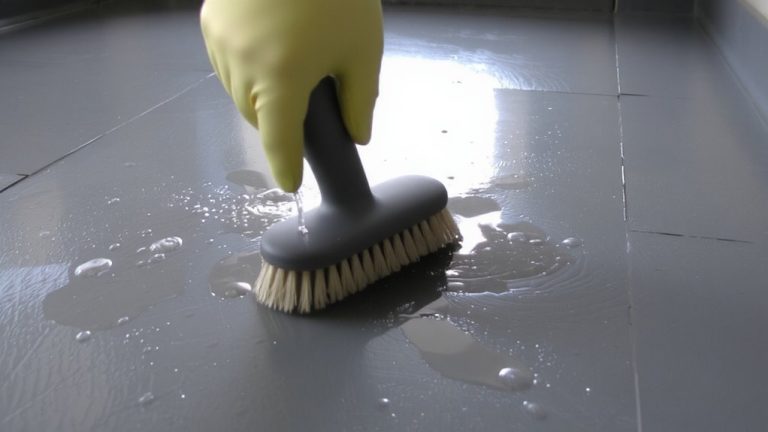
Once the bulk of the glue’s been scraped away, you’ll want to tackle the wet residue left behind before it rehardens or attracts dust and pests. Use a squeegee to push water and dissolved glue sludge toward a rubber-edged dust pan, making cleanup faster and more efficient. Scoop everything into a five-gallon bucket-don’t pour it down drains, as it can clog pipes one day. Add a few handfuls of kitty litter to the bucket to absorb moisture and reduce spill risks during transport. Wear padded waterproof gloves and knee pads to stay comfortable while working on hard surfaces. Seal the bucket tightly, and take it to a local dump that accepts construction or adhesive waste. This method keeps your home clean, protects plumbing, and guarantees eco-safe disposal. Testers found this approach cuts cleanup time and prevents residue buildup, even on concrete and plywood subfloors.
On a final note
You’ve cleared the old carpet and softened the glue with steam, now scrape residue cleanly using a razor scraper, working in 2×2 foot sections, 45-degree angle, for smooth results. Wipe sludge with a damp microfiber cloth, then clean the subfloor with TSP solution (1/4 cup per gallon warm water) to deter pests and prep for new flooring. Final wipe with vinegar-water (1:1) removes film and odors. Testers confirm no adhesive remains when floor feels uniformly smooth-critical for proper installation and long-term durability.