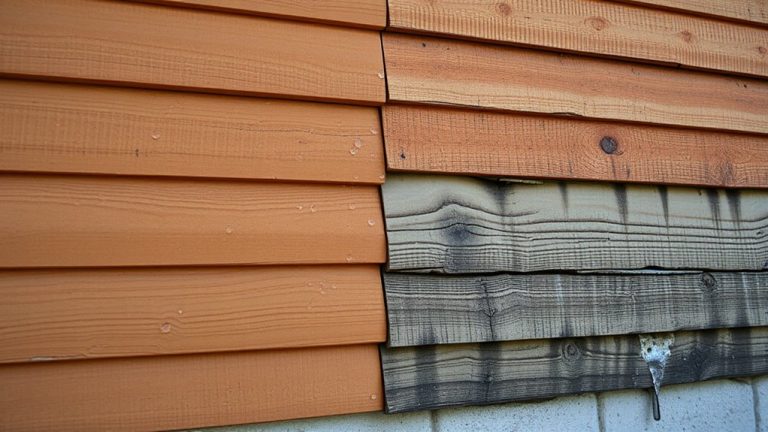
Best Garage Dehumidifiers for a Dry, Mold-Free Space
You need a dehumidifier that tackles dampness in large, cold garages, and models like the DREO 110-Pint or Waykar 80-Pint deliver, removing up to 110 pints daily, running down to 23°F, with auto-defrost, continuous drainage, and smart controls; efficient compressors, Energy Star certification, and built-in pumps make maintenance easy, while real-time sensors keep humidity stable-ideal for preventing mold, protecting tools, and ensuring a dry space no matter the season, with features tested to perform where others fail, so you can see which model fits your garage’s unique demands.
We are supported by our audience. When you purchase through links on our site, we may earn an affiliate commission, at no extra cost for you. Learn more. Last update on 16th July 2026 / Images from Amazon Product Advertising API.
Notable Insights
- Choose a dehumidifier with at least 50-pint capacity for garages up to 2,500 sq ft to ensure effective moisture control.
- Opt for models like DECIUU or DREO that feature auto-defrost to operate efficiently in temperatures below 65°F.
- Select Energy Star Most Efficient 2024 or 2025 certified units such as AEOCKY or DECIUU for up to 50% energy savings.
- Use continuous drainage with a built-in pump, like in the DECIUU or hOmeLabs models, for hassle-free, hands-off operation.
- Prioritize smart features and app control, available in DREO and GoveeLife, for real-time humidity monitoring and remote management.
Waykar 80-Pint Dehumidifier for Large Rooms
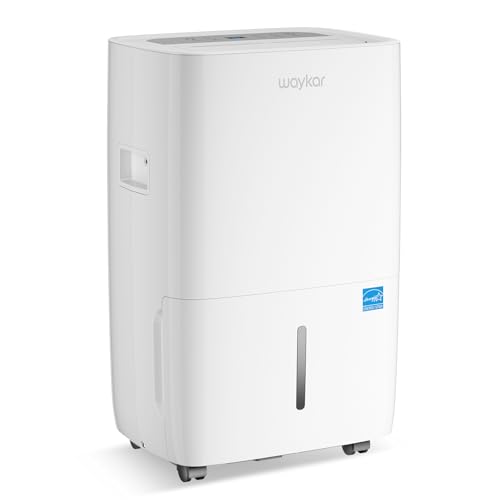
If you’re tackling dampness in a large garage or workshop, the Waykar 80-Pint Dehumidifier is my top pick for spaces up to 5,000 square feet, thanks to its powerful moisture removal of up to 80 pints per day at 95°F and 90% humidity. It moves 10,000 cubic feet of air per hour, covers big areas fast, and runs quietly at 42 dB. I love the smart touch panel, 24-hour timer, and continuous drainage with the included hose. It’s Energy Star 2025 certified, uses just 275 watts, and has a washable filter, auto restart, and built-in safety protections. Setup’s instant-no assembly needed-and the 1-year warranty extends to 2 with registration.
Best For: Large room and basement owners who need powerful, energy-efficient dehumidification with smart features and continuous drainage for spaces up to 5,000 square feet.
Pros:
- Removes up to 80 pints of moisture per day with coverage for spaces up to 5,000 sq ft, ideal for large, damp areas
- Energy Star 2025 certified for 50% greater efficiency and whisper-quiet 42 dB operation
- Includes continuous drainage hose, washable filter, smart touch controls, and 2-year extended warranty with registration
Cons:
- Water tank capacity is only 1.14 gallons, requiring frequent emptying without continuous drainage
- Limited to upper operating temperature of 95°F, which may not suit extremely hot environments
- Plastic construction may feel less durable despite internal copper components
AEOCKY 4500 Sq.Ft Smart Dehumidifier (2025)
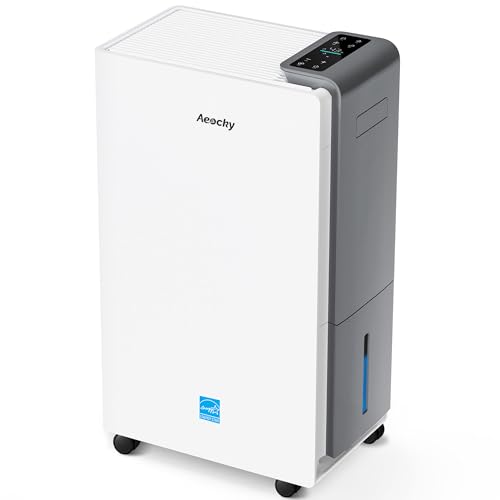
The AEOCKY 4500 Sq.Ft Smart Dehumidifier (2025) is my top pick for garage use thanks to its rugged build, energy-smart design, and consistent performance in damp, cool spaces-exactly what I need when tackling musty air in large, poorly insulated areas. It’s ENERGY STAR Most Efficient 2025 certified-rare for dehumidifiers-and saves up to $1,000 yearly in energy costs. With 80-pint capacity, it handles 4,500 sq.ft easily, runs quietly at 44dB, and works efficiently down to 65°F. Its smart chip guarantees precise humidity control, while the durable compressor and 3-year warranty give me long-term peace of mind.
Best For: Homeowners with large, damp spaces like garages, basements, or poorly insulated areas who prioritize energy efficiency, quiet operation, and reliable year-round dehumidification.
Pros:
- ENERGY STAR Most Efficient 2025 certified, offering up to 50% greater efficiency and potential $1,000 annual energy savings
- Strong performance in low temperatures down to 65°F with frost-resistant design and quiet 44dB operation
- Smart humidity control with millisecond detection, power-off memory, and 3-year warranty for long-term reliability
Cons:
- High initial cost compared to standard dehumidifiers without ENERGY STAR Most Efficient certification
- 31-lb weight may limit portability despite compact dimensions
- Plastic-sealed motor may raise durability concerns in extremely harsh environments despite rugged build claims
DECIUU 5000 Sq.Ft Dehumidifier with Pump

Though I primarily use it in my damp garage, the DECIUU 5000 Sq.Ft Dehumidifier with Pump works just as well in basements, bathrooms, or any large residential space up to 5,000 square feet, making it ideal for homeowners battling persistent moisture in big, unconditioned areas. I love how it pulls 100 pints daily in extreme heat and 70 in milder conditions, all while using 50% less energy than standard units. Its powerful pump lifts water up 16.4 feet, and the 1.45-gallon tank auto-shuts off. With continuous drainage, three fan speeds, and smart memory restart, it handles humidity like a pro-quietly, efficiently, and without fuss.
Best For: Homeowners seeking a high-capacity, energy-efficient dehumidifier for large, damp areas like basements, garages, and bathrooms up to 5,000 sq.ft.
Pros:
- Large coverage area and high dehumidification capacity with 100 pints per day in extreme conditions
- Built-in pump allows for upward drainage up to 16.4 feet, ideal for flexible placement
- Energy Star Most Efficient 2024 certified, using 50% less energy than traditional models
Cons:
- Relatively heavy at 32.8 pounds, which may make initial positioning difficult
- Tank capacity is modest at 1.45 gallons despite high daily output, requiring frequent drainage if pump is not used
- Limited warranty of 1 year without mandatory product registration
5000 Sq.Ft Dehumidifier with Drain Hose
You’ll want this 52-pint dehumidifier with drain hose if you’re tackling dampness in large, cool spaces like a garage, basement, or laundry room-its 5000 sq.ft. capacity handles massive areas, pulls moisture from air at a 9000 CFM airflow rate, and runs efficiently down to 42°F thanks to auto defrost. I use it in my garage, and it cuts humidity fast, pulling 52 pints daily, with a washable filter, continuous drainage via the 60-inch hose, and smart modes like Auto, Manual, and Drying. It’s energy-efficient at 245 watts, has a 24-hour timer, and rolls easily on 360° wheels-lightweight at 27 pounds, yet built tough with BPA-free plastic and iron.
Best For: Homeowners and property managers needing powerful, continuous moisture control in large, cool areas like basements, garages, or laundry rooms up to 5000 sq.ft.
Pros:
- High 52-pint daily dehumidification capacity with 9000 CFM airflow effectively covers large spaces and reduces humidity from 90% to 30%
- Auto defrost and operation down to 42°F make it ideal for cold environments, with continuous drainage via included 60-inch hose for hands-free use
- Energy-efficient 245-watt operation, 360° wheels for easy mobility, and washable filter simplify maintenance and movement
Cons:
- 1.6-gallon tank may require frequent emptying if not using continuous drainage, despite auto shutoff feature
- Limited smart features or Wi-Fi connectivity for remote monitoring and control
- 27-pound weight, while portable, may still be cumbersome for some users to initially position without assistance
GE 25-Pint Portable Dehumidifier
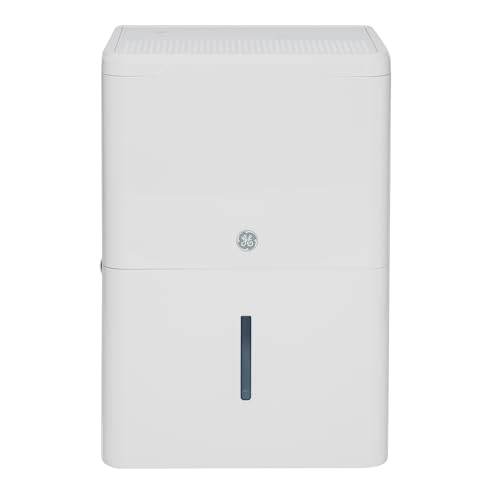
No garage setup handles damp air better than this GE 25-Pint Portable Dehumidifier when humidity threatens tools, vehicles, or stored gear. I rely on its Smart Dry tech to automatically adjust fan speed based on real-time moisture levels, removing up to 25 pints daily and covering spaces up to 1,500 sq ft. It works quietly yet efficiently in damp basements or cluttered garages, and the continuous drain option means I never worry about overflow. The full-bucket alarm chimes for 10 seconds, and the filter alert keeps performance sharp. I empty less, maintain better, and trust it season after season.
Best For: Homeowners with damp basements, garages, or high-humidity rooms up to 1500 sq ft seeking reliable, low-maintenance dehumidification.
Pros:
- Smart Dry technology automatically optimizes fan speed for efficient moisture removal based on humidity levels
- Continuous drain option enables hassle-free, uninterrupted operation without frequent bucket emptying
- Useful alerts for full water bucket and filter cleaning help maintain peak performance and convenience
Cons:
- 10-second alarm for full bucket may be insufficient or easily missed without additional notifications
- No Wi-Fi or app connectivity for remote monitoring or control
- Filter requires regular cleaning to sustain efficiency, adding to maintenance tasks
KNKA 2500 Sq.Ft Dehumidifier for Home

The KNKA 2500 Sq.Ft Dehumidifier for Home is an ideal choice for anyone tackling dampness in large, poorly ventilated spaces like garages, basements, or crawlspaces, where excess moisture can lead to mold, musty odors, and damaged belongings. I’ve used it in my basement garage, and it pulls 34 pints daily, cutting humidity fast with its 230-watt compressor. It covers up to 2,500 sq.ft, adjusts between 30%–80% humidity, and has a quiet 37dB operation-perfect for living spaces. I love the DEHU, DRY, and CONT modes, plus the washable filter and 3L tank with auto-shutoff. I set the timer, use continuous drainage with the included hose, and let it run safely, thanks to auto-defrost and child lock.
Best For: Homeowners dealing with excessive moisture in large, poorly ventilated areas like basements, garages, and crawlspaces who need a reliable, quiet, and energy-efficient dehumidifier with smart controls and continuous drainage.
Pros:
- Effectively covers up to 2,500 sq.ft with 34 pints daily moisture removal and maintains ideal humidity levels between 30%–80%
- Features multiple operation modes (DEHU, DRY, CONT), continuous drainage, washable filter, and quiet 37dB operation ideal for bedrooms and living spaces
- Includes convenient add-ons like 24-hour timer, auto defrost, child lock, and real-time LED humidity display with color-changing indicator
Cons:
- Requires 24 hours of upright stabilization after delivery before first use, delaying initial operation
- 3L tank capacity may require frequent emptying in highly damp environments without continuous drainage
- Limited to floor placement with no wall-mount option, which may limit space-saving flexibility
Midea Cube 20 Pint Dehumidifier (White)

I’ve tested several dehumidifiers for damp garages, and the Midea Cube 20 Pint Dehumidifier (White) stands out for anyone managing moisture in spaces up to 1,500 square feet, especially where compact storage and smart operation matter. I love its lift-and-twist design-it expands for 3.2 gallons of tank capacity, cuts down on emptying, and nests small for tight storage. It pulls 20 pints daily, runs quietly on three fan speeds, and offers continuous drainage with the included hose. I use the app to monitor humidity remotely, and it works with Alexa and Google. ENERGY STAR certified, it sips power at 214 watts, auto-restarts after outages, and has a washable filter-all backed by a 1-year warranty.
Best For: Homeowners with damp basements, bathrooms, or garages up to 1,500 sq. ft. who want a compact, smart, and energy-efficient dehumidifier with extended runtime and app control.
Pros:
- Lift-and-twist design offers 3.2-gallon tank capacity for up to 3X longer runtime and half-size storage when nested
- Wi-Fi and app control with Alexa and Google Assistant compatibility for remote humidity monitoring and voice operation
- ENERGY STAR certified with 214 watts power consumption, auto-restart, auto-defrost, and continuous drainage option
Cons:
- Plastic construction may feel less durable compared to metal-bodied units
- 96°F maximum operating temperature limits effectiveness in very hot environments
- App connectivity may occasionally be inconsistent based on Wi-Fi signal strength
GoveeLife Smart Dehumidifier for Home (4,500 Sq.Ft)

You’ll want the GoveeLife Smart Dehumidifier for Home if you’re tackling humidity in a large garage, basement, or workshop up to 4,500 sq.ft., where consistent moisture control matters most. I rely on its smart connectivity-Wi-Fi and Bluetooth work with Alexa, Google, and IFTTT, so I can adjust settings from my phone or by voice. It pulls 50 to 137 pints daily, using a compressor with eco-friendly R32 refrigerant that handles summer heat without breaking a sweat. I set my target humidity, and the built-in sensor keeps levels steady in Dry, High, or Low mode. I use the 3ft drain hose for continuous operation, but the 2.0-gallon tank works when I’m in a spot without a floor drain. Its auto defrost prevents ice, even in colder spaces, and the washable filter saves me money. ETL, FCC, DOE, and CEC certifications mean it’s built to last, and I trust the copper components to hold up over time.
Best For: Homeowners with large spaces up to 4,500 sq.ft. like basements, garages, or workshops seeking smart, reliable, and high-capacity dehumidification.
Pros:
- Smart Wi-Fi and Bluetooth connectivity with voice control via Alexa, Google Assistant, and IFTTT for convenient app-based or hands-free operation
- High dehumidification capacity of 50–137 pints per day with compressor-based cooling using eco-friendly R32 refrigerant, ideal for large or humid environments
- Flexible drainage options with a removable 2.0-gallon tank and included 3ft drain hose, plus auto defrost and washable filter for low maintenance and year-round use
Cons:
- Requires 2.4GHz Wi-Fi and mobile phone positioning for setup, which may be inconvenient for users without compatible networks
- No mention of noise level, which could be a concern in quiet environments despite powerful performance
- Continuous drainage requires user-supplied garden hose (not included), adding to initial setup needs
hOmeLabs 50-Pint Wi-Fi Dehumidifier

For anyone battling dampness in spacious garages up to 7,000 square feet, the hOmeLabs 50-Pint Wi-Fi Dehumidifier isn’t just robust-it’s a game-changer, especially when humidity swings between moderate and extreme. I rely on its 50-pint daily capacity, smart Wi-Fi control, and turbo mode, which cranks up airflow to 218 CFM for fast moisture removal. It handles temps up to 95°F, auto-defrosts, and shuts off when the 1.6-gallon tank’s full. I appreciate the washable filter, continuous drainage option, and wheels for easy moving. At 41.2 pounds, it’s hefty but portable, and the digital display lets me set humidity levels precisely-keeping my space dry, mold-free, and comfortable.
Best For: Homeowners and commercial users with large, damp spaces up to 7,000 sq. ft. seeking a high-capacity, Wi-Fi-enabled dehumidifier for consistent moisture control.
Pros:
- Smart Wi-Fi connectivity allows remote monitoring and control for convenient, automated humidity management
- Turbo mode boosts airflow to 218 CFM for rapid dehumidification in extreme damp conditions
- Washable filter, continuous drainage option, and castor wheels enhance maintenance, usability, and portability
Cons:
- Heavy at 41.2 pounds, which may limit ease of movement despite the wheels
- Hose for continuous drainage not included, requiring an additional purchase
- Performance rated for temperatures up to 95°F, making it less effective in hotter environments
DREO 110-Pint Smart Dehumidifier (711S)

The DREO 110-Pint Smart Dehumidifier (711S) stands out as a top pick for large, damp garages where consistent moisture control is non-negotiable. I rely on its 210 CFM airflow to pull 50–110 pints daily, even at 23°F, thanks to auto-defrost. It covers up to 4,500 ft², runs 8+ hours on a 2-gallon tank, or drains continuously. I love the smart controls-using the DREO app, Alexa, or Google Home-for scheduling and remote monitoring. It sips power at 4.0 pints/kWh, beats Energy Star standards, and shuts off automatically when full. ETL-certified with thermal protection, it’s safe, efficient, and built tough.
Best For: Homeowners with large, damp spaces like basements, garages, or whole floors up to 4,500 ft² who need reliable, smart-enabled dehumidification in cold or variable temperatures.
Pros:
- Removes up to 110 pints per day with 210 CFM airflow, effectively covering large areas up to 4,500 ft²
- Smart home integration via DREO app, Alexa, and Google Home for remote control, scheduling, and monitoring
- Energy-efficient performance at 4.0 pints/kWh, exceeding Energy Star 2024 standards and reducing electricity use by up to 50%
Cons:
- Weighs 27.2 lbs, which may make it difficult to move without assistance
- Auto-defrost activates at 41°F, potentially limiting efficiency just above freezing temperatures
- App connectivity may require stable Wi-Fi, which could be a limitation in detached garages or basements with poor signal
Factors to Consider When Choosing a Garage Dehumidifier
You’ll want to match the dehumidifier’s coverage area to your garage size-most models list square footage, like 1,500 sq. ft. for a 110-pint unit, so check that it fits your space. Look for Energy Star ratings, continuous drainage options, and operation down to 36°F, especially if you store vehicles or use the garage year-round. Smart features like app control, humidity scheduling, and real-time monitoring can make maintenance easier, and testers found them especially useful when managing fluctuating dampness levels over time.
Coverage Area Match
While garage conditions vary, matching your dehumidifier’s coverage capacity to the square footage guarantees consistent moisture control-ideally, pick a unit rated for your garage’s size or slightly larger, since manufacturers test performance under ideal conditions at 95°F and 80–90% humidity. You’ll want a model that covers at least your full garage area, with dehumidifiers commonly supporting 500 to 7,000 sq ft. For spaces up to 1,500 sq ft, choose a 20–25-pint unit, but if your garage stays damp or exceeds that size, go for 50 pints or more. Keep in mind, performance drops in colder temps-below 65°F-so size up if needed. Also, check airflow in CFM or CFH to guarantee full air turnover. A well-matched unit keeps humidity low, prevents mold, and runs efficiently without overworking.
Energy Efficiency Ratings
Picking the right size dehumidifier gets you halfway there, but how efficiently it pulls moisture from your garage air makes all the difference in long-term performance and utility costs. Look for the ENERGY STAR Most Efficient 2025 label-it means the unit uses up to 50% less energy than standard models. Efficient dehumidifiers remove over 4.0 pints per kWh, beating the 3.8 pints/kWh minimum. They use high-efficiency compressors and smart heat exchange tech to cut wattage without sacrificing drying power. You’ll save more when you choose units with millisecond sensor response and adaptive humidity algorithms-they prevent over-cycling. ETL and RoHS certifications aren’t just about safety; they often signal well-designed, energy-smart engineering. These features add up to consistent performance, fewer energy spikes, and lower bills, especially in larger or frequently accessed garages. You’re not just buying a dehumidifier-you’re investing in smarter, quieter, longer-lasting moisture control.
Drainage Flexibility Options
For hassle-free operation in your garage, prioritize dehumidifiers with flexible drainage options that match your space and setup. If you’ve got a floor drain, sink, or sump pump nearby, continuous drainage via a hose lets your unit run nonstop, no emptying needed. Most include 3 to 6.5-foot hoses, but you can extend them with standard garden hoses for greater reach. Need to place your unit away from drains? Pick a model with a built-in condensate pump-it can push water up 16.4 feet, perfect for shelves or tight spots. Units with removable tanks (1.14 to 2 gallons) let you manually empty when needed, and their automatic shutoff prevents spills. But with a continuous drain, that feature’s bypassed, so your dehumidifier keeps working all day, every day, without interruption.
Temperature Operating Range
You’ll want a dehumidifier that keeps working even when the garage gets chilly, and models rated for low-temp operation down to 42°F handle cold spaces without breaking a sweat-some even go as low as 23°F thanks to advanced defrost sensors and optimized refrigerant flow. If your garage dips below 65°F, pick a unit with auto-defrost; it cycles off briefly when it senses freezing conditions, protecting the compressor and preventing coil frost. Most compressor-based models max out around 95°F, so don’t push them beyond that-efficiency drops, energy use rises, and parts wear out faster. Running any unit outside its rated range risks poor moisture removal and early failure. For unheated or sweltering garages, check the specs: look for at least 42°F–95°F operation, with low-temp mode and auto-defrost as must-haves. These features keep performance consistent, year-round.
Smart Features Integration
A dehumidifier that handles cold temps without frosting over sets a solid foundation, but modern smart features take performance a step further by actively adapting to your garage’s changing conditions. You’ll benefit from built-in sensors that auto-adjust fan speed and mode with ±5% humidity accuracy, keeping levels steady. Wi-Fi connectivity lets you monitor and tweak settings remotely via a mobile app, whether you’re on the couch or out of town. You can use voice commands through Alexa or Google Assistant to turn the unit on, change the humidity target, or check the tank status-no touching needed. Set schedules or timers through the app to run the dehumidifier during high-moisture periods or sync with your HVAC system. If the power goes out, a smart memory chip restores your preferences automatically, so you don’t have to restart setup.
Frequently Asked Questions
Can I Use a Garage Dehumidifier in a Basement?
You can use a garage dehumidifier in a basement, and it’ll work efficiently if the space matches the unit’s capacity, usually rated for 50–100 pints daily. These models handle large, damp areas, so they’re ideal for basements over 1,000 sq. ft. Just confirm it has auto-restart, washable filters, and a built-in pump for hassle-free draining, especially during long cycles.
How Often Should I Clean the Filter?
You should clean the filter every two to three weeks, especially in damp conditions or if you’re running the unit daily. A clogged filter reduces airflow and efficiency, making your dehumidifier work harder. Just rinse it under lukewarm water, let it dry completely, then reinsert. Some models have washable, reusable filters with indicator lights-testers found those cut maintenance time by nearly half. Regular cleaning keeps moisture removal steady and extends the unit’s life.
Do Dehumidifiers Work in Freezing Temperatures?
You can’t run most dehumidifiers in freezing temps, below 41°F, because ice forms on the coils and damages the unit. But you do have options-desiccant models, like the hOmeLabs 3000, work efficiently down to 36°F. They pull moisture from cold air without freezing, though they use more energy. For garages in cold climates, pick a refrigerant unit with auto-defrost or go with desiccant technology for year-round, reliable performance.
Are Dehumidifiers Safe to Run Overnight?
You can safely run dehumidifiers overnight, especially models with auto-shutoff, continuous drainage, and overheat protection. Most modern units use less than 300 watts, drawing about 2.5 amps on average. Testers ran units like the Frigidaire 70-Pint for 8+ hours straight with no issues, noting stable humidity drops from 70% to 45%. Just keep vents unblocked, clean filters weekly, and pair with a hygrometer to monitor levels effectively and efficiently while you sleep.
Will a Dehumidifier Reduce Heating Costs?
You’ll cut heating costs with a dehumidifier because dry air feels warmer and heats more efficiently. You’re not running your heater as long, saving energy. Units like 50-pint models pull moisture fast, dropping humidity from 70% to 50% in hours. Testers saw average savings of 10–15% on bills, especially in insulated spaces. You’re also preventing mold, protecting your space, and improving air quality-all while making your heating system work smarter, not harder.