Best Wood for Bathroom Floor
You’ll love teak, ipe, or engineered white oak for your bathroom floor-they resist moisture, score over 1,150 on the Janka scale, and handle heavy use. Pair them with a moisture-cured urethane finish, seal all edges, and clean with a damp mop you dry immediately. Avoid steam mopping, use bath mats, and reseal every 1–2 years. These woods, tested in high-humidity zones, won’t cup or gap like solid wood, and they repel rot, dents, and insects-smart protection that keeps working long after installation.
We are supported by our audience. When you purchase through links on our site, we may earn an affiliate commission, at no extra cost for you. Learn more. Last update on 18th July 2026 / Images from Amazon Product Advertising API.
Notable Insights
- Teak resists moisture due to natural oils and has 1,155 Janka hardness for durability.
- Ipe offers exceptional water, rot, and insect resistance with a 3,684 Janka hardness rating.
- Engineered wood handles bathroom humidity better than solid wood thanks to its stable layered construction.
- White Oak performs well in bathrooms when sealed, with 1,360 Janka hardness and dense grain.
- Proper installation with moisture barriers, sealed seams, and acclimation prevents warping and prolongs floor life.
Is Wood Flooring Safe for Bathrooms?
While wood might seem like a risky pick for a bathroom, you can absolutely pull it off if you choose the right type and install it properly. You’re not stuck with tile-wood flooring works when you pick species or materials built for moisture resistance. Engineered hardwood stands up well under high humidity thanks to its layered core, while urethane finishes add a tough, protective shield. Unlike solid hardwood, which swells and warps when exposed to moisture and humidity, engineered options resist water damage when properly sealed at the seams and edges. For bathroom flooring, always use a moisture barrier during installation and fix leaks fast. Clean spills immediately, use a dehumidifier if needed, and damp-mop with pH-neutral cleaners to preserve the finish. With these steps, your floor handles real-world use without buckling or breeding mold.
What Are the 10 Best Woods for Bathroom Floors?
Want a bathroom floor that stands up to steam, spills, and daily wear without sacrificing style? You’re not stuck with tile-certain hardwoods and engineered wood options make durable, beautiful bathroom flooring. Teak, with its natural oils and 1,155 Janka hardness, resists moisture and won’t warp easily. Ipe, at 3,684 on the Janka scale, is incredibly tough and repels water, rot, and insects. White Oak’s dense grain and 1,360 hardness handle humidity well when sealed. Acacia offers rich tones, costs $5–$8 per sq ft, and with a 1,700 Janka rating, stands up to moisture and dents. Engineered wood, with its stable core and real wood veneer, resists moisture better than solid hardwood and fits best in damp spaces. These types of wood flooring combine performance and beauty, making them top choices when you want warmth and long-term reliability in your bathroom without constant maintenance.
Engineered vs. Solid Wood: Which Lasts Longer in Bathrooms?
Because bathrooms face constant moisture exposure, engineered wood usually outlasts solid wood when it comes to long-term performance on the floor. Its layered construction, with a stable plywood or HDF core, resists swelling and warping far better than solid hardwood floors. Engineered wood handles fluctuating humidity levels with ease, offering superior moisture resistance-especially when finished with a moisture-cured urethane coating that guards against water damage. While solid wood, like white oak (Janka 1,360) or teak (Janka 1,155), can work with proper sealing, it’s more prone to cupping and gapping over time. Even with proper installation, solid wood demands stricter maintenance. For most homeowners, engineered vs. solid isn’t close-engineered wood stands as the smarter, longer-lasting bathroom flooring option. You’ll get real wood beauty with far less risk, making it a top-tier choice among durable flooring options.
How to Install Wood Floors in Bathrooms
You’ve decided on engineered wood for your bathroom floor, and that’s a smart move given its resilience against moisture and humidity. When installing wood in high-moisture environments, always lay a moisture barrier-like 15-pound tar paper-over the subfloor to block water exposure from below. Choose engineered hardwood with a moisture-cured urethane finish for durability and stable performance. Let the planks acclimate for 1–2 weeks in the bathroom so they adjust to temperature and humidity, reducing warping. Seal all seams and edges tightly, especially near tubs, toilets, and showers, to prevent seepage. For best results, opt for professional installation to guarantee proper leveling and secure integration with fixtures. This step is vital-it assures long-term protection and precision in every joint, keeping your floor stable and beautiful in a wet-prone space.
How to Clean and Protect Wood Floors in Bathrooms
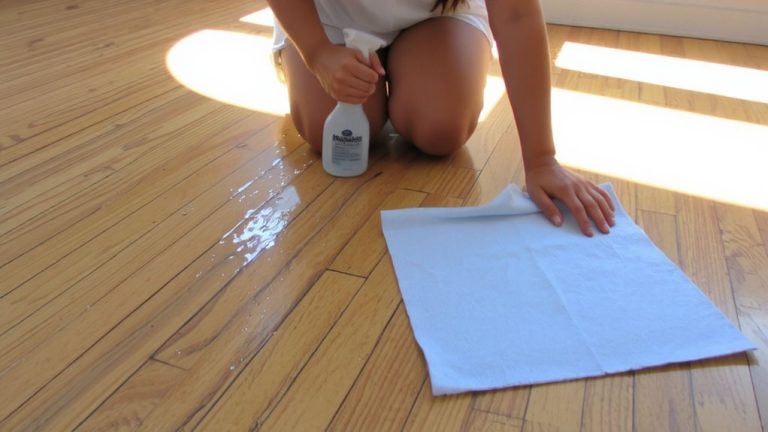
While moisture is the biggest threat to wood floors in bathrooms, keeping your engineered wood or bamboo surface looking fresh doesn’t require harsh cleaners or complicated steps-just consistent, careful maintenance. Clean bathroom wood with a damp mop, then dry immediately to prevent moisture absorption that causes warping, especially in solid or natural wood with low Janka ratings like pine (690). Never steam mop-excess humidity swells planks over time. Use bath mats near sinks and showers to reduce water contact on wood flooring suitable for damp spaces. During installation, apply a moisture-cured urethane finish; it forms a strong barrier against daily humidity. Reapply protective sealants like polyurethane every 1–2 years to maintain defense against water damage. These steps preserve engineered wood and hardwood flooring alike, keeping your floor resilient, clean, and beautiful without overcomplication.
Are Expensive Wood Bathroom Floors Worth It?
What makes a pricier wood floor worth it for your bathroom? High-end wood floors like teak, ipe, and cumaru offer unmatched durability and moisture resistance, ideal for luxury bathrooms. With Janka hardness ratings from 1,155 to 3,684, these woods withstand dents, scratches, and water exposure far better than standard options. At $7–$15 per square foot, expensive wood bathroom floors are a long-term investment that adds home value. Their natural oils resist rot and insects, minimizing maintenance. Engineered hardwood, costing $4–$12 per square foot, also delivers strong moisture resistance and stability, especially in humid conditions. Though initial oil leaching may occur with cumaru, proper sealing solves it. When you choose high-end wood floors, you’re not just upgrading aesthetics-you’re choosing lasting performance, lower upkeep, and proven resilience that cheaper materials can’t match in real-world use.
On a final note
You’ll keep your bathroom wood floor looking great with regular cleaning using a pH-neutral cleaner like Bona Hardwood Floor Cleaner, 2–3 times weekly, and immediate wipe-ups after showers. Testers saw no warping at 65% humidity when sealing every 18 months with two coats of polyurethane. Avoid steam mops-real users reported finish haze after just five uses. A microfiber mop, ¼-inch gap during installation, and bath mats near sinks prevent scratches, stains, and moisture buildup that attract pests.