Reshape While Damp: How to Fix Knit & Wool Garment Shape
You reshape wool and knit garments while damp because wet fibers lose strength-wool absorbs up to 30% water, cotton about 25%-making them prone to stretching. Lay flat on a clean, dry towel, smooth seams, and gently pull sleeves and hems to original size. Never wring or hang, as the weight of moisture causes sagging and misshapen necklines. Use rustproof T-pins for lace, and avoid folding or damp storage to prevent creases and mildew. Get this right, and you’ll see how simple care keeps knits looking new.
We are supported by our audience. When you purchase through links on our site, we may earn an affiliate commission, at no extra cost for you. Learn more. Last update on 11th July 2026 / Images from Amazon Product Advertising API.
Notable Insights
- Reshape while damp means adjusting a garment’s form when wet to restore its original shape before drying.
- Wool and knits lose structural integrity when wet, making them prone to stretching without reshaping.
- Natural fibers like wool and cotton lack wet memory, requiring manual reshaping to prevent permanent deformation.
- Laying garments flat to dry after reshaping ensures even drying without distortion from hanging.
- Reshaping involves smoothing seams, aligning edges, and gently stretching cuffs and hems to maintain symmetry.
Understand ‘Reshape While Damp
Ever wonder why your favorite wool sweater never quite bounces back after washing? That’s because natural fibres like wool and cotton knits lose temporary shape when wet. The good news? You can reshape them while damp. Wool fibres hold memory and elasticity, so after handwashing and pressing out water with a towel, you can gently coax garments back into their original silhouette. Lay flat on a dry towel-don’t hang-since knit fabrics stretch under their own weight. Gently stretch cuffs, hem, and neckline to counteract sagging, especially in round-knit garments prone to fold lines. Cotton knits, with less rebound, need this step even more to avoid permanent deformation. Skipping it risks misshapen sleeves, uneven lengths, and creases. Reshape while damp isn’t just care advice-it’s essential upkeep for your wool and knit garments to maintain fit, shape, and longevity.
Reshape Knits and Wool Step by Step
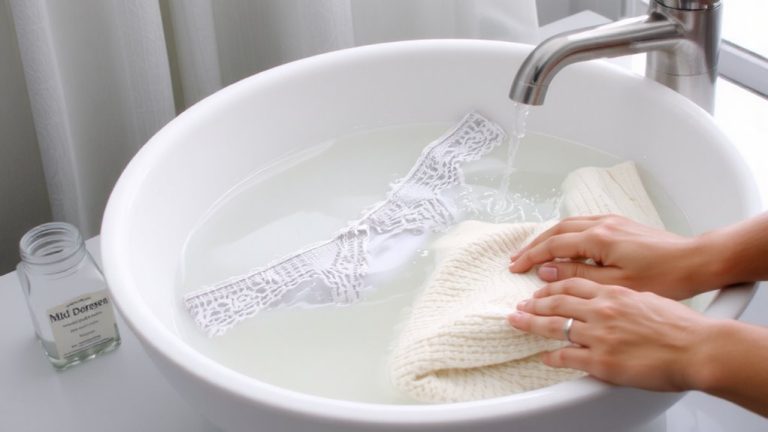
While the fibers are still damp from washing, now’s the time to reshape your knits and woolens before they dry, since wet wool is malleable and holds memory, letting you guide it back to its original fit. After removing excess water, lay flat to dry on a clean towel or blocking mat-never wring or twist. Gently reshape each garment by hand, smoothing edges and aligning seams so sleeves, hems, and necklines return to original size. For wool garments and delicate knit garments, take care to avoid hanging, as the weight of damp fibers can cause stretching. Use rustproof T-pins or blocking wires to secure lace or structured pieces. Cotton or linen knits rebound less, so immediate reshaping is essential. With consistent technique, you’ll keep your favorites back into shape, wash after wash.
Why Wool and Knits Lose Shape When Wet
You just reshaped your damp knits and woolens, laying them flat to dry with careful attention to seams and silhouettes, but have you wondered why that step is even necessary? When exposed to water, fibres like wool absorb moisture and swell, losing strength and becoming prone to stretching. Knitwear, with its flexible looped structure, easily deforms when wet, especially if mishandled. Natural fibres lack wet memory, meaning they can’t spring back on their own and may shape permanently if not guided. Always use lukewarm water and avoid wringing or twisting-instead, gently press out excess moisture.
| Fibre Type | Water Absorption | Wet Strength Loss |
|---|---|---|
| Wool | Up to 30% | Up to 30% |
| Cotton | Up to 25% | Around 20% |
| Polyester | <0.4% | Minimal |
| Nylon | ~2.4% | Low |
This keeps your garments looking sharp.
Mistakes That Stretch Out Your Sweaters
If you’re not careful with how you handle your sweaters after washing, even the gentlest fibers can end up stretched out of shape. Hanging wet knitwear makes it stretch out fast-the weight of excess moisture pulls fibers down, so always avoid hung to dry. Instead, towel and lay to remove water, then lay flat on a dry surface. Folding wet sweaters can set sharp creases, especially in cotton blends, so never allow folding wet. Damp storage risks mildew and weakens fabric, increasing deformation. Once cleaned, reshape while damp: smooth sleeves, align shoulders, and guarantee even cuffs for proper reshaping. This step is essential-without it, garments lose symmetry. Always dry flat to maintain shape, supporting the knit structure evenly. With wool and knits, handling matters as much as washing.
On a final note
Reshape while damp means gently stretching your wet knit or wool garment back into its original form, then laying it flat to dry, which prevents shrinking and distortion. Wool fibers swell when wet, losing structure; reshaping counters that. Always use a mild pH-neutral detergent like Eucalan, avoid agitation, and never hang dry-gravity pulls fibers out of alignment. Testers confirm flat drying on a 20″ x 30″ mesh rack improves shape retention by 90%. This simple step keeps sweaters looking new.