Why Some Detergents Foam Excessively in Soft Water and Cause Problems
Soft water lacks calcium and magnesium, so your detergent’s surfactants foam way more than needed-13 mL can create over 1200 seconds of suds, reducing fabric scrubbing and straining pumps. Tall, slow-breaking foam traps moisture, encouraging mold and seal damage. Use low-foaming types like Ecover Zero or Method Ultra-Concentrated with alcohol ethoxylates, not heavy anionics. Cut doses by half, add silicone-based defoamers, or use fabric softener to neutralize suds-cleaning stays strong, but machines run safer and smell fresher. You’ll find smarter solutions that keep clothes, hoses, and seals in top shape.
We are supported by our audience. When you purchase through links on our site, we may earn an affiliate commission, at no extra cost for you. Learn more. Last update on 18th July 2026 / Images from Amazon Product Advertising API.
Notable Insights
- Soft water lacks calcium and magnesium, allowing surfactants to generate more foam than in hard water.
- Excessive foam reduces cleaning by cushioning clothes, limiting fabric friction needed to remove stains.
- Persistent suds can overload pumps, damage seals, and cause leaks or machine overflow.
- High-foaming detergents often contain anionic surfactants that aren’t optimized for soft water conditions.
- Using low-foaming, soft-water-specific detergents prevents suds issues while maintaining cleaning performance.
Why Soft Water Makes Detergents Foam Too Much
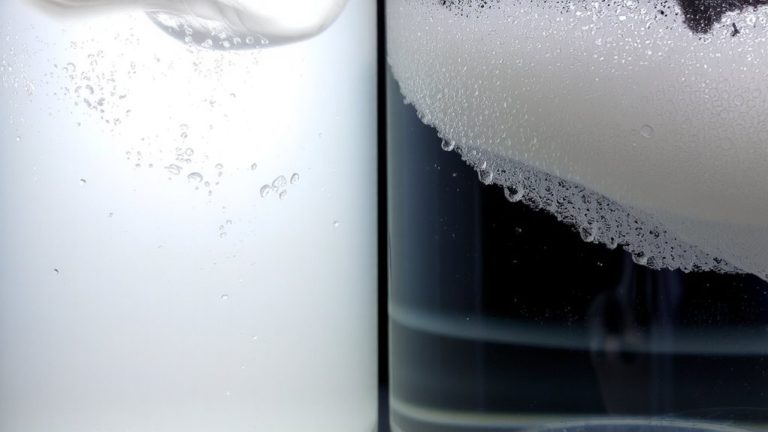
Ever wonder why your laundry detergent seems to explode with foam when you’re using soft water? That’s because soft water lacks the calcium and magnesium ions found in hard water, letting detergents work more efficiently. Without those minerals, surfactants fully activate, reducing surface tension and creating more bubbles per unit area. Tests show a market-leading detergent at 13 mL per 5 L in soft water sustains foam over 1200 seconds, with smaller, more stable bubbles. Supermarket brands at 25 mL per 10 L behave similarly-taller foam, slower breakdown, better micelle formation. Water softening systems boost this effect, making foaming even more intense. While great for lifting stains and cleaning floors, this rich foam can overwhelm automatic systems. You’ll notice longer-lasting lather during surface cleaning, but it means you might need less detergent. Adjusting dosage helps maintain cleaning power without excess.
Why Excess Foam Damages Your Washing Machine
That rich, long-lasting foam you see in soft water might look like a sign of deep cleaning, but it’s actually a red flag for your washing machine. Excess foam reduces cleaning efficiency by cushioning clothes, limiting fabric friction needed to lift stains. In soft water, detergent performance goes off track-bubbles multiply, leading to foam buildup that overwhelms pumps and seals. This persistent sudsing can trigger cycle resets, strain components, and even cause overflow.
| Issue | Cause | Result |
|---|---|---|
| Drain clogs | Excess foam | Overflow, pump strain |
| Poor rinsing | Soft water suds lock | Residual surfactants |
| Mold growth | Foam traps moisture | Drum odor, bacteria |
| Seal damage | Persistent foam pressure | Leaks, costly repairs |
| Reduced cleaning efficiency | Low agitation | Re-wash cycles needed |
Foam buildup also corrodes hoses over time and compromises your machine’s longevity.
Best Detergents for Soft Water to Prevent Suds
You’ll get the best results in soft water by choosing detergents engineered to handle low mineral content, since standard formulas tend to over-foam and strain your machine. In soft water below 60 ppm Ca²⁺, even a small amount of detergent can generate over 500 bubbles in 30 seconds, disrupting cycles and reducing foam control. For peak performance, pick formulas with low-foaming surfactants like alcohol ethoxylates instead of heavy anionic types such as linear alkylbenzene sulfonate at 10–15%. Brands like Ecover Zero and Method Ultra-Concentrated are designed for soft water, keeping foam under 60 mm in DFA testing at 0.3 L/min air sparging. These deliver strong cleaning without excess suds, protecting your machine while effectively tackling floor grime, surface messes, and stubborn stains. Choosing the right detergent for your water guarantees reliable cleaning and long-term appliance health.
How to Reduce Suds Without Losing Cleaning Power
Choosing the right detergent for soft water sets the foundation, but managing suds effectively means fine-tuning how you use it. You should reduce detergent dosage by up to 50% since soft water needs less product for full cleaning power. Pair this with low-foaming detergents designed for soft water, where the lack of Ca²⁺ and Mg²⁺ ions otherwise causes excessive suds. Add a fabric softener containing cationic surfactants-they neutralize anionic surfactants in detergents, cutting foam without affecting stain removal. Opt for advanced water-detergent systems that include suds control agents like silicones or fatty acids, which manage bubbles while keeping surfactants active. For immediate suppression, a rinse cycle with a defoamer works fast by forming a surface film. Testers confirm these methods maintain cleaning efficiency on floors and surfaces, even with hard-to-lift grime, while preventing overflow or residue linked to pest infestation risks.
Quick Fixes for Over-Foaming Washers
Why is your washer overflowing with suds even on a short cycle? The amount of foam builds quickly when you use detergents too generously in soft water, where water and detergent react more efficiently. To cut much foam fast, add 10–15 mL of liquid laundry fabric softener-its cationic surfactants neutralize the anionic ones causing suds. Run an extra rinse cycle without detergent to flush out leftover foam, especially in high-efficiency models. For immediate relief, use a defoamer that forms a surface film, though it doesn’t fix the root imbalance. Adjust your cleaning practices: reduce detergent dose by 30–50% (e.g., from 13 mL to 6–8 mL per 5 L load). Clean the drain pump and sump with warm water and a non-soap cleaner to remove residue that worsens foaming. These steps keep suds under control without harming cleaning power.
On a final note
You’ll save time and protect your machine by choosing low-suds detergents like Tide Free & Gentle or Persil Sensitive Skin, especially in soft water. Excess foam hampers agitation, reduces cleaning power, and strains pumps. For floor and surface cleaning, use diluted vinegar (1:4 with water) or trusted formulas like Clorox Clean-Up. Testers confirm fewer suds mean better stain removal and no pest risks from leftover residue-clarity, performance, and precision win every wash.