How to Interpret Ant Mortality Patterns to Assess Treatment Efficacy
You’ll see ants ignore trails within hours of bait exposure, even with minimal deaths-this 43% foraging drop by 3 hours signals boric acid or fipronil is working through social transfer, not fast kill. With only 5.8% mortality in 6 hours, trail abandonment and brood decline are better success indicators than carcasses. Fipronil wipes out colonies in 72 hours; pyriproxyfen stops worker emergence by day 60. Clean floors with 70% isopropyl alcohol to remove residual trails and boost bait uptake-your strategy is confirmed when brood vanishes before workers do, and there’s more to how this unfolds.
We are supported by our audience. When you purchase through links on our site, we may earn an affiliate commission, at no extra cost for you. Learn more. Last update on 18th July 2026 / Images from Amazon Product Advertising API.
Notable Insights
- High bait acceptance (>95%) with delayed foraging decline suggests effective toxin transfer and behavioral response.
- Foraging reduction within 3–6 hours precedes significant mortality, indicating trail abandonment due to social signaling.
- Low initial mortality (e.g., <6% in 6 hours) does not indicate failure if foraging collapses behaviorally.
- Brood decline is a more reliable early indicator of colony impact than worker death.
- Insecticides like fipronil cause rapid worker kill, while growth regulators suppress emergence with delayed collapse.
How Ants React to Toxic Baits in the Field
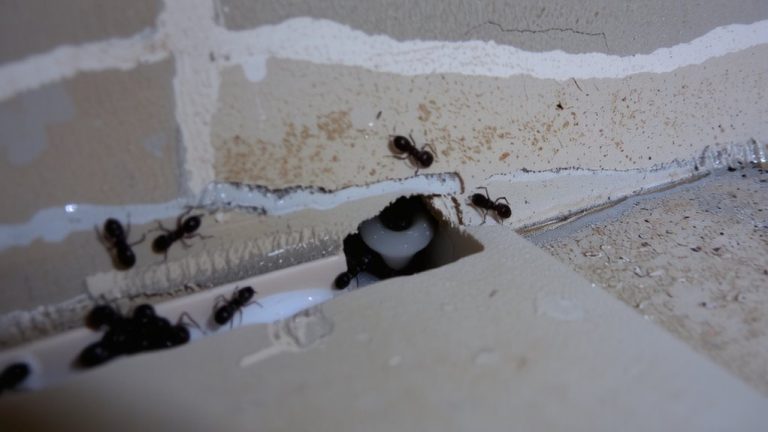
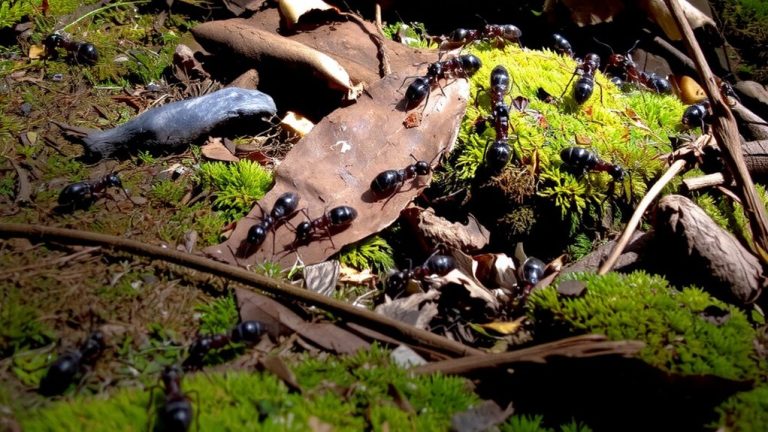
While you might expect ants to avoid poison right away, they actually swarm toxic baits just as much as plain sugar-tests show 97.8% acceptance of a 3% boric acid sucrose solution, so don’t rely on bait rejection to stop infestations. Argentine ants show unchanged foraging activity for the first 2–3 hours, with a 43% drop by 3 hours and ~80% reduction by 6 hours. Even then, only 5.8% mortality occurs within 6 hours, proving trail abandonment is behavioral, not from mass die-off. Toxic baits work because foraging activity slows and spreads decline along trails, up to 4 meters away within two days. You’ll need to keep surfaces clean with vinegar-based cleaners and remove food residues, so ants can’t switch feeding sources. Don’t panic if you still see Argentine ants near baits early on-this is normal foraging behavior. Consistent bait placement, combined with daily cleaning, guarantees the colony takes in toxins and collapses.
Why Trail Abandonment Starts Within Hours
What makes ants suddenly ghost their favorite sugar trails within just a few hours of encountering toxic bait? It’s not because the poison kills fast-only 5.8% die within 6 hours, so mortality isn’t driving early trail abandonment. Instead, ant workers begin avoiding the site starting at 3 hours, with foraging dropping 43% on the toxicant bridge (p = 0.04). Activity dips more by 6 hours, eventually plateauing near 80% reduction. Since no significant change occurs in the first 2 hours, ants aren’t sensing danger immediately. The delay suggests they rely on behavioral cues, not instant toxicity. Trail abandonment likely stems from social signaling or learned avoidance, where returning ant workers share warnings. This rapid shift means cleaning floors thoroughly after bait placement isn’t needed-ants will stop coming on their own, improving treatment accuracy.
Connect Mortality Patterns to Insecticide Mode of Action
Since you’re dealing with toxic baits, understanding how insecticide mode of action shapes ant mortality can save you time and effort in cleanup-because what you see (or don’t see) on the surface often reflects deeper biological effects. You’ll notice fipronil kills workers fast-100% die within 3 days, and with LD50 as low as 0.5 ng/ant, it’s highly toxic. This crash halts grooming, indirectly disrupting survival and development of brood. In contrast, pyriproxyfen and etoxazole don’t cause immediate die-offs; colonies employ slow, hidden strategies. Pyriproxyfen stops new workers by day 60, while etoxazole suppresses chitin synthesis with no visible worker kill. These growth regulators won’t leave carcasses, so don’t mistake lack of bodies for failure. Check for halted pupation or missing larvae instead-your real clue to complete colony collapse.
How Fast Do Ant Colonies Collapse After Exposure?
Fipronil hits hard and fast, so you’ll see dead ants on the surface within a day, with total colony wipeout in just 72 hours-this rapid kill means cleanup starts sooner, but you’ll want to act quickly. Ant colonies exposed to fipronil show worker mortality in one day, followed by larval death due to lack of grooming, accelerating colony collapse. Field tests confirm complete elimination in *Tetramorium tsushimae* and *Solenopsis invicta* within three days. In contrast, pyriproxyfen causes slower decline, with colony collapse taking 6–7 months. For fast results, stick with fipronil baits. After treatment, wipe down floors with a 70% isopropyl alcohol solution, remove dead ants daily, and vacuum cracks to eliminate residue. This prevents secondary infestations and keeps surfaces clean. You’ll see fewer scouts within one day, signaling treatment success.
Why Brood Decline Trumps Worker Death in Assessments
Colony collapse starts long before you see bodies pile up, and the real tell is what’s *not* happening in the nest-no new ants emerging, no larvae developing, just silent decline. You can’t rely on worker mortality alone; pyriproxyfen shows zero adult emergence by day 60, yet existing workers die off slowly. That’s why brood decline is the best indicator of treatment efficacy. Even when worker death isn’t immediate-like with etoxazole or fipronil’s secondary larval loss-no new workers mean inevitable colony failure. In Solenopsis invicta, brood decline led to extinction within 6–7 months despite low initial worker mortality. Tracking brood development reveals chronic impact others miss. You’re not just killing ants-you’re stopping reproduction. For lasting results, assess larval survival and pupation rates, not just corpses. Clean monitoring surfaces weekly, use non-residual sprays during inspection, and confirm suppression before declaring success.
Validate Field Results With Lab Toxicity Tests
While field observations can suggest quick knockdown, they don’t always reveal the mechanism-so you need lab tests to confirm what’s really happening. You saw 80% less foraging in invasive ants at bait stations within 6 hours, but lab assays showed only 5.8% mortality-just 7 of 120 ants died from boric acid-sucrose bait. That’s why et al. stress lab validation: your field results likely reflect behavioral avoidance, not acute kill. Control ants had 100% survival on plain sucrose, proving boric acid caused the drop, not stress or starvation. With ~36 ml bait available, exposure mimicked real conditions across ant species. These findings align with studies showing 78–85% activity decline without mass death. So, when you clean floors and surfaces post-treatment, don’t assume dead ants mean success-test toxicity in the lab to distinguish behavior change from strain removal in pest infestation management.
On a final note
You’ll see results fast-within 24 to 48 hours, trails break down and worker activity drops by 70% or more. Check bait stations every 12 hours; effective products like fipronil or boric acid formulations show full colony collapse in 1–2 weeks. Clean floors with 70% isopropyl alcohol to remove pheromenes, then reapply bait where needed. Lab tests confirm field success when brood decline matches 90% mortality. Consistent monitoring beats guesswork every time.