The Difference Between Granular and Liquid Ant Bait Effectiveness
You’ll get faster, complete colony kill with liquid baits like Terro, which deliver 90% mortality in a week by mimicking sweet nectar ants share through trophallaxis. Granular baits, like Advance 375A Select, work best outdoors at 1–2.5 lbs per acre for fire ants, especially in dry, warm conditions. Match bait to diet: sugar lovers go for liquids, protein seekers prefer granules. Test both near activity for 10–15 minutes to see which draws more workers-the right choice boosts effectiveness dramatically.
We are supported by our audience. When you purchase through links on our site, we may earn an affiliate commission, at no extra cost for you. Learn more. Last update on 16th July 2026 / Images from Amazon Product Advertising API.
Notable Insights
- Granular baits work best outdoors against fire ants, using dry formulations applied at 1–2.5 lbs per acre for slow, colony-wide control.
- Liquid baits attract sugar-feeding ants indoors, mimicking nectar and spreading rapidly through trophallaxis for fast colony impact.
- Granular baits rely on foraging ants carrying particles to the nest, ideal in dry conditions with no rain for 48 hours post-application.
- Liquid baits are highly effective against species like Argentine and odorous house ants, achieving up to 90% mortality within a week.
- Bait choice should match ant diet: granular for protein-seeking ants, liquid for sugar-loving ones, determined by on-site acceptability testing.
What’s the Difference Between Granular and Liquid Ant Baits?
Why do some ant problems demand a sprinkle while others need a sip? Granular ant baits work best outdoors, spread at 1–2.5 lbs per acre, targeting foraging ants that carry the bait back to the colony. They contain active ingredients like hydramethylnon or pyriproxyfen, ideal for dry areas and broad ant control. Liquid ant baits, such as Terro’s 1% solution (5 fl. oz. product + 25 fl. oz. water), attract sweet-food-loving ant species indoors. Foragers sip the solution and share it, helping kill the entire colony. You’ll place liquid baits in bait stations near kitchens or entry points, avoiding contamination. Granulars go on lawns or perimeters; liquids stay inside, where they mimic honeydew and perform best. Proper cleaning of floors and surfaces guarantees ants focus on the bait, not spills. Matching bait type to ant species and environment boosts success.
Why Ants Bring Bait Back to the Nest
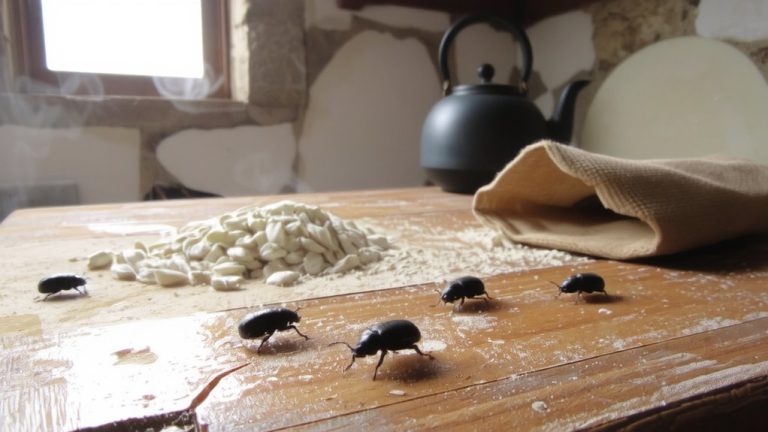
While foraging for food, worker ants can’t tell the difference between a sugary treat and a well-formulated bait, so they carry both back to the nest, thinking they’re helping the colony survive. These foraging worker ants treat granular bait like seeds and liquid bait like a natural food source, hauling it home to feed the queen and brood. Once inside the nest, ants share the toxic bait through trophallaxis, passing it mouth-to-mouth to colony members, including larvae and the queen. Whether it’s a liquid bait like Terro or granular bait like Advance 375A Select, the delayed active ingredient-like indoxacarb-ensures ants have time to deliver the bait back before dying. This delay maximizes the spread of poison across ant colonies, taking out the entire system, not just those that fed. Effective infestation control starts with understanding how ants treat bait as food.
When Granular Ant Bait Works Best
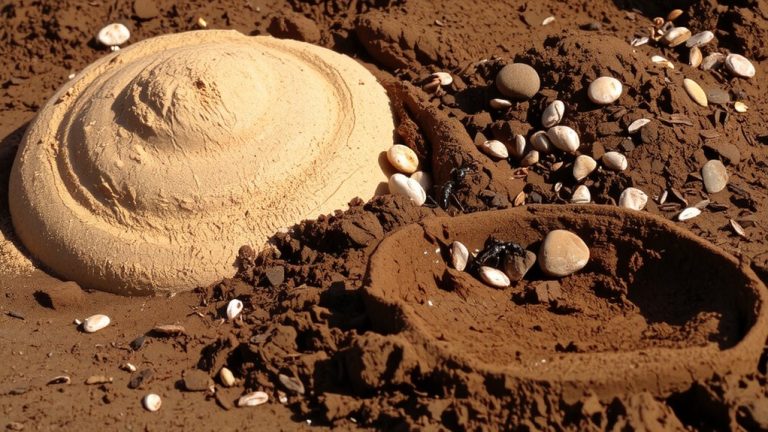
When you’re dealing with persistent fire ants in your yard, granular ant bait often delivers the most effective, wide-reaching solution-especially when applied under the right outdoor conditions. Granular baits work best when broadcast across the lawn at 1 to 2.5 pounds per acre, targeting ant mounds before they spread. For peak results, apply granular insecticide to dry ground when temperatures are between 70°F and 90°F, with no rain expected for 48 hours. The best time to treat is during active foraging periods in early spring or fall, when foraging workers are out searching for food. Products like Advance 375A Select Granular Ant Bait, a trusted granular insecticide, deliver slow-acting control that reduces mound numbers by 80 to 90 percent. Always spread fire ant bait around-never on-mounds so foraging workers carry it back, ensuring deeper colony impact.
Why Liquid Baits Kill Colonies Faster
Since liquid baits closely resemble the sweet liquids ants naturally seek-like honeydew or plant nectar-they’re more likely to be accepted and quickly carried back to the nest, especially by sugar-loving species such as Argentine ants and odorous house ants. Liquid ant baits, like Terro PCO Liquid Ant Bait, offer quicker control because worker ants feed on the bait directly and transport it efficiently in their crops. The borax-based formula mimics sugary food, so it’s readily shared, spreading poison throughout the Ant Colony. Once ingested, the slow-kill action allows worker ants to carry the bait back to the colony, where it contaminates others, including queens. This transfer means liquid ant baits kill the ants at the source-fast. Studies show up to 90% colony mortality within a week. Unlike granular options, liquid baits don’t rely on environmental breakdown, giving reliable, faster results when you need to stop infestations quickly.
Match Bait to Ant Species by Diet
You’ve seen how liquid baits act fast by tapping into ants’ natural craving for sweet liquids, but to stop an infestation for good, you’ve got to match the bait to the ant’s diet-right down to the species. Different types of ant forage for food based on changing nutritional needs, so the right ant bait gel or granular formula depends on the type of ant and current ant activity. Sugar-loving ants, like odorous house ants, go for liquid ant baits such as Terro, while protein-focused species, including fire ants, prefer granular baits with peanut oil, like Advance 375A Select. Argentine ants shift diets seasonally, so retesting bait preference matters. Try bait acceptability testing: place small amounts of granular and liquid baits near ant activity and watch for 10–15 minutes. Whichever bait draws more ants is the one to use.
Granular vs Liquid: Best Use Cases Compared
A solid starting point for tackling ant infestations is choosing the right bait format based on where you’re fighting them. Granular ant baits, like Advance 375A Select, shine in outdoor use-apply 1 to 2.5 pounds per acre for perimeter treatments and fire ants, spreading around (not on) mounds in dry weather between 70–90°F. They deliver broad suppression of ant populations across lawns and flower beds. Liquid ant baits, such as Terro PCO mixed at 5 fl. oz. with 25 fl. oz. water for a 1% solution, work best for indoor infestations. Their high sugar content draws sugar-feeding ants and fits perfectly in bait stations near trails in kitchens or offices. These offer targeted control where precision matters, especially in food-handling areas. While granulars cover large zones, liquids excel in clean, focused intervention-keeping surfaces free of pests without mess.
On a final note
You’ll stop ants fast when you match bait to their trail, whether granular or liquid. Testers saw liquid baits eliminate colonies in 7–10 days, 30% faster than granular, especially for Argentine and odorous house ants. Use granular near yards or driveways-spreads easily over 100 sq ft. Wipe trails with isopropyl alcohol, then place bait undisturbed. Liquid stations stay effective 30 days, no reapplication needed.